Mozart's Requiem
Rossen Milanov, conductor
Lydia Grindatto, soprano
Mariya Kaganskaya, mezzo soprano
Victor Starsky, tenor
Cumhur Görgün, bass
Columbus Symphony Chorus
Stephen Caracciolo, chorus director
| Mozart I-IV, VIII completed by Süssmayr V-VII completed by Spears | Requiem, K. 626 |
I. Introitus - Requiem II. Kyrie III. Sequenz IV. Offertorium V. Sanctus VI. Benedictus VII. Agnus Dei VIII. Communio - Lux aeterna |
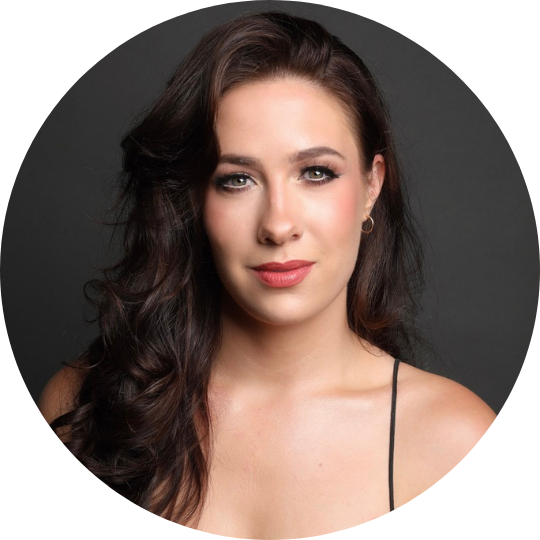
Lydia Grindatto, soprano
A native of Tijeras, New Mexico, soprano Lydia Grindatto is a graduate of the Academy of Vocal Arts (AVA) in Philadelphia, and was a 2024 Grand Finals Winner of The Metropolitan Opera Laffont Competition.
Praised for her “high-octane emotionalism,” Lydia begins the 2025-2026 season with her European, house and role debut as Léonore in Le trouvère at Wexford Festival Opera. She makes role debuts as Micaëla in Carmen (San Diego Opera, house debut) and Violetta in La traviata (Utah Opera), and adds the role of Roxana in a new production of Szymanowski’s masterpiece King Roger at Des Moines Metro Opera (house debut). On the concert stage, she joins the Columbus Symphony for Mozart’s Requiem.
The 2024-2025 season included three role and company debuts: Palm Beach Opera (Juliette in Roméo et Juliette), Utah Opera (Nedda in Pagliacci), and The Glimmerglass Festival (Anne Trulove in The Rake’s Progress). Elsewhere, Lydia bowed as a soloist with the Sag Harbor Song Festival, and made her role debut as Marguerite in Gounod’s Faust at AVA. During the 2023-24 season, Ms. Grindatto made house debuts with Arizona Opera as Donna Anna in Don Giovanni and Opera Columbus as Tatiana in Eugene Onegin, spending the summer at the prestigious Merola Opera Program, returning to the role of Donna Anna. Earlier that season, Lydia sang the title role in Donizetti’s Anna Bolena at AVA, and was invited to perform popular opera selections alongside featured guest star Michael Fabiano in a concert with Opera Italiana is in the Air at the Lincoln Memorial in Washington, D.C. She was a 2023 Apprentice Artist at the Santa Fe Opera, where she made her company debut as the Second Wood Sprite, in addition to covering the title role, in Dvorák’s Rusalka.
Her opera roles at the Academy of Vocal Arts have included Donna Anna in Don Giovanni, Violetta in La traviata, and Tatiana in Eugene Onegin. Lydia has been recently recognized as a winner in several prestigious competions, including the Opera Index Awards, The Loren L. Zachary Society Competition, the Gerda Lissner Foundation Competition, as well as winning the top prize in AVA’s Giargiari Bel Canto Competition.
The soprano has also appeared as a featured soloist in various concert settings, including the chamber ensemble Antigua y Moderna, the University of New Mexico Symphony Orchestra, and the AVA Orchestra. Lydia holds a B.M. in Vocal Performance from the University of New Mexico.
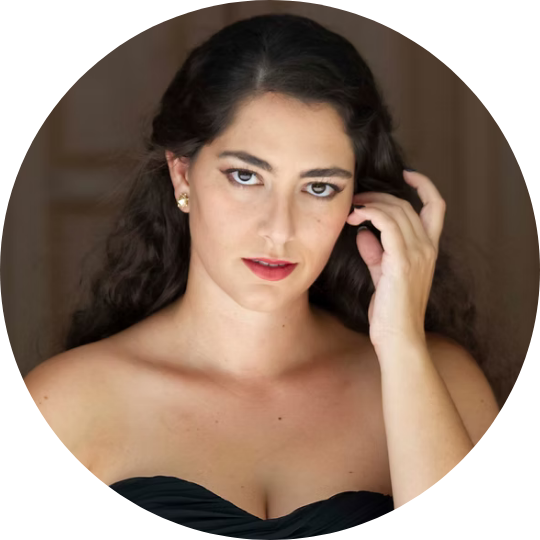 Mariya Kaganskaya, mezzo soprano
This coming season Russian-American mezzo-soprano Mariya Kaganskaya sings Mozart’s Requiem with the Columbus Symphony. In the 2024-25 season, she performed Third Lady in The Magic Flute with Opera San Jose. Her most recent roles include Suzuki in Madame Butterfly with West Bay Opera, Larina in Eugene Onegin with Opera Columbus, and Third Lady in The Magic Flute with San Francisco Opera (cover). Recent engagements prior to that include Larina in Eugene Onegin with Opera Omaha; Pauline in Pique Dame with West Bay Opera; Cherubino in Le nozze di Figaro, Page in Salome, Paula in Florencia en el Amazonas for Florida Grand Opera; and Tisbe in La Cenerentola, Suzuki in Madame Butterfly, and Third Wood Sprite in Rusalka for Arizona Opera. Ms. Kaganskaya also sang the role of Teacher in the Santa Fe Opera’s world premiere production of The (R)evolution of Steve Jobs, the recording of which earned the 2019 Grammy Award for Best Opera Recording.
In the 2018-19 season, Ms. Kaganskaya performed the roles of Mrs. Rockefeller/Natalia in Frida, as well as Käthchen and Charlotte (cover) in Werther for Florida Grand Opera. Her other recently performed roles include Dorabella in Così fan tutte, Ottavia in L’incoronazione di Poppea, the title role of Serse, Olga in Eugene Onegin, Hostess in Boris Godunov, Marta in Iolanta, La Nourrice in Milhaud’s Médée, Mexican Woman in A Streetcar Named Desire, Dinah in Trouble in Tahiti, and Julia Bertram in Mansfield Park.
Ms. Kaganskaya was a Studio Artist at Florida Grand Opera, and has been an Apprentice Singer at the Santa Fe Opera, a Marion Roose Pullin Studio Artist at Arizona Opera, a Mosher Studio Artist at Opera Santa Barbara, and a Young Artist at the iSing International Festival in China. She is an alumna of the OperaWorks Advanced Artist Program and the Russian Opera Workshop at the Academy of Vocal Arts, and earned her MM (’15) and PGD (’16) at the San Francisco Conservatory of Music, under the tutelage of Catherine Cook.
Recent awards include: First Place and Audience Choice, Lois Alba Aria Competition (2019); Grand Prize Winner in the St. Petersburg Opera Guild (2019); Winner, Butler Opera International Competition (2018); Audience Choice, Lois Alba Aria Competition (2018); Tier I Bell Encouragement Award, James Toland Vocal Arts Competition (2018); Florida East Coast Chapter Winner, NSAL Dorothy Lincoln-Smith Competition (2018); First Place, Gershwin International Music Competition (2017); Polk Young Artist Award, Orpheus Vocal Competition (2017); Young Artist Award, Pasadena Opera Guild (2016); Silver Award, Holt Competition (2016); Third Place, East Bay Opera League Competition (2016); San Francisco District Winner and Western Regional Encouragement Award, Metropolitan Opera National Council Auditions (2015); and First Place/Lotfi Mansouri Award, Pacific Musical Society Competition (2014).
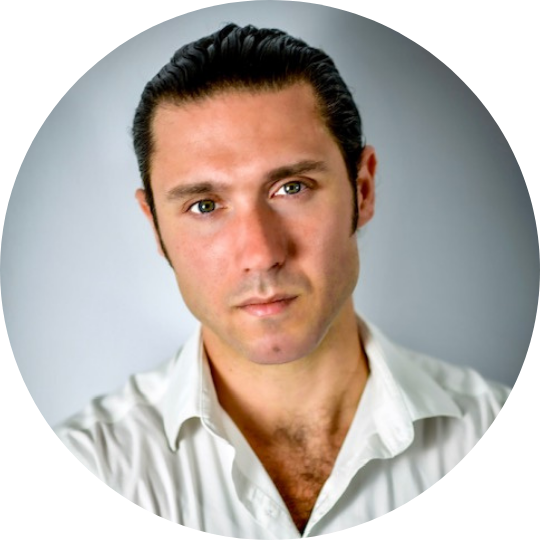 Victor Starsky, tenor
Tenor Victor Starsky, a native of Richmond Hill, New York, received critical acclaim this year for his performance as Mario Cavaradossi in the Princeton Festival’s production of Puccini’s Tosca, as well as his role debut as the title character in Verdi’s Stiffelio with Sarasota Opera. Starsky’s 2024-2025 season also featured role and company debuts as Maurizio in Adriana Lecouvreur with Pittsburgh Festival Opera; Nemorino in L’Elisir D’Amore with Charlottesville Opera; and he performed the role of Jim Casy in MasterVoice’s Carnegie Hall presentation of Ricky Ian Gordon’s The Grapes of Wrath.
Of his performance of Don José with Sarasota Opera in 2024, Your Observer writes, “While possessing a voice that flexes with nuance, the genius of Starsky’s stage performance is how he shares each tiny tear in his moral fabric as he follows and succumbs to Carmen despite every effort to cling to what he knows is moral and right. Watching his slow crumbling into unhinged desperation is unforgettable.” In the upcoming 2025-2026 season, Starsky looks forward to several new role debuts, including Enzo in Ponchielli’s La Gioconda with Pittsburgh Festival Opera, and Manrico in Il Trovatore with Sarasota Opera. He also joins Wichita Symphony Orchestra as the tenor soloist in the Verdi Requiem, as well as making his debut as Dick Johnson in Puccini’s La Fanciulla del West with Wichita Grand Opera.
In 2023-2024, Starsky made his debuts as Radamés in Verdi’s Aïda and George Gibbs in Rorem’s Our Town at Utah Festival Opera and Musical Theater. He sang Roméo in Gounod’s Roméo et Juliette with New York City Opera and Rodolfo in La Bohème with Wichita Grand Opera. Starsky was honored to perform The Celebrant in Leonard Bernstein’s Mass with the premier conductor Maestro Maurice Peress in 2014. As a Adler Fellow with San Francisco Opera in 2020 he was awarded the Shoshana Foundation’s Richard F. Gold Career Grant.
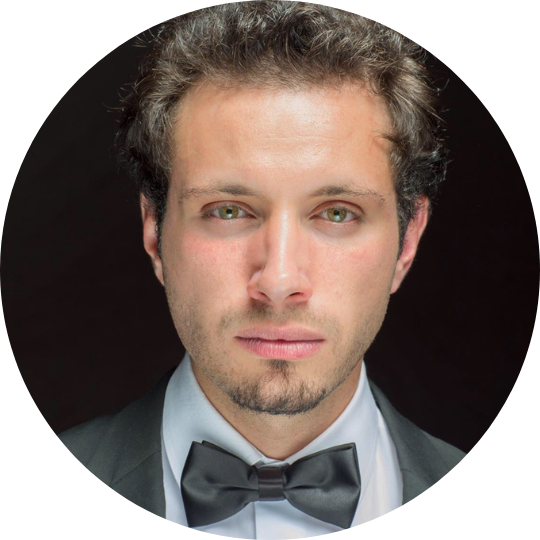 Cumhur Görgün, bass
Turkish bass Cumhur Görgün was born in Istanbul, Türkiye. He intially studied at the Istanbul University as a student of Prof. Güzin Gürel and later pursued further studies at the Rodolfo Celletti Belcanto Academy in Italy. In Türkiye, he covered Sancho in Don Quichotte at the Istanbul State Opera and Ballet and performed Schlendrian in Bach’s Coffee Cantata at the Süreyya Opera House. He has been recognized with multiple awards in national competitions.
A fourth-year Resident Artist at the Academy of Vocal Arts (AVA), Mr. Görgün has performed roles including Méphistophélès in Faust, the title role in Don Pasquale, Leporello in Don Giovanni, Enrico VIII in Anna Bolena, Don Basilio in Il barbiere di Siviglia, and Collatinus in The Rape of Lucretia. He has performed as a soloist with the Istanbul State Symphony Orchestra and was featured in the Idil Biret Music Festival. He also sang in the opening concert of Festival Under the Stars with Opera Naples, as well as performing in the Pavarotti Voices Opera Gala at Festival Boca.
Mr. Görgün has received recognition in numerous international competitions, winning prizes at the Meistersinger Competition, The Mary Jacob Singer of the Year Competition, Opera Columbus Cooper-Bing Competition, and Wilhelm Stenhammar Competition. He was awarded Second Prize in the Mario Lanza Competition, the Giargiari Belcanto Competition, and the SAS Vocal Competition. He is the winner of the Opera Naples Luciano Pavarotti Competition.
In the summer of 2025, he covered Don Basilio at the Glyndebourne Festival, and also made his debut as Banquo in Macbeth with Teatro Nuovo. In 2026, he returns to Glyndebourne to make his house debut as Don Basilio in Il barbiere di Siviglia.
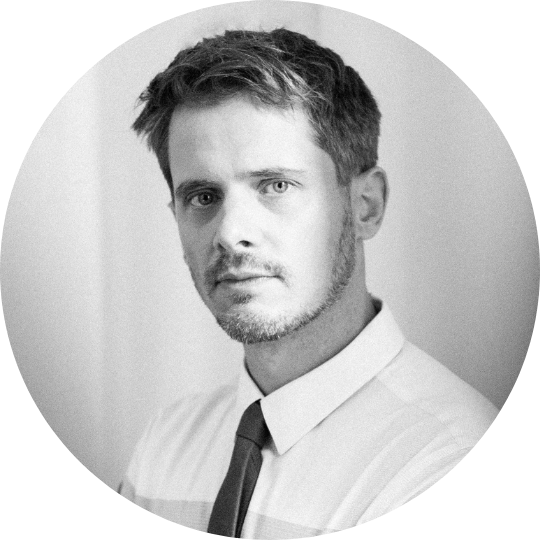 Gregory Spears, composer
Praised for “astonishingly beautiful” music (The New York Times) and a “singular compositional voice, unlike any that has been heard in opera before” (The New Yorker), composer Gregory Spears is acclaimed for blending romanticism, minimalism, and early music influences into works celebrated for their melodic richness and emotional clarity.
The 2025-2026 season brings the world premieres of Spears’ newest opera, Sleepers Awake (Opera Philadelphia), as well as Secrets (The Frick Collection) and Bartleby (Tucson Desert Song Festival). His best-known opera, Fellow Travelers (libretto by Greg Pierce), marks its tenth anniversary in 2026 with the launch of a national, multi-year tour.
Spears’ music has been commissioned by the New York Philharmonic, Lyric Opera of Chicago, Santa Fe Opera, Houston Grand Opera, Opera Philadelphia, Cincinnati Opera, Seraphic Fire, The Crossing, Bang on a Can, and JACK Quartet, among many others. Spears’ opera The Righteous (libretto by Tracy K. Smith) premiered at Santa Fe Opera in 2024, earning a “Critic’s Pick” in The New York Times. Earlier collaborations with Smith include Castor and Patience (2022, Cincinnati Opera) and Love Story, commissioned and premiered by the New York Philharmonic. His first opera, Paul’s Case (written with librettist Kathryn Walat), was called “a masterpiece” by the New York Observer. Beyond opera, Spears has developed a wide-ranging catalog of orchestral, choral, and chamber works. His Requiem (2010) and Seven Days (2021) showcase his gift for balancing intimacy with dramatic scale.
A graduate of Eastman, Yale, and Princeton, and a former Fulbright Scholar, Spears teaches at New York University, and his music is published by Schott Music and Schott PSNY. Learn more at www.gregoryspears.com.
Requiem, K. 626 (1791)
by Wolfgang Amadè Mozart
(Salzburg, 1756 - Vienna, 1791)
With new Sanctus, Benedictus and Agnus Dei movements (2013)
by Gregory Spears
(b. Virginia Beach, Virginia, 1977)
Most recent Columbus Symphony performance: March 29-30, 2019; Rossen Milanov conducting. Duration: 65’
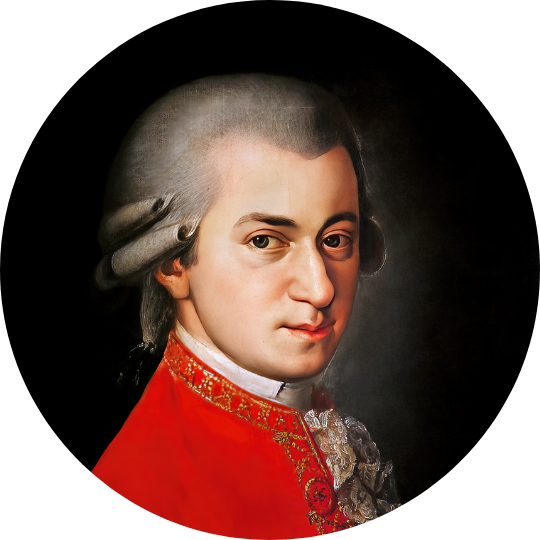
It is well known that Mozart didn’t live to finish his Requiem, leaving it to others to make the work performable. His student Franz Xaver Süssmayr was the first to take up the challenge. He had the benefit of receiving first-hand instructions from the composer, but his completion has long been subjected to criticism – especially the Sanctus, Benedictus and Agnus Dei movements, which were composed in their entirety by him in the familiar version.
Over the years, numerous musician-scholars have attempted to improve on Süssmayr in an attempt to get closer to what Mozart might have written. American composer Gregory Spears has taken a different approach; he decided to write original music for the three missing movements in what may best be described as a “contemporary-classical” style. His contributions do share some stylistic features with Mozart: the melodic writing and the rhythmic flow follow classical models, and there are even some literal quotes from Mozart. Yet the harmonic language is definitely of our time, with many extra notes added to the chords that you wouldn’t find in any harmony textbook. Instead of trying to reimagine a hypothetical original, then, Spears kept the boundary between 18th-century imperial Austria and the 21st-century United States clear at all times.
Spears is a prolific composer who has achieved great success with his operas, two of which, Fellow Travelers and Castor and Patience, have been premiered by the Cincinnati Opera. He has offered the following comments on his work on the Mozart Requiem:
While researching Mozart’s Requiem, I came across a rare recording by conductor Eugen Jochum from 1955. On the recording, the traditional Mozart/Süssmayr completion was performed as part of a memorial service in Vienna. This historical recording – which interpolated organ improvisations and chanted texts into the musical fabric – was a reminder that a Requiem, when performed as a mass, invites music from different sources and time periods. Mozart’s work was itself highly influenced by earlier music and begins with a conspicuous borrowing from Handel’s Funeral Anthem for Queen Caroline.
While my new music does not sound like Mozart, it is written in a manner that pays homage to the juxtaposition of old and new styles apparent in Mozart’s late work and much of the liturgical music of the period. One of the enduring stories concerning the Requiem was that the composer’s wife, Constanze, gave Süssmayr some musical “scraps” left by her husband to help the young composer write the missing movements. In homage to this myth, I have incorporated two cadential fragments from Süssmayr’s completion into the end of my Benedictus and Agnus Dei. Are these short passages possibly Mozart’s last writings, or are they Süssmayr’s invention? Our inability to answer such questions generates passionate debate concerning the Requiem and its fragmentary nature.
Spears’s new music for the Mozart Requiem was written in 2013 and first performed on November 15 of that year in Fort Lauderdale, Florida, with the Seraphic Fire choral group and the Firebird Chamber Orchestra under the direction of Patrick Dupré Quigley.
Notes by Peter Laki
I. Introitus - Requiem Requiem aeternam dona eis, Domine, | Give them eternal rest, o Lord, |
II. Kyrie Kyrie eleison. | Lord, have mercy. |
III. Sequenz Dies irae Dies irae, dies illa, Quantus tremor est futurus, Tuba mirum Tuba mirum spargens sonum, Mors stupebit et natura, Liber scriptus proferetur, Judex ergo cum sedebit, Quid sum miser tunc dicturus? Rex tremendae Rex tremendae majestatis, Recordare Recordare, Jesu pie, Quaerens me sedisti lassus, Juste judex ultionis, Ingemisco tamquam reus, Qui Mariam absolvisti, Preces meae non sunt dignae, Inter oves locum praesta, Confutatis Confutatis maledictis, Oro supplex et acclinis, Lacrimosa Lacrimosa dies illa, | The day of wrath, that day, How great a trembling there shall be The trumpet, sending its wondrous sound Death and Nature will be stupefied, A book will be brought forth When the Judge takes His place, What can a wretch like me say? King of terrible majesty, Remember, sweet Jesus, Seeking me, you descended wearily, Just Judge of Vengeance, I groan like a criminal, You who absolved Mary [Magdalene] My prayers are unworthy, Grant me a place among the sheep, When the damned are dismayed I pray, suppliant and kneeling, What weeping that day will bring, |
IV. Offertorium Domine Jesu Domine Jesu Christe, rex gloriae, Hostias Hostias et preces tibi, Domine, | O Lord Jesus Christ, King of Glory, Sacrifices and prayers of praise, |
V. Sanctus Sanctus, Sanctus, Sanctus, | Holy, holy, holy, |
VI. Benedictus Benedictus qui venit in nomine Domini. | Blessed is he who is coming in the name of the Lord. |
VII. Agnus Dei Agnus Dei, qui tollis peccata mundi, | Lamb of God, you who take away the sins of the world, grant them rest. Lamb of God, you who take away the sins of the world, grant them eternal rest. |
VIII. Communio: Lux aeterna Lux aeterna luceat eis, Domine, | May eternal light shine upon them, o Lord, |
Columbus Symphony Chorus
SOPRANO I SOPRANO II ALTO I ALTO II | TENOR I TENOR II BARITONE BASS DIRECTOR ACCOMPANIST BOARD CHAIR COORDINATOR |
Columbus Symphony Musicians
VIOLIN I VIOLIN II VIOLA CELLO | BASS CLARINET BASSOON TRUMPET TROMBONE TIMPANI KEYBOARD |