Amadeus Live
Stuart Chafetz, conductor
Columbus Symphony Chorus
Stephen Caracciolo, chorus director
| MOZART | Amadeus Live |
Film licensed by The Saul Zaentz Company.
Tonight's performance will include a 20-minute intermission at approximately 9:20PM, and will end at approximately 10:30PM.
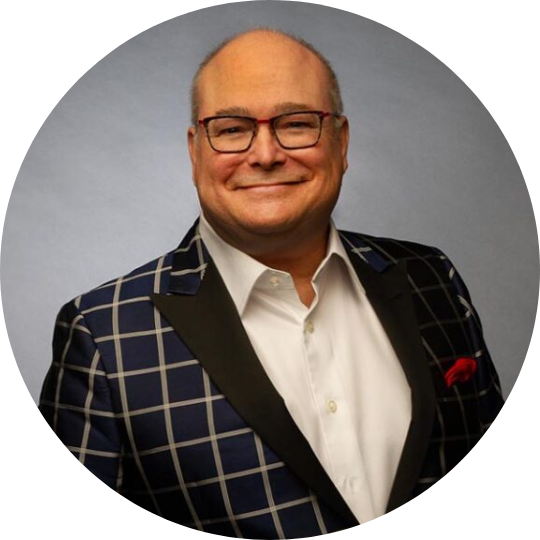 Stuart Chafetz, principal pops conductor
Stuart Chafetz is the Principal Pops Conductor of the Columbus Symphony and Principal Pops Conductor of the Chautauqua and Marin Symphonies. Chafetz, a conductor celebrated for his dynamic and engaging podium presence, is increasingly in demand with orchestras across the continent and this season Chafetz will be on the podium in Detroit, Ft. Worth, Naples, Buffalo, North Carolina and Seattle. He enjoys a special relationship with The Phoenix Symphony where he leads multiple programs annually.
He’s had the privilege to work with renowned artists including Ne-Yo, Ben Folds, Natalie Merchant, Leslie Odom, Jr., En Vogue, Kenny G, David Foster w/Catherine McPhee, The O’Jays, Chris Botti, 2 Cellos, Hanson, Rick Springfield, Michael Bolton, Kool & The Gang, Jefferson Starship, America, Little River Band, Brian McKnight, Roberta Flack, George Benson, Richard Chamberlain, The Chieftains, Jennifer Holliday, John Denver, Marvin Hamlisch, Thomas Hampson, Wynonna Judd, Jim Nabors, Randy Newman, Jon Kimura Parker and Bernadette Peters.
He previously held posts as resident conductor of the Milwaukee Symphony Orchestra and associate conductor of the Louisville Orchestra. As principal timpanist of the Honolulu Symphony for twenty years, Chafetz would also conduct the annual Nutcracker performances with Ballet Hawaii and principals from the American Ballet Theatre. It was during that time that Chafetz led numerous concerts with the Maui Symphony and Pops. He’s led numerous Spring Ballet productions at the world-renowned Jacobs School of Music at Indiana University.
When not on the podium, Chafetz makes his home near San Francisco, CA, with his wife Ann Krinitsky. Chafetz holds a bachelor’s degree in music performance from the College-Conservatory of Music at the University of Cincinnati and a master’s from the Eastman School of Music.
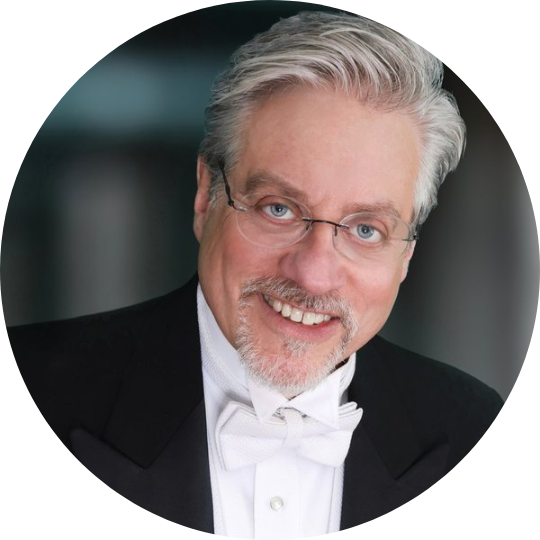 Stephen Caracciolo, chorus director
Stephen Caracciolo is the Chorus Director of the Columbus Symphony Orchestra, preparing the CSO Chorus for appearances in the Masterworks concert series and conducting community performances of the CSO Chamber Choir. Dr. Caracciolo is a conductor recognized for his passionate artistry and creative leadership in interpreting an expansive range of the choral repertoire, including choral-orchestral works, Renaissance and Baroque motets, German-Romantic part songs, French chansons, the sacred literature of the English and Russian churches, opera choruses, American folk songs and spirituals, and works by living composers.
For twelve years he was a professional choral bass at Washington National Cathedral where he also served as the cover conductor for masses, choral evenings, and special services. He has performed choral masterworks with the New York Philharmonic, the Philadelphia Orchestra, the Juilliard Orchestra, the American Symphony, and the orchestra of Washington National Cathedral with such renowned conductors as Robert Shaw, Zubin Mehta, Riccardo Muti, Kurt Masur, Erich Kunzel, Michael McCarthy, and James Levine.
Known nationally as a composer and arranger, Caracciolo’s choral works are performed extensively throughout the United States and Europe. He is a composer with MorningStar Music Publishers, E.C. Schirmer, Kjos Music, and Roger Dean Publishing, and is active as a consultant for various educational, ecclesiastical, and professional organizations. His publications—including commissions for the acclaimed professional vocal ensemble, Cantus—appear on numerous professional, collegiate, and cathedral repertoire lists, and may be heard on nationally distributed recordings as well as syndicated radio broadcasts including the well-known Sunday program, With Heart and Voice.
Dr. Caracciolo concurrently serves as Artistic Director of ProArteOHIO, Central Ohio’s premier professional vocal ensemble. Under his leadership, the ensemble consistently garners high praise for its beauty of tone, remarkable blend, and exceptional commitment to elegant text phrasing. Previous conducting posts include the Maryland Choral Society and choral ensembles at the University of Maryland-Baltimore, Roberts Wesleyan College, the Ohio University School of Music, and Denison University. Caracciolo holds a doctoral degree in conducting from the Jacobs School of Music at Indiana University, a master’s degree in conducting from Westminster Choir College, and a bachelor’s degree in music education from the Capital University Conservatory of Music.
Columbus Symphony Chorus roster
SOPRANO ALTO | TENOR BASS DIRECTOR ACCOMPANIST BOARD CHAIR COORDINATOR |
Amadeus Live (1984)
Music composed by Wolfgang Amadè Mozart (Salzburg, 1756 – Vienna, 1791)
This is the first Columbus Symphony performance. Duration: 160’
What is the reason for the enduring popularity of Mozart’s Requiem? Besides the beauty and power of the music itself, the circumstances of its creation shortly before the great composer’s death surely play a role. As an unfinished work, the opportunities for both completion and myth-making are nearly endless. Audiences at the Columbus Symphony’s performances of the Requiem earlier this year heard a contemporary twist on the ending of the work by American composer Gregory Spears, contrasting with the original completion by Mozart’s student Franz Xaver Süssmayr – and there have been multiple other efforts over the years by composers and musicologists.
As a member of our audience this evening, you’ll witness yet another take on the Requiem, a masterful melding of music and cinema that still contributes, more than 270 years after his birth, to the popular image of Mozart as a musical genius who was still all too human. The Academy Award-winning Amadeus, directed by Miloš Forman, is based on a play by Peter Shaffer, itself inspired by the work of Alexander Pushkin. In the more than four decades since the film’s premiere, it has inspired the hit song “Rock Me Amadeus” and been parodied on television shows like 30 Rock, The Simpsons and Family Guy. Who else but Mozart could span such a range of both highbrow and popular culture?
Drawing on excerpts from the operas The Abduction from the Seraglio, The Marriage of Figaro, and Don Giovanni, to the Great Mass, multiple piano concertos, and of course the Requiem, music conductor and supervisor Neville Marriner and music coordinator John Strauss requisition Mozart’s music to creatively score his own life for maximum Hollywood drama, especially in applying the Commendatore’s theme from Don Giovanni to represent Mozart’s own relationship with his demanding father and with fate itself. Although it is not true that Mozart dictated parts of the Requiem to his real-life colleague (but not murderer) Antonio Salieri, the climactic scene has elements of fact. Mozart did sometimes work in a last-minute frenzy, completing the score to Don Giovanni the night before its premiere, and Süssmayr did complete the score at the urging of Mozart’s widow, Constanze, who was eager to build her husband’s legacy and her own economic security. As F. Murray Abraham’s Salieri frantically scribbles ideas from Tom Hulce’s Mozart, we see the Confutatis movement of the Requiem come to life from the bottom up, rendering the ‘flames of woe’ through voices, trombones and bassoons, trumpets and timpani, and grinding ostinato strings. His compositional genius is demonstrated in a much more lighthearted way earlier in the film, when Mozart demonstrates his impeccable ear and skill for improvisation by one-upping Salieri’s simple march (grazie, signore …) and by humorously, and crassly, imitating the styles of various composers in a party scene.
Endless words could be written – and have been – about the historical accuracy of Amadeus. But although the details of every scene may not be based in fact, the film presents a marvelous pastiche of Mozart’s timeless music as it dramatizes the times of his life.
Note by David Hoyt