Verdi's Requiem
Rossen Milanov, conductor
Ann Toomey, soprano
Alice Chung, mezzo-soprano
Moisés Salazar, tenor
Richard Ollarsaba, bass
Columbus Symphony Chorus
Stephen Caracciolo, chorus director
| VERDI | Requiem |
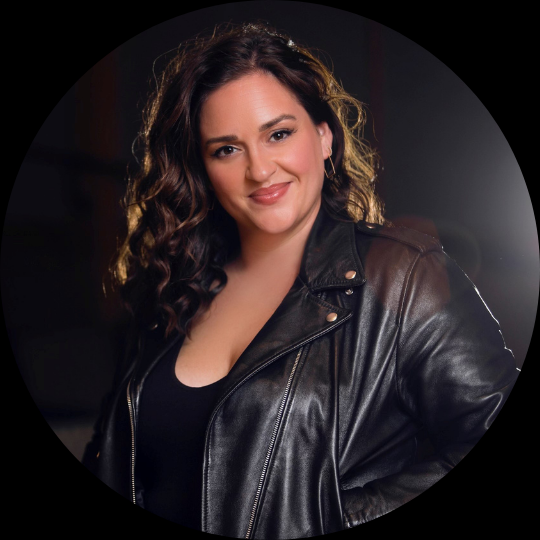
Ann Toomey, soprano
American soprano Ann Toomey, whom Naples Daily News proclaimed “is a brilliant Floria Tosca…[whose] rich voice projects power that doesn’t disintegrate under adversity” is enjoying a burgeoning and varied international career. In the 2026-27 season she joins Livermore Valley Opera for the title role in Suor Angelica, St. Barths Music Festival for Violetta in La traviata, a role debut, and in concert, Radio France on a tour of France presenting American musical theater.
Last season, Toomey made her debut as the title role in Madama Butterfly with Lyric Opera of Kansas City, performed the title role in Tosca with Florentine Opera and the role Ofglen in The Handmaid’s Tale with Detroit Opera. With the BBC Symphony, she appeared as soprano soloist in the critically acclaimed opera/rock pastiche Queen at the Opera, which she premiered at the Grange Festival in summer 2025. Other concert appearances included Barber’s Knoxville: Summer of 1915 with Santa Fe Symphony, and Mahler’s Symphony No. 2 with Northwest Florida Orchestra.
Recent highlights include the title role in Suor Angelica at the Berlin Philharmonic, Tosca with Sarasota Opera, Opera Naples and Livermore Valley Opera, Woglinde in Das Rheingold with the Los Angeles Philharmonic, the Una poenitentium in Mahler’s Symphony No. 8 with the Nashville Symphony, Ortlinde in Die Walküre with Detroit Opera, Meg Page in Sir John in Love, Mrs. Lovett in Sweeney Todd with Dayton Opera, the Witch in Into the Woods with Tulsa Opera, Lady Billows in Albert Herring with the Princeton Festival, the title role in Die Kathrin with the Chicago Folks Operetta, Wolf Trap Opera for the title role in Susannah, at Lyric Opera of Chicago as Musetta in La bohème, First Lady in Die Zauberflöte, Fifth Maid in Elektra, the Mother in Amahl and the Night Visitors with Opera San Antonio, and First Lady in Die Zauberflöte with Glyndebourne Festival.
Toomey is a former member of the Ryan Opera Center at the Lyric Opera of Chicago, a Met Opera National Council Auditions national semifinalist and Richard F. Gold Career Grant Recipient. A native of Detroit, she splits her time between Michigan, Chicago and Los Angeles.
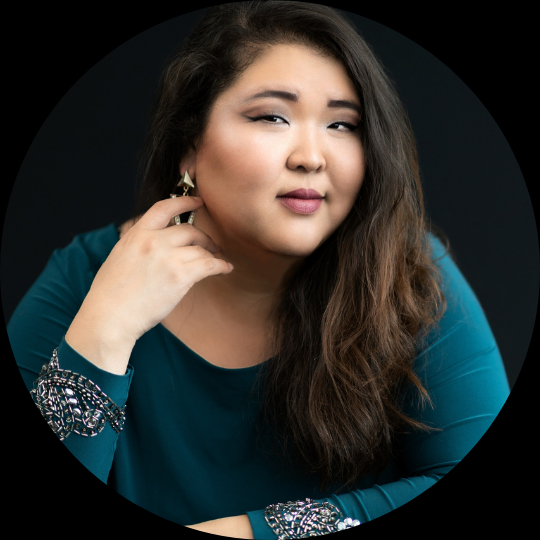
Alice Chung, mezzo-soprano
Lauded by Opera News as “one of America’s most gifted young singers,” Korean American mezzo-soprano Alice Chung is recognized for her “operatic tonal glamour” (Parterre) and being “a force of nature with a sound both powerful and appealing” (San Francisco Classical Voice).
Following her international debut in the summer of 2026 as Olga in a new production of Eugene Onegin at The Grange Festival in the U.K., Ms. Chung’s 2026-27 season includes the world premiere of Carla Lucero’s Tea in her return to Hawai’i Opera Theatre in 2027. On the concert stage this season, she appears in Verdi’s Requiem as Mezzo soloist with both the Columbus Symphony Orchestra and the Philadelphia Youth Orchestra.
Recent seasons have included a series of notable role debuts across both standard and contemporary repertoire, including Laura Adorno in La Gioconda with Pittsburgh Festival Opera, Amneris in Verdi’s Aida with Boston Lyric Opera, and Dinah in Bernstein’s Trouble in Tahiti with Annapolis Opera. Other highlights include the title role in Bizet’s Carmen with Hawai’i Opera Theatre, Mother in the world premiere of Derrick Wang’s Fearless with OperaDelaware, and Ox/Pig in the world premiere of The Big Swim with Houston Grand Opera.
Ms. Chung is a graduate of The Academy of Vocal Arts in Philadelphia, a 2025 Ravinia Steans Music Institute fellow, and a two-time alumna of the prestigious Merola Opera Program.
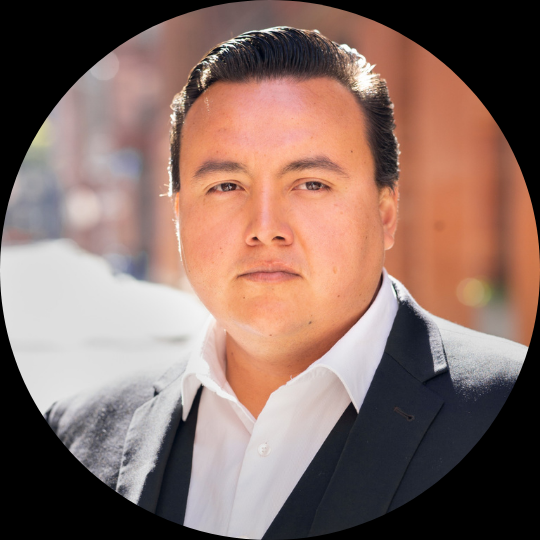
Moisés Salazar, tenor
Moisés Salazar is a Mexican-American tenor known for his rich romantic sound and broad range of vocal color. During the 2026-27 season, Mr. Salazar will debut as the tenor soloist in Verdi’s Requiem with the Columbus Symphony Orchestra. During recent seasons, he debuted the role of Pinkerton in the San Francisco Opera production of Madame Butterfly. As an Adler Fellow, he participated in intense role study, coaching, and constant performances built around small ensemble and salon styles, as well as full stage production. Mr. Salazar returned to Palm Beach Opera as Remendado (Carmen) and Nemorino (L’elisir d’amore - cover), and took the stage at Merola Opera Program as 1st Armored Man in Die Zauberflöte. During the 2021-2022 season, Moisés covered Buckley (The Tongue and the Lash) and Gherardo (Gianni Schicchi) at Opera Theatre of St. Louis. He also appeared as Tebaldo in I Capuleti e i Montecchi, Rodolfo (cover) in La bohème, both 1st Priest and 1st Armored Man in Die Zauberflöte, and Tamino (cover) in Die Zauberflöte at Palm Beach Opera.
2020’s engagements canceled due to COVID-19 included Elder Gleaton in Susannah and Frank in Awakenings at Opera Theatre of St. Louis. Moisés began singing with his family’s mariachi band, Trio Los Salazar, and is presently creating a concert series dedicated to Mexican folk music. Past roles include Ferrando (Così fan tutte), Señor Alcalde (The Summer King), Lysander (A Midsummer Night’s Dream), Borsa (Rigoleto), and Camille (The Merry Widow).
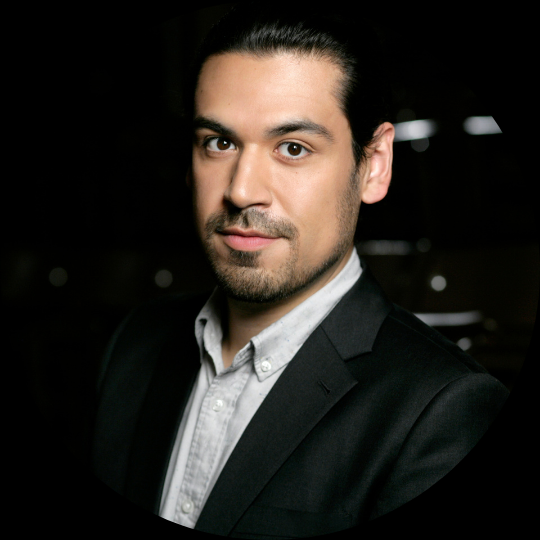
Richard Ollarsaba, bass-baritone
Mexican-American bass-baritone Richard Ollarsaba — praised by The Washington Post for his “meltingly smooth bass-baritone” — represented the USA in the 2019 BBC Cardiff Singer of the World competition. He was also a member of the prestigious Ryan Opera Center at Lyric Opera of Chicago for three seasons and a grand finalist in the 2013 Metropolitan Opera National Council Auditions.
Mr. Ollarsaba debuts two important roles during the 2026-27 season; Sharpless in Puccini’s Madama Butterfly (with Knoxville Opera) and Germont in Verdi’s La traviata for a hometown audience with Arizona Opera. On the concert stage, he also performs the bass solos of Verdi’s Requiem with the Columbus Symphony, under the baton of Maestro Rossen Milanov.
Recent highlights include Escamillo in Carmen with Nashville Opera, Hawai’i Opera Theatre, Charlottesville Opera, Opera Columbus, Glimmerglass Festival, Lyric Opera of Kansas City, Portland Opera, Kentucky Opera, Minnesota Opera, North Carolina Opera, Tulsa Opera, Annapolis Opera, and the Bar Harbor Music Festival; Count Almaviva in Le nozze di Figaro with Portland Opera, Pensacola Opera, Piedmont Opera, Knoxville Opera, New Zealand Opera, and Virginia Opera; Figaro in Le nozze di Figaro for the Sacramento Philharmonic & Opera and Minnesota Opera; Riolobo in Florencia en el Amazonas for North Carolina Opera; Miguel de Cervantes/Don Quixote in Man of La Mancha for Piedmont Opera; Enrico in Lucia di Lammermoor with Pensacola Opera, The titular Don Giovanni with Arizona Opera, Opera Grand Rapids, Opera Carolina, and Opera Hong Kong; The Life and Death(s) of Alan Turing (composed by Justine F. Chen) with Chicago Opera Theater; and Schaunard in La bohème with Jacksonville Symphony.
Requiem (1869–73)
by Giuseppe Verdi (Le Roncole, Duchy of Parma, 1813 – Sant’Agata, Italy, 1901)
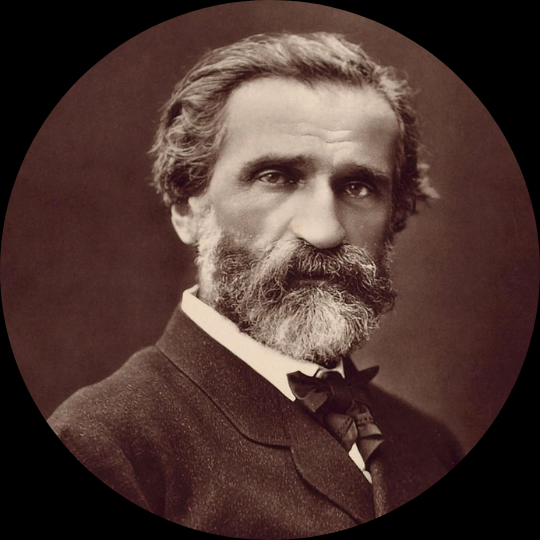 Most recent Columbus Symphony performance: Oct. 28-29, 2016; Rossen Milanov conducting.
Duration: 83’
Throughout his long life, Giuseppe Verdi devoted his energies almost exclusively to the writing of operas. He wrote only a few works in other forms, of which the Requiem is by far the most important. There is no doubt that Verdi felt a spiritual need to write it. Unlike most of the operas, the Mass of the Dead was not commissioned by anyone; the composition was Verdi’s own initiative, a project that occupied him for several years during which time he wrote no new operas.
As a matter of fact, there wasn’t just one project but two. In 1868, Gioachino Rossini passed away, and the last surviving member of the great triumvirate of opera composers before Verdi was gone (Bellini and Donizetti had died many years earlier). Verdi, well aware that a whole era of musical history had come to an end, took the initiative — with the help of his publisher, Tito Ricordi — to invite a group of composers to write a joint Requiem. The composers duly completed their work, but the performance fell through because of technical difficulties. (The Messa per Rossini remained unperformed until 1988.) Five years later, the death of the great novelist Alessandro Manzoni compelled Verdi to set the entire Mass, this time all by himself. Now nothing stood in the way of the performance; the premiere, at Milan’s San Marco church, was a resounding success and was followed by three more performances at La Scala, Milan’s famous opera house, as well as performances in many countries.
The very first word, “Requiem,” is whispered rather than sung by the chorus, to great dramatic effect. Soon after that, Verdi introduced the first of many great melodies. For “Te decet hymnus,” he wrote a hymn for unaccompanied chorus, whose contrapuntal imitations suggest Renaissance polyphony. After a return of the “Requiem aeternam” section (with choral whispers and lyrical violins) the soloists take over in the “Kyrie,” a fervent plea for mercy.
The high point of the Requiem is, without question, the monumental Dies irae, based on the famous medieval poem about the Last Judgment, attributed to Thomas of Celano (around 1250). The mighty strokes of the timpani and bass drum serve as a backdrop for one of the most powerful expressions of fear and anguish in the entire history of music. The eruption of intense emotions gradually yields to silent shudders at the words “Quantus tremor est futurus” (“How great a trembling there shall be”). Another violent explosion occurs at “Tuba mirum” (with onstage and offstage brass), followed by a whisper expressing the “stupefied” (stupebit) state in which Death and Nature find themselves at the sound of the trumpet. The same extremes characterize the mezzo-soprano solo “Liber scriptus” (“A Written Book”), which culminates in a reprise of the movement’s dramatic opening.
The mood changes in “Quid sum miser” as the tempo slows down and the mezzo-soprano begins a beautiful lyrical melody surrounded by the figurations of a solo bassoon. This is where the poem suddenly switches to first person singular: “What can a wretch like me say?” The section evolves into a profoundly moving quartet between three vocal soloists (soprano, mezzo, tenor) and the solo bassoon.
Bass voices and low-pitched instruments intone the solemn “Rex tremendae majestatis,” answered by an ethereal melody at “Salva me.” The “Recordare” is a heart-rendingly beautiful duet for female voices. The tenor soloist sings “Ingemisco” in a tone that is in turn tender and heroic; the bass’s “Confutatis maledictis” again links images of turmoil and salvation in a dramatically poignant way. The lyrical conclusion of the bass aria is brusquely interrupted by another reprise of the movement’s opening with its formidable drumstrokes. The “Dies irae” concludes with the exceptionally moving “Lacrymosa.”
The main melody of the Offertory is introduced by unaccompanied cellos and subsequently taken over by the soloists. The middle section “Hostias et preces” is a quiet prayer for eternal life, followed by an expanded return of the previous section. The movement ends quietly, rising from the lowest register of the voices to the highest, and fading away with the sound of the muted strings.
The Sanctus is a fugue for double chorus, in which the texts “Sanctus,” “Osanna,” and “Benedictus” are all combined, contrary to traditional practice. The vigorous contrapuntal activity stops in the final section of the movement, where the melody is presented in augmentation (twice as slowly as the first time) in preparation for a grandiose ending.
The beginning of the austere Agnus Dei alludes to (though does not actually quote) Gregorian chant with its unaccompanied single vocal line, sung by the soprano and mezzo soloists in parallel octaves. The melody is repeated by the chorus. The instruments join in during further repeats of the melody, alternating between soloists and chorus — including a breath-taking quintet of two singers and three flutes, followed by a choral response and a short, highly emotional coda.
In Lux aeterna, the idea of eternal light is symbolized by the tremolos (fast repeated notes) of the violins and — later in the movement — by the piccolo’s striking staccato motif (one moving in well-separated fast notes). A warm melody, first introduced by the bass soloist, is associated with the words “requiem aeternam” (“eternal rest”). Three of the four soloists (mezzo, tenor, and bass) come together in a harmonically intricate, unaccompanied trio to praise God for His mercy.
The Libera me movement, scored for soprano solo and chorus, opens with some speech-like recitation. The image of the judgment by fire soon prompts an impassioned outburst, and the trembling of the terrified soul is rendered by a very unsettling motion in descending half-steps. A brilliant and fiery fugue crowns the movement, but the last word, like the first, is barely whispered: the work ends on an introspective note rather than with grand gestures.
Note by Peter Laki
1. Requiem and Kyrie (Chorus) 2. Dies Irae (Chorus) Quantus tremor est futurus, Tuba mirum spargens sonum (Bass solo) (Mezzo-soprano solo and chorus) Judex ergo cum sedebit, Dies irae, dies illa, (Soprano, Mezzo-soprano, Tenor) (Solo quartet and Chorus) Quaerens me, sedisti lassus, Juste judex ultionis, (Tenor) Qui Mariam absolvisti, Preces meae non sunt dignae, Inter oves locum praesta, (Bass and Chorus) Oro supplex et acclinis, (Solo quartet and Chorus) 3. Offertory (Solo quartet) Hostias et preces tibi, Domine, Libera animas omnium fidelium defunctorum 4. Sanctus (Chorus) 5. Agnus Dei (Soprano, Mezzo-soprano, and Chorus) 6. Lux aeterna (Communion) (Mezzo-soprano, Tenor, and Bass) 7. Libera me (Soprano and Chorus) Tremens factus sum ego et timeo Dies irae, dies illa, Requiem aeternam dona eis, Domine, Libera me, Domine, de morte aeterna,
| Give them eternal rest, o Lord,and let perpetual light shine upon them. The day of wrath, that day, How great a trembling there shall be The trumpet, sending its wondrous sound
When the Judge takes His place, The day of wrath, that day,
King of terrible majesty,
Seeking me, you descended wearily, Just Judge of Vengeance,
You who absolved Mary [Magdalene] My prayers are unworthy, Grant me a place among the sheep,
I pray, suppliant and kneeling,
Lamb of God, you who take away the sins of the world, grant them rest. May eternal light shine upon them, o Lord, Deliver me, o Lord, from eternal death I am seized with fear and trembling The day of wrath, that day, Give them eternal rest, o Lord, Deliver me, o Lord, from eternal death Deliver me, o Lord, from eternal death |