Run Time: Approx. 19 minutes
Darius Milhaud took his interest in jazz a step further than many of his compatriots, traveling to America and the streets of Harlem in search of real authenticity. While there, he found inspiration not only in the music, but also in the broader African cultural and mythological traditions. Upon his return to Paris in 1923, the first major work to emerge from his experience was the ballet La création du monde (The Creation of the World).
Milhaud was not the only one interested in African culture and art. Losses from the war had shaken many people’s belief in the superiority of Western Civilization, sparking an interest in the exoticism of the French colonies. La création du monde draws on author Blaise Cendrars’ Anthologie nègre for its retelling of African creation legends. Cubist painter Ferdinand Léger, who was himself interested in primitive African art, designed the sets.
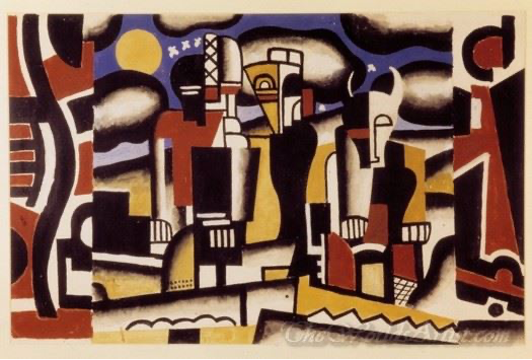
La création du monde by Ferdinand Léger
The ballet unfolds in five continuous sections, each depicting a stage of creation: chaos before the world’s beginning; the birth of plants and animals; the creation of man and woman; their awakening desire; and finally, a springtime scene of renewal, birth, and healing.
Perhaps the most obvious jazz transplant is the addition of the saxophone to the traditional orchestral complement. Its warbly voice infuses the music with an exoticism signaling that the Western world has been left behind. Throughout much of the work, a steady pulse, passed between the percussion, piano, and low strings, underlies the music, evoking the beat of a heart—the very essence of humanity.