The General (1926), released by United Artists
Directed by Buster Keaton and Clyde Bruckman
Produced by Joseph M. Schenck for Buster Keaton Productions
Starring Buster Keaton (Johnnie Gray), Marion Mack (Annabelle Lee), Glen Cavender, and Jim Farley
Running time: 75 minutes
Buster Keaton considered The General his finest film, and generations of critics and filmmakers have agreed. First released in December 1926, the film reaches its centennial this year. The story is based on the 1862 Andrews Raid, a Civil War episode in which Union soldiers seized a Confederate locomotive in Georgia. Keaton tells it from the Southern side, casting himself as Johnnie Gray, a railroad engineer whose two loves are his locomotive and Annabelle Lee. Even so, the film avoids the political issues of the war. Keaton uses the historical setting as the frame for a large-scale action comedy.
Keaton insisted on authenticity, using real locomotives, filming on location in Oregon, and performing his own stunts on and around moving trains with no special effects to protect him. The result is a film that is as thrilling as it is funny, with its comedy built on precise timing and physical skill. The General was not a success on its release, but it is now regarded as one of the greatest films ever made. Tonight’s presentation uses a recent 4K restoration.
As with all of his presentations, Christian Elliott’s score for The General is compiled from music published before the film’s release — what a skilled theatre organist would have drawn on in 1926. Selections from opera, ballet, symphonic, and theatre repertoire are joined by controlled improvisation, so the music follows the action on screen and heightens the comedy and suspense without drawing attention away from the film. Listen for “Dixie” representing the South, “Yankee Doodle” representing the North, and “Felicia” (Vernon Eville, 1916) as the love theme for Johnnie and his sweetheart, Annabelle Lee.
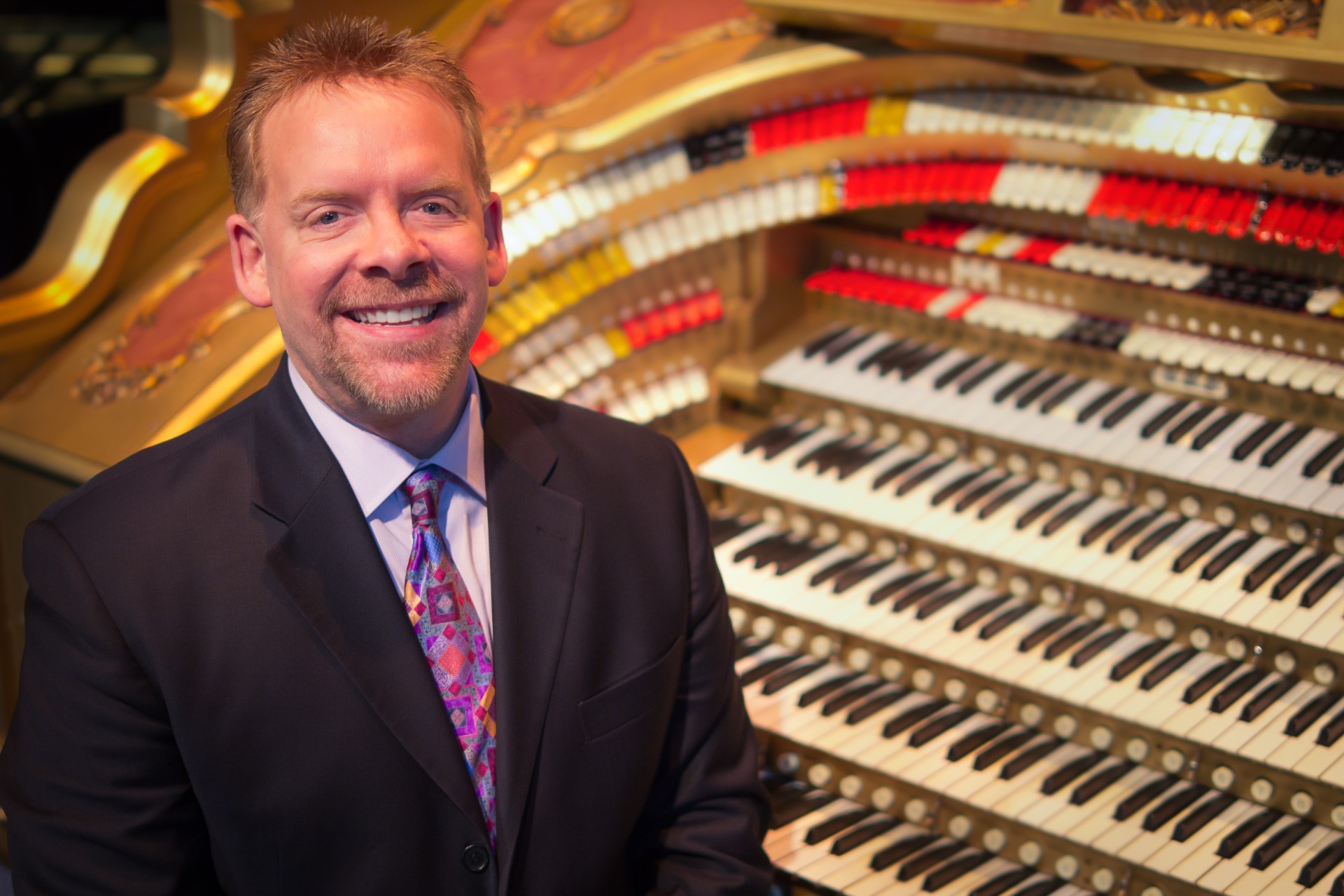
Christian Elliott is one of today’s premier theatre organists, focused on the historically authentic presentation of silent film accompaniment. The protégé of legendary silent film organist Gaylord Carter, he carries forward the tradition of film accompaniment as passed down by one of the finest practitioners of the silent film era. His dedication ensures that this nearly lost art continues to thrive, offering audiences an authentic glimpse into the cinematic experiences of the past.
Over the course of his career, Christian has performed extensively at prestigious venues, including the Packard Foundation’s Stanford Theatre (Palo Alto, California), UCLA, the Cinequest and San Francisco Silent Film Festivals, the San Luis Obispo International Film Festival, as well as with the San Diego Symphony, Los Angeles Conservancy, and the Academy of Motion Picture Arts and Sciences. Since 2015, he has been scoring and presenting silent films for the Seattle Paramount Theatre’s popular “Silent Movie Mondays” series.
In addition to silent film accompaniment, his contributions to the world of theatre organ music include numerous solo performances across the United States and six solo recordings that showcase his passion and skill in the art form. His artistry and dedication were recognized in 2009 when he was named “Organist of the Year” by the American Theatre Organ Society.
A classically trained organist, Christian graduated with honors from Vanguard University of Southern California with degrees in Music and Business Administration, served as Organist at Menlo Park Presbyterian Church for over three decades, and studied with celebrated organist and composer Richard Purvis.
Through his commitment to historical authenticity and his passion for engaging modern audiences, Christian Elliott ensures that the magic of silent film accompaniment and theatre organ music remains both vibrant and relevant today.
For the first three decades of cinema, nearly all films were presented with live musical accompaniment. Over time, the approach to film scoring evolved, becoming more sensitive and complex. Since silent films lack dialogue or sound effects, their musical score is critical to the audience’s experience. In fact, during the peak of urban movie palaces, accompanists were sometimes billed higher than the film itself, with audiences choosing movies based on the musician performing.
The experience of watching a silent film today is most impactful when the accompaniment authentically replicates the style it would have received in its original era. A film released in 1926, like The General, deserves a musical score that mirrors what a skilled cinema pianist or organist would have performed at the time. To preserve historical integrity, all music compiled for the score should have been published before the film’s release and should complement the film’s narrative. Modern genres — such as progressive ’50s jazz or exaggerated percussion rhythms — undermine the historical authenticity of the art form.
This approach honors the film’s origins, respects the era of its production, and transports modern audiences back in time. It enriches the viewing experience, allowing audiences to appreciate the film’s merits alongside the immersive authenticity of live musical recreation.
When done well, historically accurate accompaniment heightens the action, shapes mood, and stirs emotion while remaining unobtrusive. Audiences might be surprised to learn that good film accompaniment involves little improvisation. Feature-length films demand carefully compiled scores using music from opera, ballet, symphonies, sacred music, and descriptive theatre pieces, with controlled improvisation seamlessly linking these elements. As audiences often tell Christian after a performance, “I got so lost in the film that I forgot you were there!”
Bert & Candace Forbes
Francie Levy & Larry Akey - for love of organ music
Maryellen & Michael Simkins