Bartók & Boléro
Sponsored by Masterworks Circle of Friends
Aram Demirjian, conductor
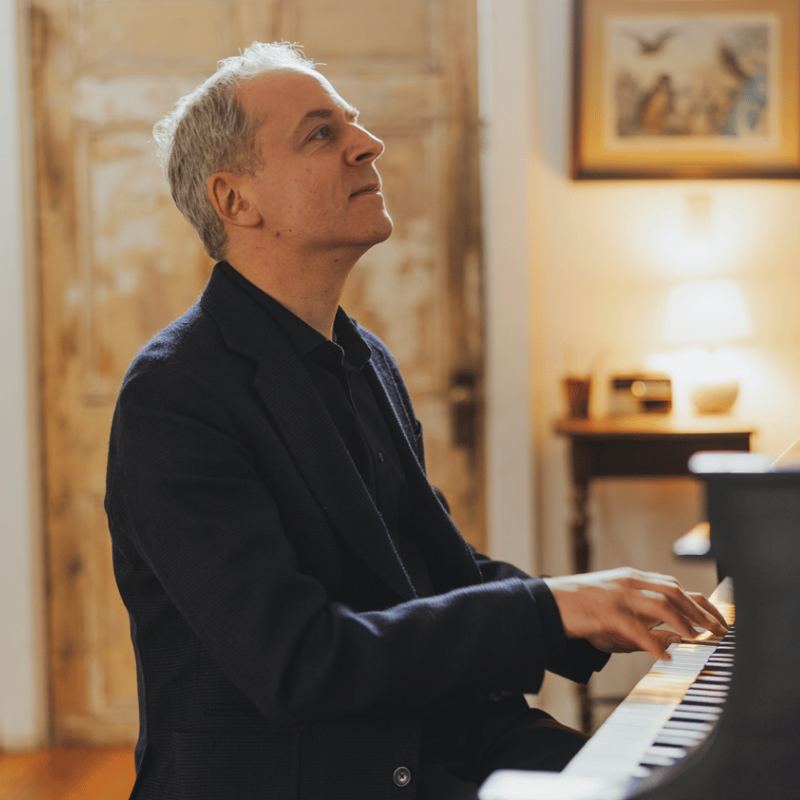
Jeremy Denk, piano
CLAUDE DEBUSSY (1862-1918)
Clair de lune
from Suite bergamasque (1890-1905) (arr. Caplet)
BÉLA BARTÓK (1881-1945)
Piano Concerto No. 2, Sz.95 (1931)
I. Allegro
II. Adagio - Presto - Più Adagio
III. Allegro molto
Jeremy Denk, piano
Intermission
OLIVIER MESSIAEN (1908-1992)
L’Ascension: Four symphonic meditations (1933)
I. The Majesty of Christ Asking for His Glory from His Father
II. Serene Hallelujahs of a Soul Desiring Heaven
III. Hallelujah on the Trumpet, Hallelujah on the Cymbal
IV. Prayer of Christ AscendingToward His Father
MAURICE RAVEL (1875-1937)
Boléro (1928)
By Ken Meltzer
From the KSO blog...
The acclaimed pianist makes his Knoxville Symphony Orchestra debut November 12–13 with one of the most demanding concertos in the piano repertoire. But for Denk, the music is about much more than technical virtuosity.
Béla Bartók’s Piano Concerto No. 2 has a reputation as one of the most challenging works ever written for piano and orchestra. But when acclaimed pianist Jeremy Denk discusses the concerto, he is quick to emphasize its joy rather than its formidable technical demands.
“I do think difficult is a bad word because the piece is finally very joyful and celebratory,” Denk said.
Denk, a recipient of the MacArthur Fellowship and Avery Fisher Prize, makes his Knoxville Symphony Orchestra debut November 12–13 at the Tennessee Theatre. A New York Times bestselling author, he is celebrated for performances that combine intellectual curiosity with musical imagination. Bartók’s Second Piano Concerto, completed in 1931, demands extraordinary precision, stamina and agility. Denk acknowledges its technical challenges but emphasizes that the music’s exuberance should never be overshadowed by the effort required to perform it.
His understanding of Bartók was shaped in part by his studies with Hungarian pianist György Sebők. Denk recalls Sebők describing the concerto’s first movement as a combination of a Bach Brandenburg Concerto and a Hungarian folk dance, capturing both its intricate construction and rhythmic vitality. The concerto is filled with propulsive rhythms and memorable melodies. “The first tune is so catchy in this piece that whenever I’m practicing it, I hear it for weeks and months afterwards. It’s in my head,” Denk said.
The relationship between soloist and orchestra is equally dynamic. Rather than simply accompanying the piano, the orchestra engages in a lively exchange, with instruments responding to and sometimes competing with the soloist. KSO Music Director Aram Demirjian shares Denk’s enthusiasm. “There is a supreme joy bursting out of this particular piece,” he said, emphasizing the concerto’s energy and rhythmic drive.
Bartók’s concerto is the centerpiece of the KSO’s Bartók and Boléro program, which also features Debussy’s Clair de lune, Messiaen’s L’Ascension and Ravel’s Boléro. Together, the works explore the remarkable range of colors and expressive possibilities of the symphony orchestra. For Denk, the concerto may be a monumental challenge at the keyboard, but its lasting impression is something far more immediate: music filled with movement, invention and joy.