Founders Concert
featuring the Senior Symphony
Carter Simmons, Artistic and Music Director
Saturday, February 21, 2026 | 7:00 pm
Sharon Lynne Wilson Center | Brookfield, Wisconsin
ARAM KHACHATURIAN (1903-1978)
"Adagio of Spartacus and Phrygia" from the ballet Spartacus (1954)
ZOLTÁN KODALY (1882-1967)
Háry János Suite (1926)
- "Prelude. The Fairy Tale Begins"
- "Viennese Musical Clock"
- "Song"
- "The Battle and Defeat of Napoleon"
- "Intermezzo"
- "Entrance of the Emperor and His Court"
Intermission
DMITRI SHOSTAKOVICH (1906-1975)
Symphony No. 5, Op. 47 (1937)
- Moderato
- Allegretto
- Largo
- Allegro non troppo
Concertmasters and woodwind, brass, and percussion musicians are listed in alphabetical order.
VIOLIN
Anna Lena Derocher, Concertmaster
Christianna Ebel, Concertmaster
Stephanie Neely, Concertmaster
Henry Snavely, Concertmaster
Salvador Stein, Concertmaster
Colette Wiering, Concertmaster
Andrew Behring
Yiwen Ma
Rosy Kojis
Milo Elliott
Sophia Collins
Leif Young
Joy Zhao
Chloe Chen
Lexi Mabini
Nishanth Suthan
Carl Gauslow
Samuel Botshtein
Bode Li
Akshay Bharathwaj
Ilina Joshi
Simon Doerr
José Ortiz
Bianca Enriquez
Elina Cheng
Sarah Harkavy
Shervin Ghanbari
Daniel Li
Sloan Becker
Ishani Joshi
Vera Le Fort
Willa Grimm
Harvey Whitney
Monroe Emling
Rayna Jellish
Lawton Schick
Ellasyn Korb
Tess Ganski
James Pienkos
Nathaniel Bunn
Sophia Ball
Anna Koney
Lilah Dunlop
Julia Bell
Benjamin De Torre
Alexandra Wang
Adelaide Davis
VIOLA
Jennifer Raychel, Principal
Max Hemann, Associate Principal
Lance Westmore, Associate Principal
Grace Pett
Iris Thoreson
CJ Jacobsen
Eleanor Froelich
Evelyn Kenny
Levi Stein
Zev Stein
Anya Prakash
Jonathan Del Razo
Ruby Tilapa
CELLO
Anderson Brewer, Principal
Josiah Chu
Aurnob Ghose
Katherine Steele
Brandon Liao
Lanting Shi
Carolina Kasymova
Mariana Welsh
Charlie Johnson
Josiah Anderson
Maggie Barrett
Kyra Jester
Joanee Rosploch
BASS
Ania Kurowski, Principal
Kasen Menke, Associate Principal
Lillia Warnes
Abraham Prusha
Luke Nora
HARP
Emmaline Strong
PIANO and CELESTE
Charlie Plante
FLUTE
Maribel Cortez
Carli Hannes
Johana Kim
Lucy Merrill
Lily Talbot
PICCOLO
Maribel Cortez
Johana Kim
Lucy Merrill
OBOE
Serena Ball
Alan Bennett
Kelly Li
ENGLISH HORN
Serena Ball
Alan Bennett
CLARINET
Hanh Bui
Madeline Makarewicz
Nikola Sindjelic
Emily Thill
E-FLAT CLARINET
Madeline Makarewicz
BASSOON
Elise Brown
Gavin Hansen
Annabelle Rook
CONTRA BASSOON
Elise Brown
HORN
Cameron Coraggio
Sarah Demar
Simon Field
Emma Manion
Leah Shatzer
TRUMPET
Evelyn Brandel
Andrew Elliott
Max Marshal
Redding Mortwedt
Katharine Wilhelm
TROMBONE
Kayli Abbott
James Duong
Louis Gones
TUBA
Lane Wendorf
TIMPANI
Kyler Katanik
PERCUSSION
Mason Clendenning
Zoe Johnson
Kyler Katanik
Charlie Plante
Aram Khachaturian (1903–1978) | “Adagio of Spartacus and Phrygia” from the ballet Spartacus (1954)
Composed in 1954, Spartacus is one of Aram Khachaturian’s most celebrated works and a cornerstone of 20th-century ballet repertoire. The ballet tells the story of Spartacus, the Thracian gladiator who led a slave uprising against the Roman Republic. Khachaturian’s score—richly melodic, emotionally direct, and vividly orchestrated—brings sweeping drama and humanity to this ancient tale.
The “Adagio of Spartacus and Phrygia” is the emotional heart of the ballet. It portrays a tender moment between Spartacus and his wife, Phrygia, as they dream of freedom amid oppression and turmoil. In this intimate scene, Khachaturian turns from the grandeur of battle and spectacle to a deeply personal expression of love and longing.
The movement opens with a broad, yearning melody, introduced by the oboe unfolding over a gently pulsing accompaniment. Khachaturian’s gift for expansive, singing lines is fully on display; the music breathes with both vulnerability and quiet strength. As the Adagio builds, lush harmonies and surging orchestral textures heighten the emotional intensity, suggesting both the couple’s devotion and the weight of the world pressing upon them.
Khachaturian’s orchestration is cinematic in scope—arpeggios shimmer, strings soar, and the full orchestra rises in waves of passion before subsiding into moments of fragile calm. The music balances grandeur with intimacy, capturing not only romantic love but also the hope for liberation that defines Spartacus’s story.
Today, the “Adagio of Spartacus and Phrygia” stands as one of Khachaturian’s most beloved excerpts. Its sweeping lyricism and heartfelt emotion continue to resonate with audiences, offering a powerful reminder that even in the darkest of circumstances, love and hope endure.
Zoltán Kodály (1882–1967) | Háry János Suite (1926)
The Háry János Suite by Zoltán Kodály is a colorful orchestral work drawn from his comic opera Háry János, premiered 100 years ago in Budapest. The opera—and the suite that followed—centers on Háry, a boastful Hungarian soldier who spins wildly exaggerated tales of his heroic adventures. Though his stories are clearly larger than life, Kodály treats the character with affection, celebrating the humor, imagination, and spirit of Hungarian folk culture.
Kodály, a pioneering ethnomusicologist alongside Béla Bartók, spent years collecting and studying authentic Hungarian folk songs. That deep connection to rural musical traditions permeates the Háry János Suite. Folk-inspired melodies, dance rhythms, and vibrant instrumental colors give the music its unmistakable national character.
The suite consists of six movements:
I. Prelude: The Fairy Tale Begins
The work opens with a surprising orchestral “sneeze”—a humorous nod to the superstition that a sneeze confirms the truth of a story. From there, Kodály introduces a stately, nostalgic melody that evokes the warmth and simplicity of village life, setting the stage for Háry’s fantastical storytelling.
II. Viennese Musical Clock
This playful movement depicts the mechanical charm of a musical clock in the imperial court of Vienna. Delicate textures and precise rhythms create a sense of ticking gears and dancing figurines, blending elegance with gentle satire.
III. Song
A lyrical and tender interlude, this movement highlights Kodály’s gift for melody. Often featuring a beautifully expressive solo line, it reflects the heartfelt sincerity beneath Háry’s grand tales.
IV. The Battle and Defeat of Napoleon
Here Kodály’s imagination runs wild. With bold brass, driving rhythms, and vivid orchestration, the music portrays Háry’s outrageous claim that he single-handedly defeated Napoleon. Martial themes and dramatic contrasts add both excitement and humor.
V. Intermezzo
One of the suite’s most beloved movements, the Intermezzo is a spirited Hungarian dance. Its rhythmic vitality and bright orchestral colors capture the exuberance of folk celebration.
VI. Entrance of the Emperor and His Court
The suite concludes with pomp and ceremony as the imperial court appears in full splendor. Yet even in its grandeur, Kodály’s music retains a wink of humor, reminding us that we are still inside Háry’s fantastical world.
The Háry János Suite remains a concert favorite for its irresistible melodies, imaginative storytelling, and brilliant orchestration—including the distinctive use of the cimbalom, a Hungarian hammered dulcimer that adds authentic folk color. Through humor and heart, Kodály invites audiences to delight in the power of imagination and the enduring vitality of national musical traditions.
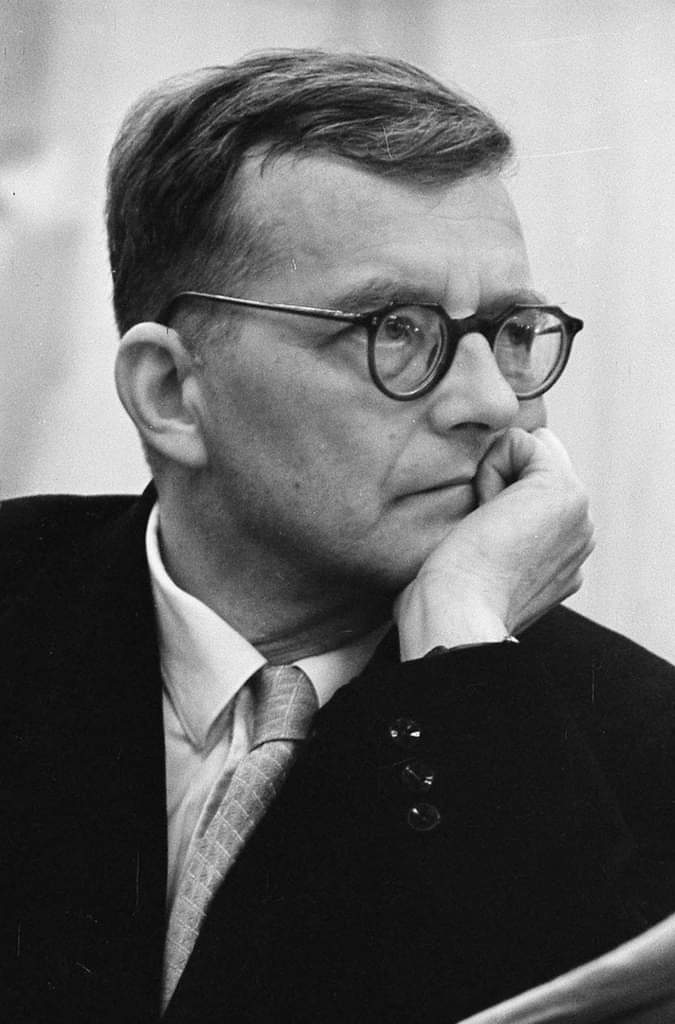
Dmitri Shostakovich (1906–1975) | Symphony No. 5 in D Minor, Op. 47 (1937)
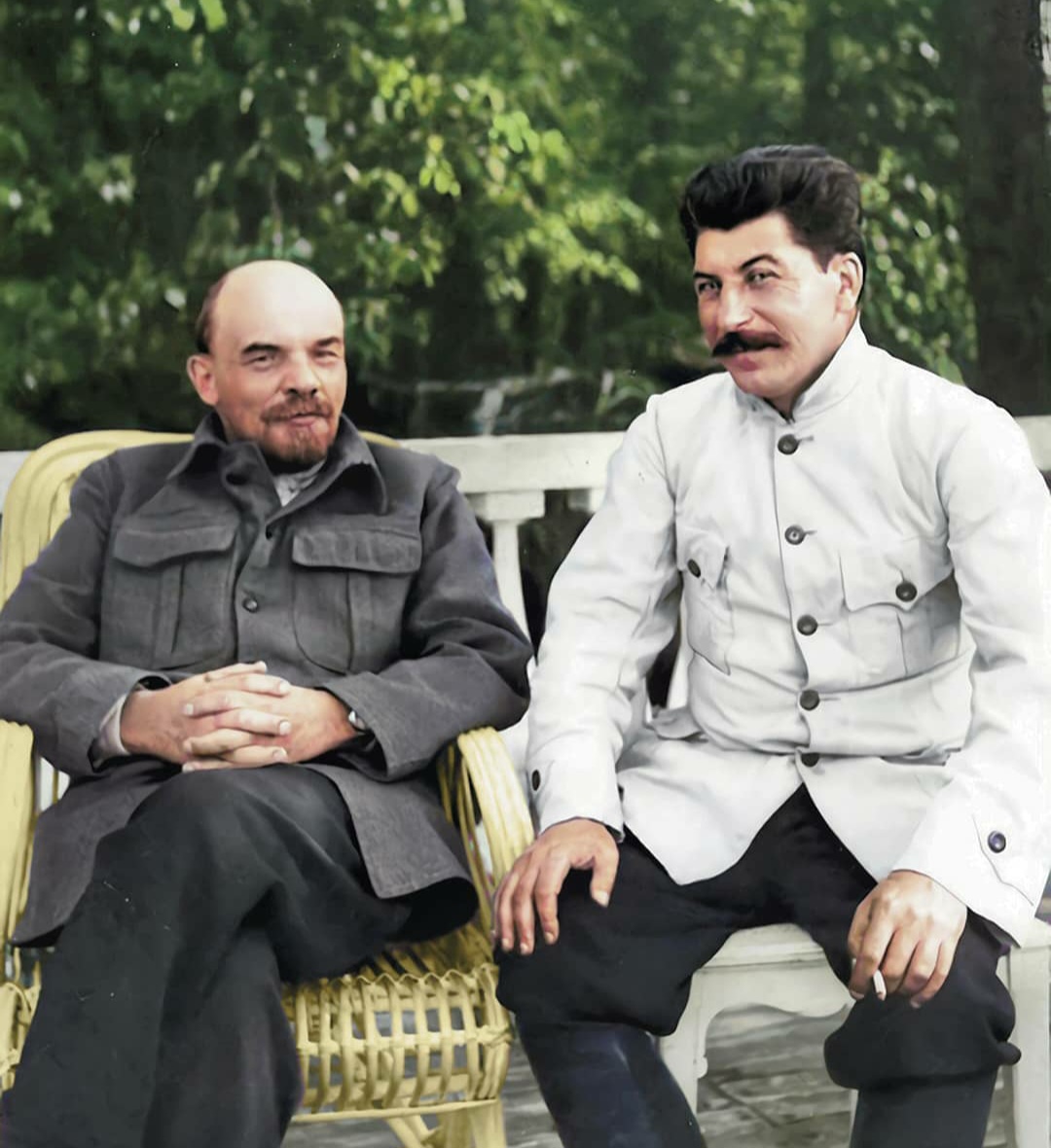
Composed in 1937, Dmitri Shostakovich’s Symphony No. 5 stands as one of the most powerful and complex artistic statements of the 20th century. Written during one of the darkest periods of Soviet history, the symphony emerged after Shostakovich had fallen sharply out of political favor. His opera, Lady Macbeth of the Mtsensk District, was denounced in the state newspaper Pravda after Joseph Stalin (pictured below with Vladimir Lenin) very publicly walked out of a performance in disgust. Through execution and imprisonment of dissenters, Stalin had consolidated supreme power as General Secretary of the Central Committee of the Communist Party of the Soviet Union giving him control of the Party, the secret police (NKVD), military and the economy. Stalin’s criticism placed Shostakovich in personal and professional danger during the height of the Great Terror.
Under immense pressure, Shostakovich withdrew his experimental Fourth Symphony and set to work on a new piece that would restore his standing. Officially described as “a Soviet artist’s practical, creative reply to just criticism,” the Fifth Symphony was premiered in Leningrad in 1937 to overwhelming public response. Audiences reportedly wept during the slow movement and applauded for more than half an hour at the end. Whether the symphony represents genuine compliance, subtle resistance, or a deeply personal expression of suffering remains a subject of debate—but its emotional impact is undeniable.
I. Moderato
The first movement opens with a stark, arresting theme in the strings, establishing a mood of tension and foreboding. Angular melodies and driving rhythms create a sense of struggle, building toward a shattering climax. The music then recedes into a haunted, fragile stillness, ending not with triumph but with uneasy restraint.
II. Allegretto
The second movement offers biting irony. Cast as a sardonic waltz or grotesque dance, it features exaggerated rhythms and sharp contrasts. Humor here feels uneasy—almost satirical, suggesting a masked critique beneath the surface.
III. Largo
The heart of the symphony lies in its expansive and deeply moving slow movement. With strings and harp creating a luminous backdrop, the Largo unfolds in long, aching lines. The music rises to an intense, almost spiritual climax before dissolving into a profound hush. For many listeners, this movement expresses collective grief and quiet resilience.
IV. Allegro non troppo
The finale begins with explosive energy and driving momentum. Bold brass and insistent rhythms propel the music toward what appears to be a triumphant conclusion in D major. Yet the character of this triumph has sparked decades of discussion. Is it sincere celebration—or forced rejoicing? The relentless repetition and sheer weight of sound leave room for ambiguity, as if victory has been achieved at great cost.
Shostakovich’s Fifth Symphony endures not only because of its historical significance, but because of its emotional depth and masterful construction. Balancing drama, irony, sorrow, and defiance, the symphony speaks across generations, inviting listeners to consider how art can survive, and even transcend, oppression.
We are grateful to these teaching artists who have worked with the orchestra this season:
Frank Almond, Johnston Family Artist-in-Residence
Margaret Butler
Brittany Conrad
Nicole Gabriel, Music Librarian
Paul Hauer
Dietrich Hemann
Megumi Kanda
Amanda Koch
Jon McCullough-Benner
Paris Myers
Colin O’Day
Pamela Simmons
Don Sipe, Brass Studies Director
Tobie Wilkinson
Adrien Zitoun
Donations to MYSO are the crucial funding source that allow us to nurture, challenge, and inspire young minds, profoundly changing lives and our community for the better. We are tremendously grateful for these important gifts.
This list recognizes gifts of $250 or more that were received from July 1, 2025, through January 15, 2026. We encourage you to contact Maria Fuller, Individual Giving and Stewardship Manager, at 414-267-2958, with questions or corrections—or to learn how to make a much-appreciated gift to MYSO.
Appassionato ($100,000 - $399,000)
Robert W. Heine Revocable Trust
United Performing Arts Fund
Maestoso ($20,000 - $99,999)
Anonymous
Bader Philanthropies, Inc.
Bert L. & Patricia S. Steigleder Charitable Trust
Bertha Surlow and Maurice S. Surlow Donor Advised Fund
Francie Luke Silverman Foundation
The Frank and Lucille Puncer Foundation
Greater Milwaukee Foundation - Adelaide F. Banaszynski Memorial Fund
Harri Hoffmann Family Foundation
Johnson Controls
Krause Family Foundation
Milwaukee Recreation Partnership for the Arts and Humanities
Erik & Carol Moeser
Olive and Eunice Toussaint Foundation
The Richard and Ethel Herzfeld Foundation
Richard P Walters Revocable Trust
The ROS Foundation
Windhover Foundation
Michael Zucker

Con Fuoco ($10,000 - $19,999)
Anon Charitable Trust
Patricia Calvy
Charles D. Jacobus Family Foundation
Greater Milwaukee Foundation - Margaret E. Sheehan Memorial Fund
Greater Milwaukee Foundation - Milwaukee Music Scholarship Fund
Jewish Women's Endowment Fund
Gerald Mainman
PNC Foundation
Ralph Evinrude Foundation, Inc.
Volo Consulting LLC
William N. and Janice V. Godfrey Family Foundation
Wisconsin Arts Board with Funds from the National Endowment for the Arts


Vivace ($5,000 - $9,999)
Anonymous
Anthony Petullo Foundation, Inc.
Bob Balderson
Donald & Donna Baumgartner
Drs. Brian and Laurel Bear
Anthony & Jodi Consiglio
Dorothy Inbusch Foundation
Einhorn Family Foundation
George and Jill Fahr
Greater Milwaukee Foundation- Judith A. Keyes Family Fund
Margarete & David R. Harvey
Joan G. and Michael R. Potter Foundation
Constance Kling
Laskin Family Foundation
John & Linda Lewenauer
Madeleine and David Lubar
Maihaugen Foundation
Milwaukee County Cultural Artistic and Musical Programming Advisory Council
Dudley Palmer & Katherine Brooks
Peck Foundation, Milwaukee LTD
Marsha Sehler
Tim and Sue Frautschi Charitable Fund at the Greater Milwaukee Foundation
Wisconsin Conservatory of Music, Inc.
Zilber Family Foundation
Animato ($2,500 - $4,999)
Anonymous
Baird Foundation
John & Marilyn Breidster
Croen Foundation, Inc.
Tom & Lynda Curl
Davidson and Harley Fund, Inc.
Dal & Jackie Drummer
Linda Edelstein
Abert & Storm Elser
Ernest and Sally Micek Family Foundation
Ted & Mary Kellner
Chistine Krueger
The Mike Van Handel Foundation
Milwaukee Arts Board and Wisconsin Arts Board, with funds from the State of Wisconsin
National Federation of Music Clubs
Weiss Family Foundation
Don & Kate Wilson
Cantabile ($1,000 - $2,499)
Anonymous
Helmut & Sandy Ammon
Karen Arbit
Rose Bice
Erin Casper Borissov
Bostik, Inc.
Camille A. Lonstorf Trust
Jennifer Chang
Robert Coletti and Karen Chung Hung Charitable Fund
Joe & Lisamarie Collins
Maelynn Colinco, M.D.
Myra L. Edwards
Brian & Janet Enters
Wendy & David Enters
Paula Fong
Barbara D. Froemming
Michael & Beth Giacobassi
Gustav and Gladys Kindt Foundation
Greater Milwaukee Foundation Eleanor N. Wilson Scholarship
HH Camp Foundation
Patty Hanz & David Feiss
Amy S. Jensen
Jewish Community Foundation - Richman Family Donor Advised Fund
Arthur & Jackie Josetti
Judith Ford's Fund
Greg & Linda Kliebhan
Jun Li
Jim & Sandy Metzger
Robert W. Baird Inc.
Shirely & Denise Roma
Roger & Sally Ruggeri
Steve Russ
William Scanlon
Liga Schubach
Carter & Pamela Simmons
Carlton Stansbury
Mark Stein
Kent & Marna Tess-Mattner
Mark & Penny Vance
Sarah Wendorf
Judith Wenzel & Thomas Ristow
White House of Music
Dr. D.F. Yoder
Con Espressione ($500 - $999)
Anonymous (3)
Veronica Ariens
Patricia Bice
Michael Becker
Mike & Sandy Blegen
Martha Brown & Tony Lam
Michael Cleary
Charter Manufacturing Company Foundation
Kenneth & Sue Copp
Linda Czestler
Steven & Elizabeth Duback
Bryan and Marilou Davido & Kids
Walter S. Dryburgh III
Ted & Beth Durant
Peter Eash-Scott
Rachel & Tim Enright
Dr. Kenneth Fabric
Galaxy Foundation, Inc.
Greater Milwaukee Foundation - MacDowell Club of Milwaukee Fund
Jason & Diep Graham
Margaret Hader
Linda Heesch
Nels & Kathy Jacobsen
JM Brennan, Inc
William Johnstone
Robin Johnson
William & Ruth Jones
Travis Kern
Steffany Kaminski
David & Sarah Kolo
Joseph Kutchera & Lulu Garcia
Eric Larson & Susan Lewis
Lincoln Property Company
Michael & Deb Linley
Randolph Lipchik & Ravenna Helson
Jennifer Mattes
Mark & Evonne Zalewski Charitable Fund
Mr. Daniel Neely & Ms. Xiaoting Hao
Kathleen Newell
Victor & Gladys O'Mahen
Mr. & Mrs. Pethke
Jan Pirozzolo-Mellowes
Mark & Anne Plichta
Carol Pohl
Caran Quadracci
Barton Reames
Wendy Richman & Tim Feeney
Ritsema & Howley Charitable Fund
Thomas J. Russell, MD
Jeffrey & Diane Roznowski
Jim and Susan Sajdak
Skycom Avionics Inc
Solventum
Joan Spector
Tera Stamm
Kenneth & Diana Stein
Erik & Erin Stilp
Jack Sutte & Audra Zarlenga
Wauwatosa-Mayfair Rotary Club
Jill & Mike Weinshel
WISN TV
Whalen/Burke Family Fund
Nancy Zeit
Grazioso ($250 - $499)
Anonymous (5)
Barbara & Paul Ahlf
Jayne Ayers
Paul Baerwald
Linda Bachowski
Lucy Bahn
Shana Baldassi
Doung & Molly Bell
Terry Bellinger
Boquist Family Fund
Scott Bowe
Joseph & Karen Branch
Janine Brzezinski
Buelow Vetter Buikema Olson & Vliet, LLC
Burton & Audrey Strnad Donor Advised Fund of the Jewish Community Foundation
Mark & Linda Carlson
Jim & Tricia Chirillo
Krista D'Amore
Thomas & Linda Dvorak
Nestor Dyhdalo & Diane Signatur
Eileen and Howard Dubner Donor Advised Fund of the Jewish Community Foundation of the Milwaukee Jewish Federation
Kurt & Cynthia Eisenmann
Brenda Engel
Michael Gauger
Jen Graetz
Greater Milwaukee Foundation - Enerpac Tool Group Community Outreach Fund
Marta & Doyne Haas
Paul & Kathy Hartke
Ed & Doris Heiser
Dietrich Hemann & Megumi Kanda
Carole Herbstreit
Dane Hoechst
The Home Depot Foundation
Bunny & Joel Honigman
Jewish Community Foundation - Marshall Zarem Donor Advised Fund
Mr. & Mrs. Kastrup
Dan & Becky Kennedy
Jacqueline Kern
Joseph Kmoch
Davd & Diane Knox
Bev Kraemer
Beth Krippendorf
Charles & Holly Krull
Sarah Lerand
Darren Luke
Madnek Family Giving Fund
Lois Malawsky
Vincent Martin
Christine McGee
Amina Merchant
Matthew & Leslie Michelic
Richard & Sharon Moore
Meilyn Nelson
Jody Newby
Thomas Norton
Laura Oldenburg
Brian Perkins
Michael Perrone
John & Jill Peterson
Matt & Katie Phillips
Johua Putnam
Ginny Quin
Steven & Rona Rindt
Chris & Angie Roloff
Valentina Sales
Andrew & Natalie Sajdak
Russ & Barb Simpson
Soik Family
Michael & Julie Sonnenberg
Kevin Stathus
Valerie Stein
Ellen Sternig
Jack Stewart
Jason Talbot
Paul Thorgaard
Philip Vacca
Gerald Washington
Anatole Wiering
Del & Kim Wilson
M. Darlene Wilson
Yanhong Xu
Michael & Eileen Zei
Amy Zientek