Saturday, October 17, 2026
7:30 PM
Thank You Show Sponsors!

Concert Sponsor

Co-Sponsors
Amy & David Chandler
English, Lucas, Priest & Owsley, LLP
Kentucky Tourism, Arts & Heritage Cabinet
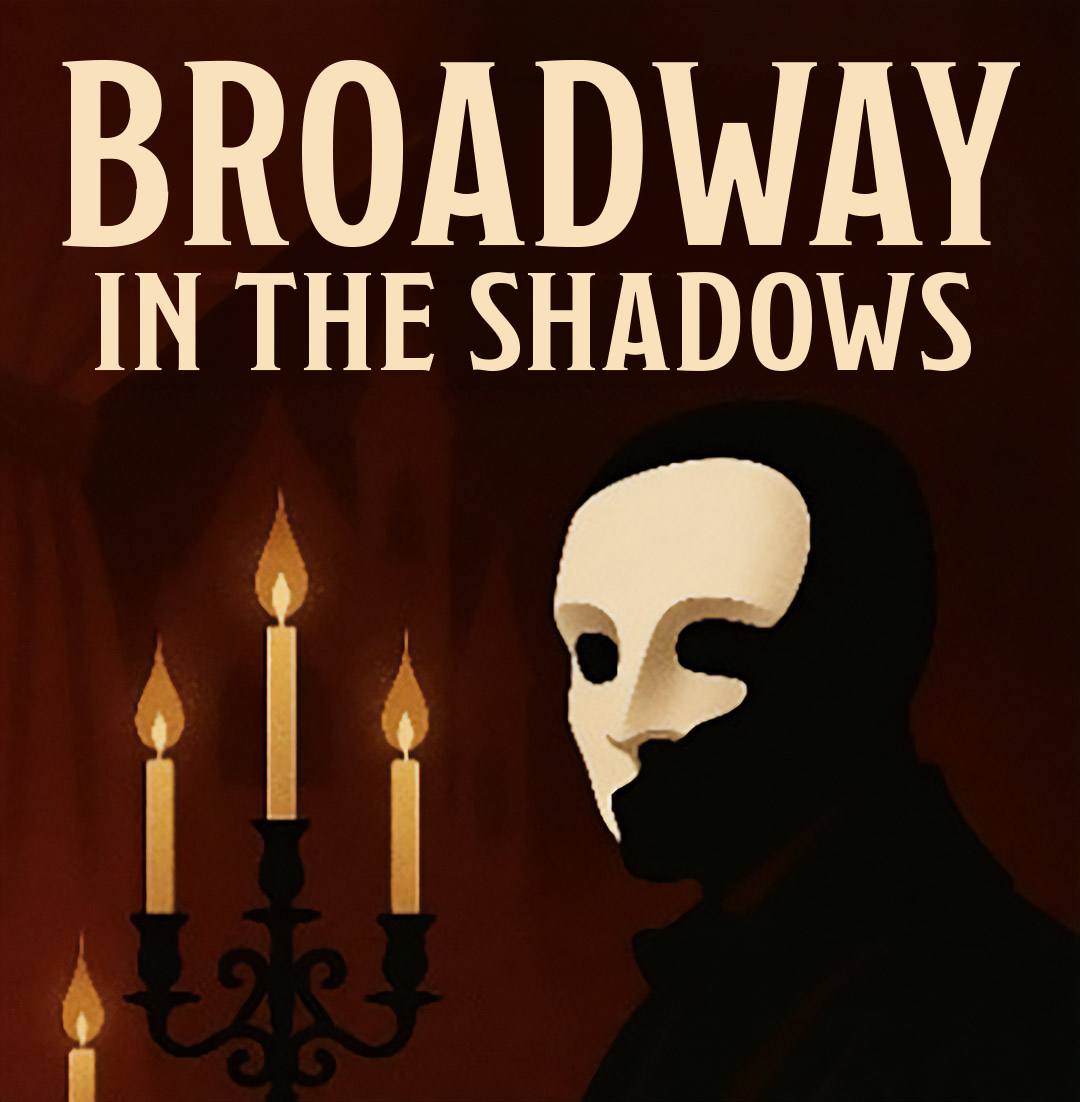
Welcome to the Shadows!
Tonight belongs to the villains. Broadway has always known that the bad guys get the best tunes: a barber with a grudge, a doctor with a secret, a sea witch with a contract, a masked genius beneath an opera house. Why do we love them? Because fear set to music is a thrill, not a threat. Some of tonight is truly dark. Some of it is wickedly funny. Some of it is so tender it hurts. All of it sounds best with the lights down low.
Scroll Down to Learn More, or Click Here!
Song List:
Psycho — Bernard Herrmann
Prelude and The Murder
Jekyll and Hyde — Frank Wildhorn
“This Is the Moment”
“Alive”
Sweeney Todd — Stephen Sondheim
“Johanna”
“Epiphany”
“Not While I’m Around”
The Witches of Eastwick — John Williams
Dance of the Witches
The Mystery of Edwin Drood — Rupert Holmes
“Moonfall”
Love Never Dies — Andrew Lloyd Webber
“’Til I Hear You Sing”
INTERMISSION
Tango del Ángel — Astor Piazzolla
La Muerte del Ángel
The Addams Family — Vic Mizzy
The Addams Family Theme
Little Shop of Horrors — Alan Menken
“Dentist!”
The Little Mermaid — Alan Menken
“Poor Unfortunate Souls”
The Threepenny Opera — Kurt Weill
“Mack the Knife”
Gayaneh — Aram Khachaturian
Sabre Dance
The Phantom of the Opera — Andrew Lloyd Webber
“The Music of the Night”
“The Phantom of the Opera”
Psycho
Bernard Herrmann: Prelude and The Murder
Alfred Hitchcock’s instruction was firm: “Please write nothing for the murder in the shower. That must be without music.” Bernard Herrmann wrote it anyway, and the director gave in the moment he heard it. Herrmann used strings alone, a black-and-white sound for a black-and-white film. First comes the Prelude, racing like a car fleeing down a dark highway. Then the stabs, when the violins become a scream. You know them already. They will still make you jump.
Jekyll and Hyde
Frank Wildhorn: “This Is the Moment” and “Alive”
One man, two songs, two souls. In “This Is the Moment,” Dr. Jekyll stands alone in his laboratory, about to test his formula on himself. The melody climbs and climbs, full of hope, and it has since been sung at the Olympics and the Super Bowl. Then the potion takes hold. In “Alive,” Edward Hyde bursts out and discovers that being wicked feels wonderful. Frank Wildhorn’s music trades dignity for raw, pounding appetite.
Sweeney Todd
Stephen Sondheim: “Johanna,” “Epiphany” and “Not While I’m Around”
A barber returns to Victorian London to take revenge on the judge who destroyed his family. At fifteen, Stephen Sondheim sat through a thriller twice to memorize Bernard Herrmann’s music, and you can hear the composer of Psycho in every uneasy chord. “Johanna” is pure young love, a sailor singing up at a window. “Epiphany” is the moment Sweeney snaps and his rage turns on the whole world. “Not While I’m Around” is the gentlest tune of the night, a boy’s promise to protect the woman who took him in. He has no idea whom he is singing to.
The Witches of Eastwick
John Williams: Dance of the Witches
Three bored New England friends wish for the perfect man. What arrives is the devil, and he looks exactly like Jack Nicholson. John Williams, the composer of Star Wars, gave him a dance: a whirling tarantella with sawing, devilish fiddles and a tune that keeps twisting where you least expect it. This is temptation with a grin, charming right up to the moment it isn’t.
The Mystery of Edwin Drood
Rupert Holmes: “Moonfall”
Charles Dickens died in 1870 with his last novel half written and its murder unsolved. Rupert Holmes finished it by letting the audience vote on the killer at every performance. “Moonfall” is the show’s haunted heart. The choirmaster John Jasper has written it for his young pupil Rosa Bud and has her sing it at her lesson. On the surface it is a shimmering love song. Listen closer and you hear his obsession, and a girl singing words that frighten her.
Love Never Dies
Andrew Lloyd Webber: “’Til I Hear You Sing”
What became of the Phantom after he vanished, leaving only a mask on a chair? Andrew Lloyd Webber called it “unfinished business.” Ten years on, the Phantom has fled Paris for the fairground lights of Coney Island. He is rich, powerful and miserable, unable to write a note without Christine’s voice. The tune rises through one key change after another, each a little more desperate. Lloyd Webber judged it “probably as strong a song as I’ve ever done.”
INTERMISSION
Tango del Ángel
Astor Piazzolla: La Muerte del Ángel
Tango was born on the rough edges of Buenos Aires, among knife fighters, and it has never lost the feeling that desire and danger are dancing together. Astor Piazzolla scandalized the city by mixing it with jazz and Bach. This piece comes from a 1962 play in which an angel comes down to a shabby tenement to heal its broken spirits and is killed in a knife fight. It begins as a fugue, Bach’s strict musical chase, with one jagged tune pursued by copies of itself. First the chase. Then the knives come out. Hold on to that rhythm: the next couple on the program would rather tango than breathe.
The Addams Family
Vic Mizzy: The Addams Family Theme
Passion with a hint of danger: nobody understands the tango better than Gomez and Morticia Addams. She murmurs a word of French, he cries “Tish! That’s French!”, and they are off across the floor. They have tangoed on television, on the movie screen, and on Broadway, where their duet is called “Tango de Amor.” That is the secret behind the cobwebs. This ghoulish household holds one of the most devoted marriages in American entertainment. Vic Mizzy caught the whole family in four notes and two finger snaps, and sang every voice in the chorus himself. Please snap along.
Little Shop of Horrors
Alan Menken: “Dentist!”
A man-eating plant, a skid row flower shop, and a score soaked in early-1960s rock and roll and doo-wop. “Dentist!” belongs to Orin Scrivello, D.D.S., a leather-jacketed bully who has found the one profession that pays him to cause pain. His mother, he explains, spotted his talent early. It is the oldest fear in the waiting room, turned into a rock and roll party.
The Little Mermaid
Alan Menken: “Poor Unfortunate Souls”
The team behind Little Shop then went to work for Disney, and they brought Broadway with them. Ursula the sea witch was modeled on the drag performer Divine, and Pat Carroll played her as a faded Shakespearean actress who now sells used cars. The song is exactly that: a sales pitch dressed up as a cabaret number. Ursula preys on a teenager’s longing, and by the last chorus she has Ariel’s voice in writing.
The Threepenny Opera
Kurt Weill: “Mack the Knife”
The most cheerful song ever written about a killer. Kurt Weill and Bertolt Brecht dashed it off days before their 1928 Berlin premiere, because a vain leading man wanted a bigger entrance. The trick is the smile: the tune strolls along, easy and charming, while the words count the bodies. Louis Armstrong, Bobby Darin and Ella Fitzgerald taught it to swing. Tonight’s version follows Frank Sinatra, who recorded it at 68, tipped his hat to all three by name, and then swung it harder with every verse.
Gayaneh
Aram Khachaturian: Sabre Dance
Count the blades tonight: a knife in a shower, a barber’s razor, a knife fight over an angel, the blade Mack keeps out of sight. Now come the sabres, and for once nobody gets hurt. Aram Khachaturian wrote the dance in a single eleven-hour sitting in 1942, a show of pure daring for a wedding scene. The real shadow fell on the composer. In 1948, the very year America made the Sabre Dance a jukebox craze, Stalin’s cultural chief denounced his music as “anti-people” and he was made to apologize in public. Tonight’s villains are make-believe. His was not.
The Phantom of the Opera
Andrew Lloyd Webber: “The Music of the Night” and “The Phantom of the Opera”
Most readers took the old French novel for a horror story. Andrew Lloyd Webber saw the “high romance” he had always wanted to write: a disfigured genius, hidden beneath the Paris Opera, in love with a young soprano. “The Music of the Night” is his seduction, the most tender music of the evening, sung by a very dangerous man. The title song is the descent to his lair: a pounding rock beat, a thundering organ, and Christine’s voice driven higher and higher, up to the highest note in the entire show. It ran on Broadway for 35 years, longer than any show in history.
FLUTE AND PICCOLO Heidi Alvarez Julie Ditzel OBOE AND ENGLISH HORN Jennifer Potochnic CLARINET John Cipolla James Goodhue BASSOON Andrew Witherington HORN Harry Ditzel Joey Demko Colin Dorman Jacob Andrews, assistant TRUMPET Reese Land Jonathan Stites TROMBONE Lee Blakeman Bill Huber BASS TROMBONE Jefferson Tunks TUBA Clint McCanless TIMPANI AND PERCUSSION Mark Berry PERCUSSION Marty Sharer Todd Sheehan | VIOLIN I Kameron Myers, Concertmaster Michael Chu Paul Tobias Drew Sarette Emilia Carter Steven Kinnamon Regina Mercurio Reagan Ballard VIOLIN II Julianna Waller-Martinez, Principal Lacy Jean Julie Lastinger Kristen Hicks Becca Major Aleka Chau VIOLA Henry Haffner, Principal Darrell Merryman Brian St. John Landon Case CELLO Sarah Berry, Principal Rebecca Price Ian Schroeder Eunice Kim BASS Paul Reich, Principal Greg Olson PIANO Diane Earle GUITAR John McCracken HARP Claire Burney |