Florence Price
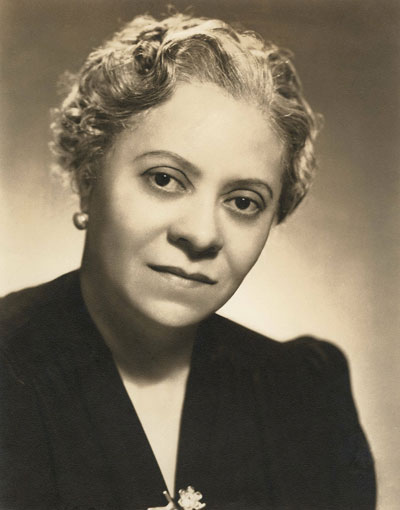
Born: April 9, 1888 in Little Rock, Arkansas.
Died: June 3, 1953 in Chicago.
Concert Overture No. 2
- Work Composed: 1943
- Premiere: 2018 in London by the BBC Concert Orchestra, conducted by Jane Glover
- Duration: approx. 15 minutes
Florence B. Price was a musical pioneer — one of the first African American students to graduate from the New England Conservatory of Music, the first African American woman to have a symphonic work performed by a major American orchestra, the first winner of the composition contest sponsored by the progressive Wanamaker Foundation.
Florence Beatrice Smith was born in 1888 into the prosperous and cultured family of a dentist in Little Rock, Arkansas, and received her first piano lessons from her mother, a schoolteacher and singer; Florence first played in public when she was four. She later also took up organ and violin, and at age fourteen was admitted to the New England Conservatory of Music in Boston. After graduating with honors in 1907, she returned to Arkansas to teach at Arkadelphia Academy and Shorter College and was appointed music department chair at Clark University in Atlanta in 1910. She returned to Little Rock two years later to marry attorney Thomas J. Price, and left classroom teaching to devote herself to raising two daughters, giving private instruction in violin, organ and piano, and composing.
In 1927, following racial unrest in Arkansas that included a lynching, the Price family moved to Chicago, where Florence studied composition, orchestration, organ, languages and liberal arts at various schools with several of the city’s leading musicians and teachers, and published four pieces for piano soon after settling there. In 1932, Price won First Prize in the Wanamaker Foundation Composition Competition for her Symphony in E minor. The performance of the Symphony on June 15, 1933 by the Chicago Symphony Orchestra was the first by a major American orchestra of a symphonic work by an African-American woman; the CSO repeated the performance at the Chicago World’s Fair later that year. She continued to compose prolifically — three more symphonies and two more piano concertos, a violin concerto, chamber, piano and organ pieces, songs, spiritual arrangements, jingles for radio commercials — and received numerous performances, including her arrangement of the spiritual My Soul’s Been Anchored in the Lord that Marian Anderson used to close her historic concert at the Lincoln Memorial in Washington, D.C. on April 9, 1939. Florence Price died in Chicago on June 3, 1953.
In 1943, as the country endured some of the darkest months of World War II, Price composed two Concert Overtures on well-known traditional spirituals — the first was based on Sinner, Please Don’t Let the Harvest Pass, the second on Go Down Moses, Nobody Knows the Trouble I've Seen, and Ev’ry Time I Feel the Spirit. There is no record that either was performed when it was new, and the scores ended up among the many manuscripts, letters, diaries and photographs discovered in 2009 during renovations of an abandoned house in St. Anne, Illinois, seventy miles south of Chicago, which had been Price’s weekend home and work studio. That nearly lost discovery is now preserved in the Florence Beatrice Smith Price Collection at the University of Arkansas. The Concert Overtures were restored by University of Arkansas librarians Tom Dillard and Tim Nutt, published respectively by G. Schirmer and Schott in 2018, and premiered on March 8th that year by the BBC Concert Orchestra, conducted by Jane Glover, on a concert observing International Women’s Day. The Concert Overture No. 2 is in two large sections — the first part treats the three spirituals in succession in a straightforward manner, while the second intertwines and slightly develops them in the style of a fantasia.
©2025 Dr. Richard E. Rodda