Harry T. Burleigh
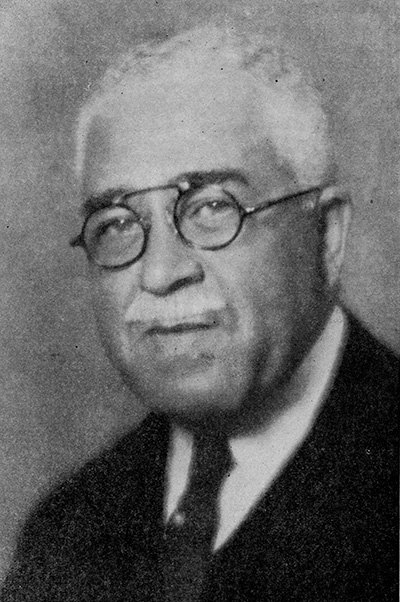
Born: December 2, 1866 in Erie, Pennsylvania
Died: September 12, 1949 in Stamford, Connecticut
From the Southland
- Composed: 1907
- Duration: approx. 17 minutes
Henry Thacker Burleigh was a pioneer in winning a place for African-Americans in this country’s concert music. Burleigh’s father died soon after Henry (sometimes also known as Harry) was born in Erie, Pennsylvania in 1866, so his mother entered service to the city’s prominent Russell family, who encouraged the boy’s talent for music by hiring him as the doorman for their household musicales so he could listen in. Burleigh began taking piano lessons and singing as baritone soloist with several of Erie’s churches as a teenager. In 1892, at age 26, he won a scholarship to the new National Conservatory in New York City, where he met Victor Herbert and became a student of Antonín Dvořák, then directing the school, who was deeply influenced by his performance of spirituals and other traditional American songs. (“I am convinced,” Dvořák said, “that the future music of this country must be founded on what are called Negro melodies. They can be the foundation of a serious and original school of composition to be developed in the United States.” Dvořák’s “New World” Symphony shows their influence on his music.) Burleigh’s appointment as soloist at St. George’s Episcopal Church in Manhattan in 1894 met with controversy, but he quickly became much admired there for the quality of his singing and for his many arrangements of spirituals, and he held the post for the next 52 years. Burleigh toured widely through America and Europe (King Edward VII summoned him for a command performance when he passed through London), and wrote nearly 300 songs and made a like number of concert arrangements of spirituals for solo voice and for chorus that were programmed by such leading artists as Schumann-Heink and McCormack. He was also a soloist at New York’s Temple Emanu-El (1900-1925), an editor for the prestigious music publisher Ricordi (1911-1949), and a charter member of ASCAP. On May 16, 1917, Henry T. Burleigh was presented with the Spingarn Medal of the National Association for the Advancement of Colored People for the highest achievement by an American citizen of African descent during the previous year.
Though Burleigh was famed for his songs, choral pieces and vocal arrangements, he also wrote a handful of instrumental compositions, including the piano suite From the Southland, composed and published in 1907. The work’s six movements are characterized by folk- and spiritual-inspired melodies, catchy rhythms and appealing harmonies, but they also signify a seldom-remarked aspect of Burleigh’s legacy — they were among the first works by an African-American composer available to a wide audience. Burleigh’s songs were first published in 1898 by the New York firm of G. Schirmer, which issued other of his works until he signed on with the brothers George and William Maxwell in 1902. William ran his own publishing house, which became the principal outlet for Burleigh’s music for the next decade; George was the New York representative for both the London music publisher Boosey & Hawkes and the Milan firm of G. Ricordi, publisher of Verdi and Puccini. George hired Burleigh as an editor for Ricordi, in which capacity he not only oversaw the publication of his own and other music, including the 1907 From the Southland, but freely offered his advice to his African-American colleagues and promoted the publication and performance of their compositions. George also worked during those years with Victor Herbert, Burleigh’s teacher, to establish an organization to protect the copyright of musicians, writers and publishers. When they founded the American Society of Composers, Authors and Publishers (ASCAP) in 1914, Henry Burleigh was among its charter members.
Louise Alston Burleigh, the composer’s wife, wrote the following poems in the vernacular of traditional spirituals to preface the six movements of From the Southland, which Danish conductor Stig Junge arranged for orchestra in 2017.
—Dr. Richard Rodda