Max Bruch
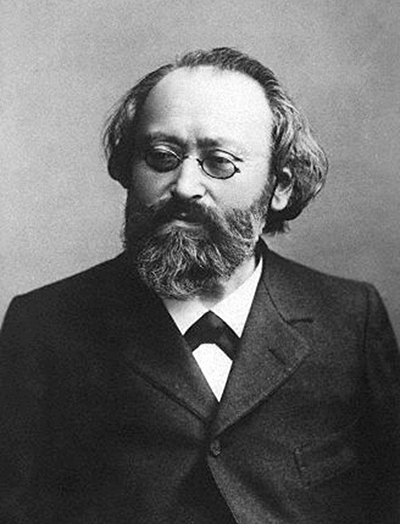
Born: January 6, 1838, Cologne, Germany
Dead: October 2, 1920, Friedenau, Germany
Concerto No. 1 in G Minor for Violin and Orchestra, Op. 26
- Composed: 1865–66
- Premiere: April 24, 1866, Koblenz, Germany, with the composer conducting and Otto von Königslöw, violin
- Instrumentation: solo violin, 2 flutes, 2 oboes, 2 clarinets, 2 bassoons, 4 horns, 2 trumpets, timpani, strings
- CSO notable performances: First: January 1897, Frank Van der Stucken conducting; Charles Gregorowitsch, violin. Most recent: April 2025, Case Scaglione conducting; Simone Lamsma, violin.
- Duration: approx. 24 minutes
Max Bruch had an extremely long career. At age 11 he started composing. At age 12 he won prize money for his string quartet, which enabled him to formally study composition, music theory and piano in his native Cologne. At age 20 he completed his first opera, and at age 83 he wrote his last works. Yet it is his Violin Concerto No. 1, Op. 26, written in his 20s, that first launched him to international recognition and earned status as one of the jewels of the violin solo repertoire.
In September 1865 Bruch was appointed to what he was sure would be his dream job: director of the Royal Institute for Music and of the Koblenz Subscription Concert series in Koblenz, Germany. Although his administrative duties kept him busy, he completed a handful of large-scale works for choir and orchestra during his first two years. When he took his first cautious steps composing in a newer, less familiar genre, he confided his doubts to his friend Hiller:
My violin concerto is progressing slowly — I do not feel sure of my feet on this terrain. Do you not think that it is, in fact, very audacious of me to write a violin concerto?
His work on the piece, which would eventually become known as his Violin Concerto No. 1 in G Minor, Op. 26, progressed in tentative fits and starts over the course of the next several years. By April 1866 he had completed his first draft, and had it performed. Unhappy with the results, he sent the manuscript to the violinist Joseph Joachim for advice.
The edits that Joachim sent back to Bruch consisted largely of violinistic concerns, adjustments to make the piece fit better under the hand on the fingerboard. But his recommendations regarding the pacing and forward motion of the piece display an astute grasp of musical architecture that only a trained composer would possess. He urged Bruch:
Finish it very quickly and then allow me, if you do not find my request too forward, to write out a solo part so that I may learn the concerto before we meet, which I hope will be soon.
Bruch made changes to the piece, which he detailed in a written response to Joachim. As helpful as he found the violinist’s suggestions, he was concerned about how others might perceive them.
Even after a private performance with the Royal Court Orchestra, conducted by the composer and with Joachim as soloist, Bruch was still not pleased with the work. Another violinist and composer, Ferdinand David, offered advice, but David’s revisions to the solo part were not entirely welcome. Even Bruch’s friend, the conductor Herman Levi, got involved. Levi stirred up Bruch’s own insecurities to such a point that their friendship chilled. After “nearly half a dozen” revisions the concerto was formally premiered.
The title of Bruch’s first movement Vorspiel, “prelude,” serves a dual purpose. It defines the first seven minutes of music in terms of its relationship to the Adagio that follows, but it also prepares the audience for its unorthodox structure, curbing expectations of a traditional sonata-form opening. In fact, there is no initial orchestra statement of the theme, just the exchange of musical ideas between orchestra and soloist that call to mind the opening of Beethoven’s Piano Concerto No. 5 from 75 years previous. The second theme offsets the brilliant opening with a simple folk tune that rises and soars.
The Vorspiel settles seamlessly into the second movement with no break, much as Mendelssohn had done in his Violin Concerto decades earlier. This Adagio is the heart of the work, and it is exemplary of Bruch’s talent for breathtaking simplicity. Like the first movement, the Adagio is trimmed down to its bare essentials: each theme appears only once before Bruch launches into the finale. The Allegro energico has a bounce to it that Brahms seems to echo a decade later in his own violin concerto and its Hungarian flavor seems to be a nod to Joachim’s Magyar roots.
In spite of the emotional honesty of its simpler tunes, the concerto is a virtuoso’s dream. Bruch employs open strings, the high register, four-note chords and rapid passages in double stops, all to great effect.
—©Dr. Scot Buzza