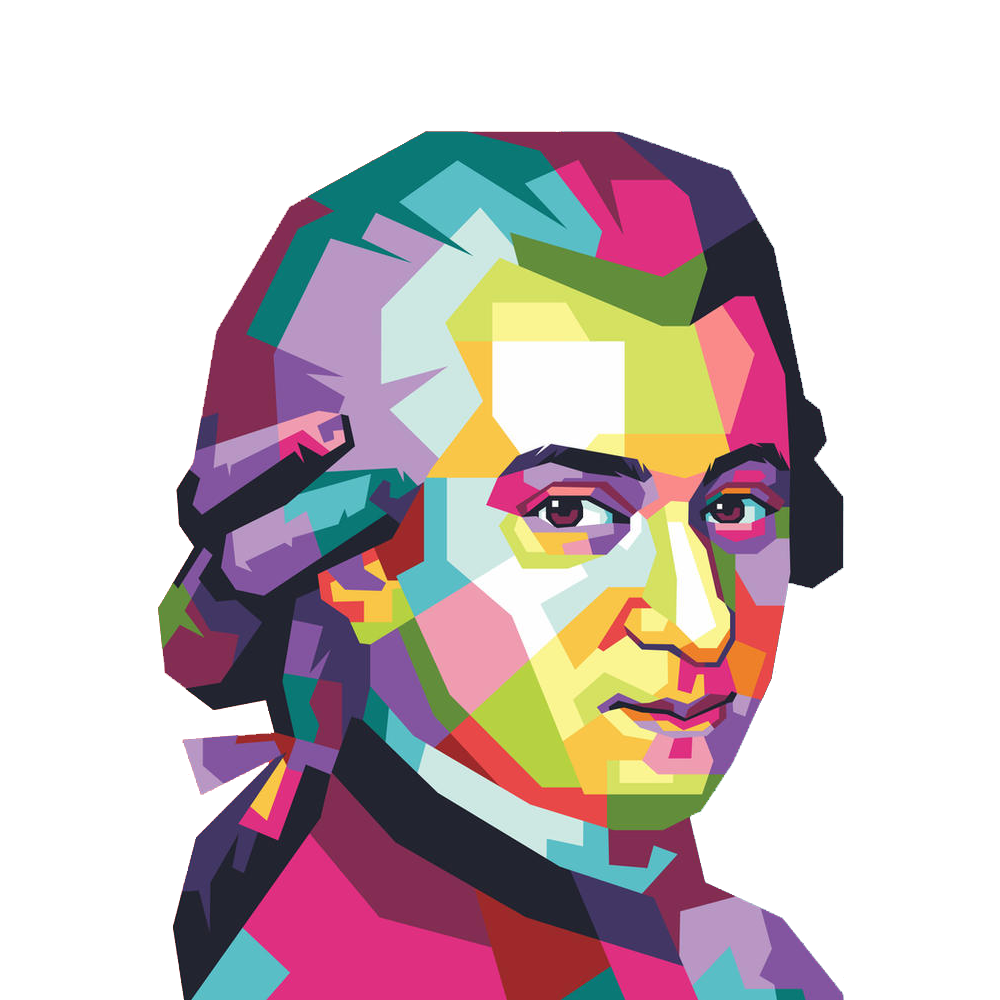
Premiere performance recorded LIVE. Then available On Demand.
Omri Barak, ASO Principal Trumpet
Members of the Allentown Symphony Orchestra
Musicians of the ASO usher in springtime with a delightful program featuring ASO Principal Trumpet Omri Barak (Neruda Trumpet Concerto) and works by Louise Ferrenc and Mozart.
FARRENC
Overture No. 2 in E-flat major, Op. 24
J.B.G. NERUDA
Corno da Caccia Concerto in E-flat major
MOZART
Symphony No. 40 in G minor, K. 550






MAGNIFICENT MOZART | May 1, 2021
Overture No. 2 in E-flat major, Op. 24 (1834)
LOUISE FARRENC ✮ 1804-1875
There are few better examples in the history of music of innate genius, rigorous training, steadfast ambition and sheer hard work overcoming seemingly insurmountable obstacles than Louise Farrenc. She was born in Paris in 1804 into a distinguished artistic family — her father and brother were both Prix de Rome-winning sculptors — and started studying piano and music theory at age six. At fifteen, she broke a significant gender barrier by being accepted into the previously all-male composition class at the Paris Conservatoire. Two years later she married Aristide Farrenc, a flutist at the Théâtre Italien, a respected teacher and founder of a music publishing firm. During the 1830s, Louise Farrenc established an impressive career in Paris as a pianist, composer and teacher, and undertook several concert tours around the country. She began composing seriously during those years, not just small pieces for piano but also large-scale chamber and orchestral works — two piano quintets, two piano trios, a nonet and sextet for mixed ensembles, and sonatas for cello and violin, as well as two overtures and three symphonies, which received notable performances. Hardly any other significant French composer was then writing such challenging, abstract works.
In 1842, Farrenc was appointed piano professor at the Paris Conservatoire and she distinguished herself in that capacity for the next three decades as the only woman to hold such a prominent permanent position at the school during the entire 19th century. When Louise Farrenc died in Paris on September 15, 1875 she was regarded as one of the foremost female musicians of her time.
Farrenc first broached the orchestral genres in 1834 with two concert overtures: the first (E minor, Op. 23) was finished that summer, the second (E-flat major, Op. 24) by December. No. 1 was performed in Paris in 1835 and No. 2 on April 5, 1840 at the Société des Concerts du Conservatoire, when Farrenc was in the midst of writing her three symphonies. The “concert overture” — a piece not associated with a stage production — was still a brand new form at that time. The ones that did exist — Berlioz’s Waverly (premiered 1828), King Lear (1833) and Rob Roy (1833), Mendelssohn’s A Midsummer Night’s Dream (1827), Hebrides (1832), Calm Sea and Prosperous Voyage (1832) and The Fair Melusine (1834) — had drawn on literary sources, so Schubert’s three overtures of 1817 (D. 556, 590, 591) were among the few earlier such pieces without referential qualities. The pioneering spirit of Farrenc’s overtures is even more remarkable because only Berlioz’s works and A Midsummer Night’s Dream had been performed in Paris by 1834.
Each of Farrenc’s overtures follows a well-crafted and finely orchestrated sonata form. The Overture No. 2 in E-flat major, darker in emotional character than its major-key tonality might indicate, opens with a broad, tragic introduction of halting phrases. The music pauses for the main theme, brighter in key but agitated in rhythm and expression; the second theme, entrusted to the woodwinds, is lyrical and gentler in nature. The troubled mood returns in the development section, which is skillfully woven from elements of the earlier themes. The materials of the exposition are recapitulated to close this too-little-known work by one of France’s most gifted 19th-century musicians.
Trumpet [corno da caccia] Concerto in E-flat major
JOHANN BAPTIST GEORG NERUDA ✮ CA. 1711-1776
Among the many gifted composers and performers from the Czech lands who enriched the musical life of the mid-18th century was Johann Baptist Georg Neruda, born around 1711 in Rosice, Moravia, near Brno, about thirty miles north of the border with Austria. Neruda was from a musical family — his brother, Jan Chryzostomus, was a violinist and later choirmaster of Prague’s Strahov Monastery — and he was trained as a violinist and cellist in Prague, where he spent several years performing in theater orchestras before entering the service of Count Rutowski in Dresden in 1741 or 1742. He became concertmaster of the Dresden court orchestra in 1750 and remained in that post until his retirement in 1772; he died in Dresden four years later. Neruda composed nearly a hundred works, including an opera, church music, some three-dozen pieces in the gestating form of the symphony, numerous trio sonatas and fourteen concertos that were widely disseminated throughout northern Europe in both manuscripts and printed editions. Two of his sons became violinists in the Dresden court orchestra.
The Concerto in E-flat major, Neruda’s best-known work, was originally written for the valveless horn of the late 18th century (then known as corno di caccia — “hunting horn” — to denote its sylvan associations) but it is most commonly performed today on trumpet. It was written during the years of transition from the Baroque to the Classical era, and shows traits of both the old and new styles: its harmonic and melodic components are largely of the modern type, while certain formal characteristics and modes of expression look back to the models of preceding generations. Each of the Concerto’s three movements is rooted in the old ritornello form, in which an orchestral refrain returns (ritorno in Italian) to separate the soloist’s intervening episodes. There are three such formal alternations in both the opening Allegro and the closing Vivace, with the last solo episode in each culminating in a cadenza. The slow tempo of the central Largo allows for only two solo episodes, with the second rounded out by a cadenza.
Symphony No. 40 in G minor, K. 550 (1788)
WOLFGANG AMADEUS MOZART ✮ 1756-1791
At no time was the separation between Mozart’s personal life and his transcendent music more apparent than in the summer of 1788, when, at the age of 32, he had only three years to live. His wife was ill and his own health was beginning to fail; his six-monthold daughter died on July 29th; Don Giovanni received a disappointing reception at its Viennese premiere on May 7th; he had small prospect of participating in any important concerts; and he was so impoverished and indebted that he would not answer a knock on the door for fear of finding a creditor there. Yet, amid all these difficulties, he produced, in less than two months, the three crowning jewels of his orchestral output — Symphonies Nos. 39, 40 and 41. The G minor alone of the last three symphonies may reflect the composer’s distressed emotional state at the time. It is among those great works of Mozart that look forward to the passionately charged music of the 19th century while epitomizing the structural elegance of the waning Classical era.
The Symphony’s tragic restlessness is established at the outset by an arpeggiated figure in the violas above which the violins play the agitated main theme. A stormy transition leads to the second theme, a contrasting, lyrical melody shared by strings and winds. The development gives prominence to the fragmented main theme. The recapitulation returns the earlier themes in heightened settings. The sonata-form Andante creates a mood of brooding intensity and portentous asceticism. The Minuet was judged by legendary conductor Arturo Toscanini to be one of the most darkly tragic pieces ever written. Its character is heightened by its contrast with the central trio, the only untroubled portion of the work. The finale opens with a rocket theme that revives the driven rhythmic energy of the first movement. The gentler second theme, with a full share of piquant chromatic inflections, slows the hurtling motion only briefly. The development section exhibits a contrapuntal ingenuity that few late-18th-century composers could match in technique and none surpass in musicianship. A short but eloquent silence marks the beginning of the recapitulation, which maintains the Symphony’s tragic mood to the work’s closing pages.
©2021 Dr. Richard E. Rodda