Premiere performance recorded LIVE. Then available On Demand.
Diane Wittry, Music Director/Conductor
Diane Wittry and the Allentown Symphony Orchestra conclude our celebration of Beethoven’s 250th birthday season with an exciting tribute to the master!
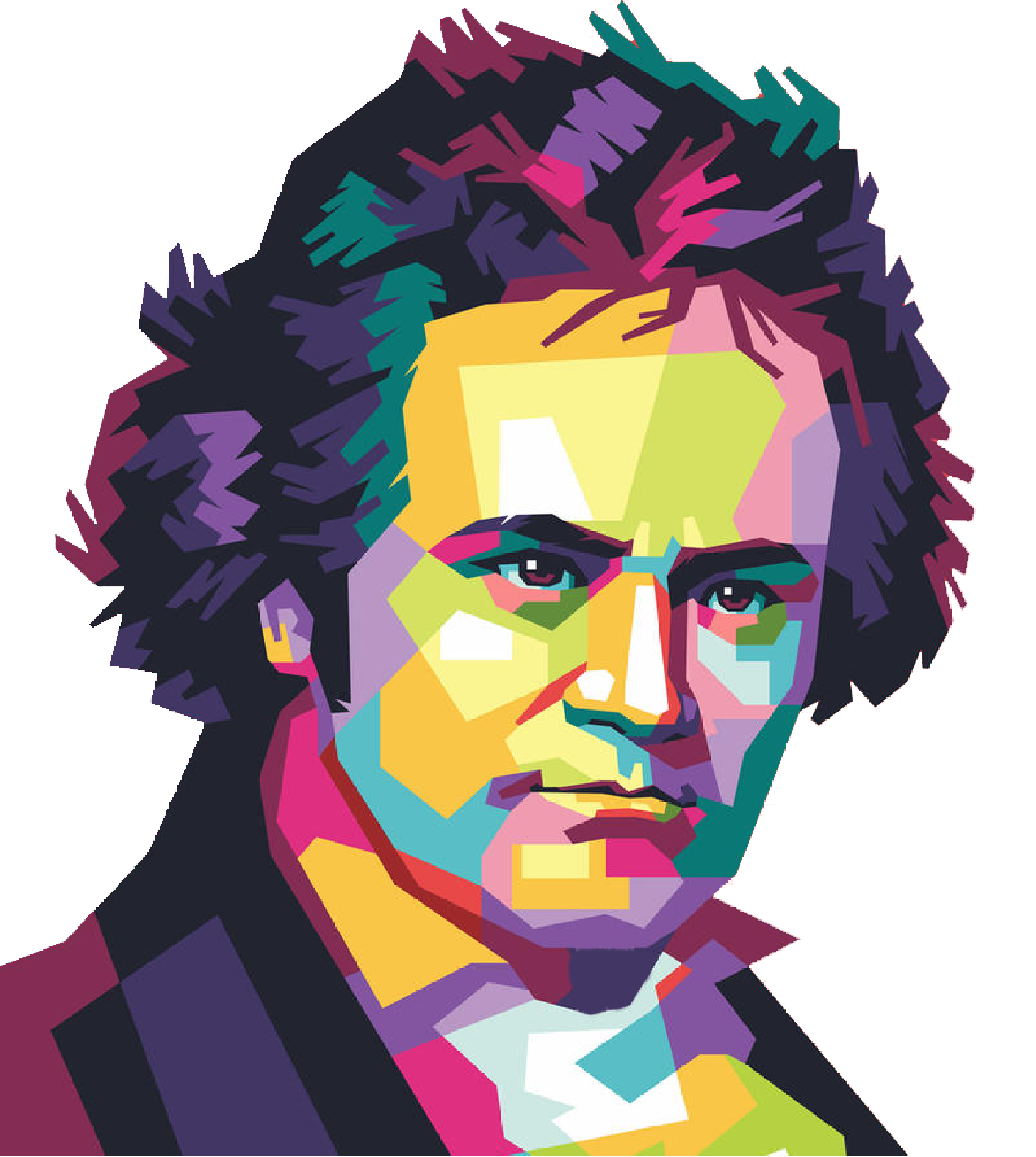
BEETHOVEN
Overture & Finale from The Creatures of Prometheus, Op. 43
BEETHOVEN
Symphony No. 3 in E-flat major, Op. 55 “Eroica”




BELOVED BEETHOVEN | JUNE 12, 2021
LUDWIG VAN BEETHOVEN ✮ 1770-1827
Selections from The Creatures of Prometheus, Op. 43 (1801)
Salvatore Vigano was one of the great dancers of the early 19th century, whose fame during his own time has been compared to that of Nijinsky a century later and Nureyev and Baryshnikov in more recent days. Though he was constantly in demand throughout Europe as performer, producer and choreographer, Vigano showed Vienna the special favor of two extended residencies, the second beginning in 1799. Late in 1800, Vigano devised the scenario for a ballet based on the Prometheus legend, a work he intended as a compliment to Maria Theresa, second wife of the Emperor Francis. He inquired at court as to which composer might be suitable, and was informed that Beethoven, who had recently (and tactfully) dedicated the score of his Septet (Op. 20) to Maria Theresa, would be an appropriate choice. Beethoven was approached, and he agreed to undertake the project.
The following description of the ballet’s plot appeared in the program for the premiere: “The foundation of this allegorical ballet is the fable of Prometheus. The philosophers of Greece allude to Prometheus as a lofty soul who drove the people of his time from ignorance, refined them by means of science and the arts, and gave them manners, customs and morals. As a result of that conception, two statues that have been brought to life are introduced in this ballet; and these, through the power of harmony, are made sensitive to all the passions of human life. Prometheus leads them to Parnassus, in order that Apollo, the god of the fine arts, may enlighten them.”
The Overture to Prometheus is Beethoven’s earliest work in that form and one of his most compact. The opening chord initiates a slow, lyrical introduction. The main body of the Overture follows without pause. The first theme is an display of rushing scales propelled by a vibrant rhythmic energy. The second theme is a more delicate melody, entrusted to the flutes in duet. The ballet’s finale is based on a melody heard in the other works on this concert.
Symphony No. 3 in E-flat major, Op. 55, “Eroica” (1803-1804)
The year 1804 — the time Beethoven finished his Third Symphony — was crucial in the modern political history of Europe. Napoleon Bonaparte had begun his meteoric rise to power only a decade earlier, after playing a significant part in the recapture in 1793 of Toulon, a Mediterranean port that had been surrendered to the British by French royalists. Britain, along with Austria, Prussia, Holland and Spain, was a member of the First Coalition, an alliance that had been formed by those monarchial nations in the wake of the execution of Louis XVI to thwart the French National Convention’s ambition to spread revolution (and royal overthrow) throughout Europe. In 1796, Carnot entrusted the campaign against northern Italy, then dominated by Austria, to the young General Bonaparte, who won a stunning series of victories with an army he had transformed from a demoralized, starving band into a military juggernaut. He returned to France in 1799 as First Consul of the newly established Consulate, and put in place measures to halt inflation, instituted a new legal code, and repaired relations with the Church. It was to this man, this great leader and potential saviour of the masses from centuries of tyrannical political, social and economic oppression, that Beethoven intended to pay tribute in his majestic E-flat Symphony, begun in 1803. The name “Bonaparte” appears above that of the composer on the original title page.
Napoleon proclaimed himself Emperor of France in 1804 and was crowned, with the new Empress Josephine, at Notre Dame Cathedral on December 2nd, an event forever frozen in time by David’s magnificent canvas in the Louvre. Beethoven, enraged and feeling betrayed by this usurpation of power, roared at his student Ferdinand Ries, who brought him the news, “Then is he, too, only an ordinary human being?” The ragged hole in the title page of the score now in the library of the Gesellschaft der Musikfreunde in Vienna bears mute testimony to the violent manner in which Beethoven erased Napoleon from this Symphony. He later inscribed it, undoubtedly with much sorrow, “To celebrate the memory of a great man.”
The “Eroica” (“Heroic”) is a work that changed the course of music history. There was much sentiment at the turn of the 19th century that the expressive and technical possibilities of the symphonic genre had been exhausted by Haydn, Mozart, C.P.E. Bach and their contemporaries. It was Beethoven, and specifically this majestic Symphony, that threw wide the gates on the unprecedented artistic vistas that were to be explored ever since. In a single giant leap, he invested the genre with the breadth and richness of emotional and architectonic expression that established the grand sweep that the word “symphonic” now connotes. For the first time, with this music, the master composer was recognized as an individual responding to a higher calling. The modern conception of artists — what they do, their place in society, how they can affect those who experience their work — stems from Beethoven. Romanticism began with the “Eroica.”
The vast first movement opens with two mighty chords. At least four thematic ideas are presented in the exposition. The development is a massive essay progressing through many moods, all united by a titanic sense of struggle. It is in this central portion of the movement and in the lengthy coda that Beethoven broke through the boundaries of the 18th-century symphony to create a work not just longer in duration but also more profound in meaning. The beginning of the second movement — “Marcia funebre” (“Funeral March”) — with its plaintive, simple themes intoned over a mock drum-roll in the basses, is the touchstone for the expression of tragedy in instrumental music. A development-like section, full of remarkable contrapuntal complexities, is followed by a return of the simple opening threnody. The third movement is a lusty scherzo; the central section is a rousing trio for horns. The finale is a large set of variations on two themes, one of which (the first one heard) forms the bass line to the other. The second theme, introduced by the oboe, is a melody that also appears in the finale of Beethoven’s ballet The Creatures of Prometheus, Contradanse No. 7 and Variations and Fugue, Op. 35. The variations accumulate energy, and, just as it seems the movement is whirling toward its final climax, the music comes to a full stop before launching into an Andante section that explores first the tender and then the majestic possibilities of the themes. A brilliant Presto led by the horns concludes this epochal work.
©2021 Dr. Richard E. Rodda