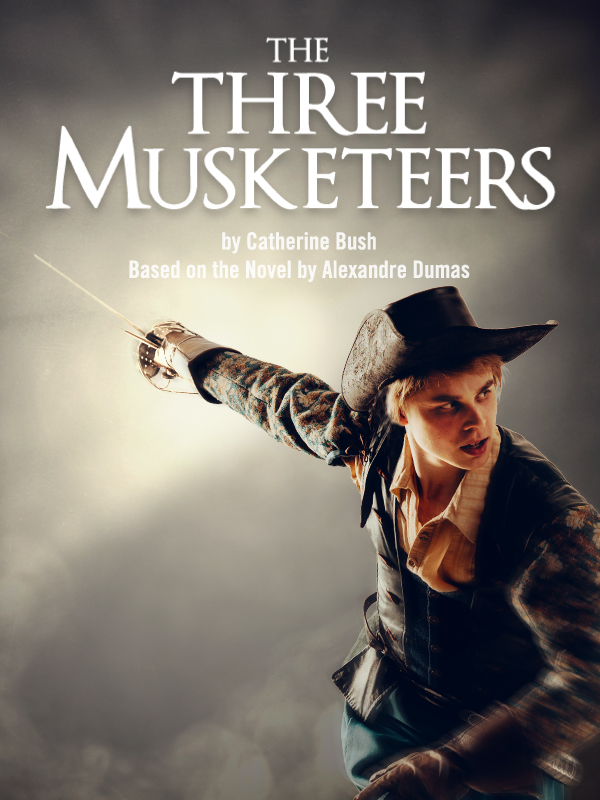
As we’ve prepared for this show, I have thought much about the forging of blades, and how incredible heat, pressure, and the will of a craftsman can create a world-class sword from disparate metals. There’s, of course, a clear relationship between this idea and the forming of Musketeers. D’Artagnan’s discovery of who he is and what sort of man he will become is only made possible by the heat and pressure he undergoes. He walks forward into fire where he may burn or he may rise with others; if we are doing our job right, he may do both. Fire kills; it also makes it possible to find out what one is capable of.
This notion is true of all of us, right? What we live through isn’t always easy, and risking boldly necessitates the possibility of great loss. When we are faced with the impossible, we rise, we surprise ourselves with our strength, and we form bonds with others that are deepened by our trials. It’s an obvious metaphor, but if you’ve experienced it, you know it to be true. The fires will come. How will we seek joy in the burning? How can it make us stronger, bring us closer, and shoot us through with purpose? Let’s find out.
- Katy Brown, Director of The Three Musketeers
D’Artagnan/Patron
Jacob Nuti
Criminal/Athos/Buckingham/Ball Attendee/Soldier
Josh Innerst*
Mob/Porthos/Richelieu
Sam McCalla*
Mob/Aramis/King Louis/Abbess
Ashley Campos*
Mob/Planchet/Patron/Constance/Cahusac/Fisherman
Libby Zabit*
Rochefort/Patron/Guard/Bicarat/Innkeeper/Ball Attendee/Kitty
Sean Maximo Campos*
Mob/Treville/Queen Anne/Lemieux/Soldier/Sailor/Beggar
Zoë Velling*
Milady/Jussac/Bonacieux/Ball Attendee/Fisherman
Molly Van Pelt*
Soldier/Guard/Drunk/Ball Attendee/Fisherman/Felton
Michael Patchen
*Denotes member of Actors’ Equity Association, the Union of Professional Actors, and Stage Managers in the United States.
Understudies never substitute for listed actors unless a specific announcement for the appearance is made at the time of the performance.
For the roles of D’Artagnan/Patron/Rochefort: Michael Patchen
For the role of Athos: Sean Maximo Campos*
For the roles of Criminal/Buckingham/Ball Attendee/Soldier/Mob/Porthos/Richelieu: James Jiggetts
For the roles of Mob/Aramis/King Louis/Patron/Guard/Bicarat/Innkeeper/Ball Attendee/Kitty: Garrett Summitt
For the roles of Abbess/Mob/Planchet/Patron/Guard/Constance/Cahusac/Fisherman/Soldier/Drunk/Ball Attendee/Felton: Emma Massey
For the roles of Mob/Treville/Queen Anne/Lemieux/Soldier/Sailor/Beggar/Milady/Jussac/Bonacieux/Ball Attendee/Fisherman: Natalie Crane
Director/Choreographer
Katy Brown
Fight Choreographer
Rod Kinter^
Assistant Fight Choreographer
Barbara Kinter
Fight Captain
Sean Maximo Campos*
Scenic Designer
Derek Smith
Costume Designer
Kelly Jenkins
Lighting Designer
Sarah Jean Elliott
Sound Designer
Connor Stevens
Intimacy Coordinator
Ashley Campos
Dialect Coach
Zacchaeus Kimbrell
Playwright
Catherine Bush
Stage Manager
Megan Ward*
Assistant Stage Manager
Brady Willis*
Producing Artistic Director of Barter Theatre
Katy Brown
* Denotes members of the Actors’ Equity Association, the Union of Professional Actors, and Stage Managers in the United States.
^ Member of SDC, Stage Directors and Choreographers Society

Natasha Carpenter - Production Assistant
Grace Foor - Gilliam Assistant Wardrobe Supervisor
Harper Fulmer - Gilliam Stage Electrician
Seth Hutton - Audiovisual Engineer
Beks Knost - Gilliam Wardrobe Supervisor
Rebekah Williams - Production Assistant
Desmond Wood - Gilliam Stage Carpenter
Roya Zafar - Dresser
Production Sponsor
ANONYMOUS