40th ANNUAL
ROCKPORT CHAMBER MUSIC FESTIVAL
Friday, September 10 :: 5 & 8 PM
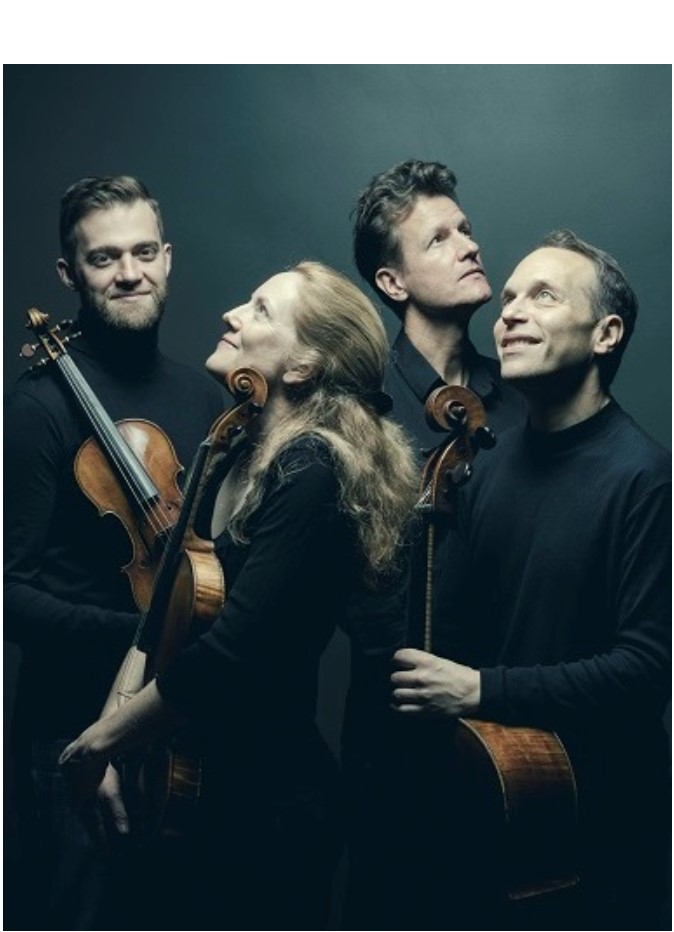
ST. LAWRENCE STRING QUARTET
and
BARRY SHIFFMAN, viola
QUARTET IN B-FLAT, OP. 76 NO. 4 (‘SUNRISE’) (1797)
Joseph Haydn (1732-1809)
Allegro con spirito
Adagio
Menuet: Allegro ma non troppo
Finale. Allegro ma non troppo
K'VAKARAT (1994), arranged by the composer for string quartet
Osvaldo Golijov (b. 1960)
SLOW MOVEMENT FROM THE QUARTET IN A MINOR, OP. 132 (1824-5): [‘Sacred Song of Thanksgiving to the Deity from a Convalescent, in the Lydian Mode’]
Ludwig van Beethoven (1770-1827)
Molto Adagio – Andante
GENEROUSLY SPONSORED BY SUSANNE GUYER AND THAD CARPEN
Thank you to our Corporate Sponsor

QUARTET IN B-FLAT, OP. 76 NO. 4 (‘SUNRISE’)
Joseph Haydn (b. Rohrau, Lower Austria, March 31, 1732; d. Vienna, May 31, 1809)
Composed (1797); 22 minutes
.png) The magnificent set of six Opus 76 quartets dates from Haydn's late years, when he had been composing for a half century. For the 18th century English historian Charles Burney they were, as he wrote to Haydn, "full of invention, fire, good taste, and new effects and seem the production, not of a sublime genius, who has written so much and so well already, but of one of highly-cultivated talents, who had expended none of his fire before." Burney’s comments reflect the high esteem in which Haydn was held throughout Europe. He was, quite simply, the greatest living composer of the time and he knew that musicians everywhere were judging his latest compositions by the high standards he himself had set.
The magnificent set of six Opus 76 quartets dates from Haydn's late years, when he had been composing for a half century. For the 18th century English historian Charles Burney they were, as he wrote to Haydn, "full of invention, fire, good taste, and new effects and seem the production, not of a sublime genius, who has written so much and so well already, but of one of highly-cultivated talents, who had expended none of his fire before." Burney’s comments reflect the high esteem in which Haydn was held throughout Europe. He was, quite simply, the greatest living composer of the time and he knew that musicians everywhere were judging his latest compositions by the high standards he himself had set.
During his two visits to England, Haydn had the opportunity to compose for the public concert room rather than for the private aristocratic salon he had known throughout much of his composing career. His approach to the quartet began to change. His music became more concentrated and closely argued. It began to speak out to an audience and range boldly through different keys. The six Op. 76 quartets, known as the Erdödy Quartets after their commissioner Count Joseph Erdödy, are, in many ways, Haydn’s final thoughts on the medium. They expect more from an audience than the earlier quartets, when string chamber music was designed as a background for wining and dining or for four amateurs to enjoy in the privacy of their own music salon. After these quartets, Haydn was to concentrate on choral music, including the six great masses of 1796-1802 and his two oratorios, The Creation and The Seasons, for the remainder of his life.
The ‘Sunrise’, as the B-flat quartet is known in the English-speaking world, has one of the great openings in chamber music. A lovely rising phrase is played by the first violin, over a warm, sustained chord, like the sun rising out of the clouds. Haydn's confidence is at its peak. The music both sums up the great classical era of chamber music and looks ahead to the dawning age of romanticism. While its opening seems to promise a sunny, easy-going work, this never quite arrives. The B-flat major quartet often sounds like a minor-key quartet which happens to be written in the major. Its opening does, however, contain a wealth of musical ideas that provide the fuel, and thereby the unity, of the entire work. The three subsequent movements – a profound slow movement, rustic minuet and exuberant and witty finale – are written with no less skill than the magical opening. Op. 76 No. 4 is among the finest of Haydn’s quartets.
Osvaldo Golijov (b. La Plata, Argentina, December 5, 1960)
Composed 1994; 8 minutes
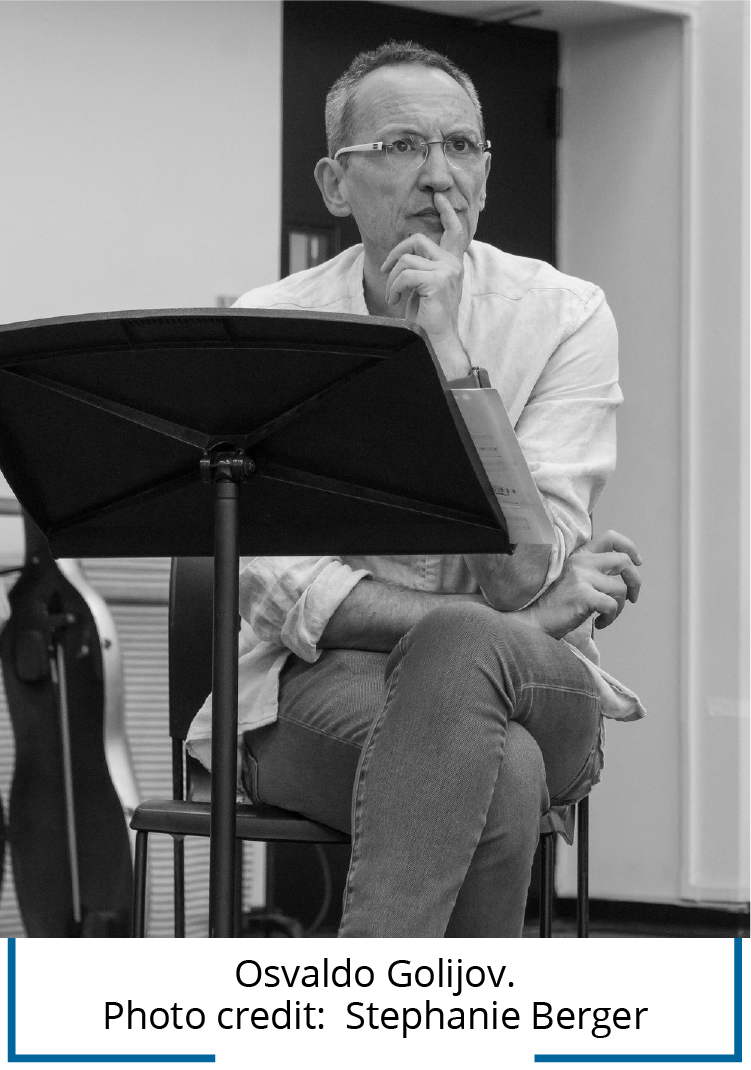
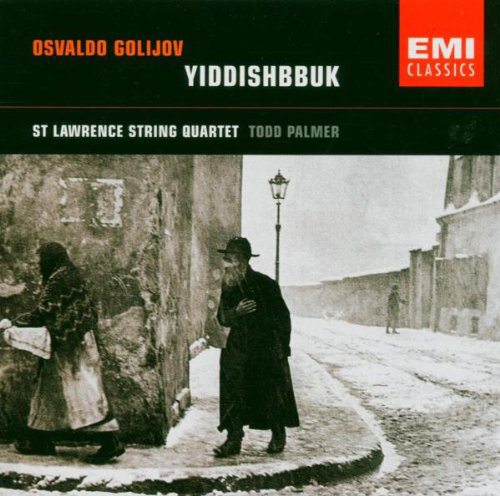 Argentinean-American composer Osvaldo Golijov, our 2018 composer-in-residence, has collaborated closely with the St. Lawrence String Quartet over many years. Golijov, a Romanian Jew by birth, but born in Argentina, who lived for six years in Israel and for the greater part of his life in Massachusetts, brings a musical language that is infused with an ever-widening influence from many sources. The ingredients include folk music from many traditions, the western repertory from many eras, the Judeo-Christian liturgy, tango and other Latin American dance forms, all of which remain in a state of flux in a highly individual musical voice with a meaningful musical message. Most recently his Falling Out of Time meditates upon death and grief in a way that profoundly speaks to a world in the grips of a pandemic. Though conceived and premièred well before the word lockdown became commonplace, this moving, questioning 80-minute “tone poem in voices” is based on David Grossman’s 2014 novel of the same name and written for three voices and the Silkroad Ensemble.
K'vakarat started life as a work for cantor and string quartet. It is “the last paragraph of the prayer that epitomizes the central theme of the High Holidays,” Golijov writes. “The whole prayer is known as Un'tahne Tokef Kedushat Hayom (We will observe the mighty holiness of this day). Tradition ascribes this prayer to Rabbi Amnon of Mayence (XV century of our era) who uttered it in his last moments as he lay dying in martyrdom.” Critic Allan Kozin, writing in The New York Times, adds: “Its quiet stasis at first suggests the image of electric charges dancing on a wire, but by the end of the setting, the string writing is vehement and explosive.” Golijov later adapted the piece as the middle movement of his clarinet quintet The Dreams and Prayers of Isaac the Blind. In today’s string quartet arrangement by the composer, the viola takes the role of the cantor.
Ludwig van Beethoven (b. Bonn, Germany, December 15 or 16, 1770; d. Vienna, Austria, March 26, 1827)
Composed 1824-5; 17 minutes

The five string quartets and Grosse Fuge that Beethoven composed during the last five years of his life mark the pinnacle of his chamber music. Ideas from one spill over to the next. The A minor quartet was the second of the sequence to be completed and was originally laid out in four movements. Then, in the spring of 1825, Beethoven fell seriously ill, with a variety of debilitating diseases. Towards the end of May, he began to recover and the change in his physical well-being had a profound impact on the quartet. A central slow movement, the centerpiece of a vast, arch-like structure, was the immediate result. Beethoven marked it ‘Sacred Song of Thanksgiving to the Deity from a Convalescent’ (Heiliger Dankgesang eines Genesenen an die Gottheit, in der lydischen Tonart). It is one of the most sublime pieces of music ever written – and one of the longest quartet movements at almost half the length of the quartet itself. Its contemplative stillness is enhanced by the conscious use of an old church mode known as the Lydian mode. Beethoven mentions it in the score, as if to remind us that the old church modes, with their spiritual, often mystical and tonally ambiguous connotations, were a deep source of inspiration in his late works. The slow movement’s successive alternations of Adagio and Andante bring new expressions of relief from the composer. These are noted in the margin of his score as 'Feeling new strength' and 'You returned my strength to find me in the evening' and, in the final section, 'With the most intimate feeling.' Because of the generally dark character of much of the quartet, this transcendental slow movement seems to radiate inner release from outward suffering.
— Program notes © 2021 Keith Horner.
Comments welcomed: khnotes@sympatico.ca