1ST VIOLIN BASS | CLARINET |
DANIEL MYSSYK | conductor
RICHMOND SYMPHONY
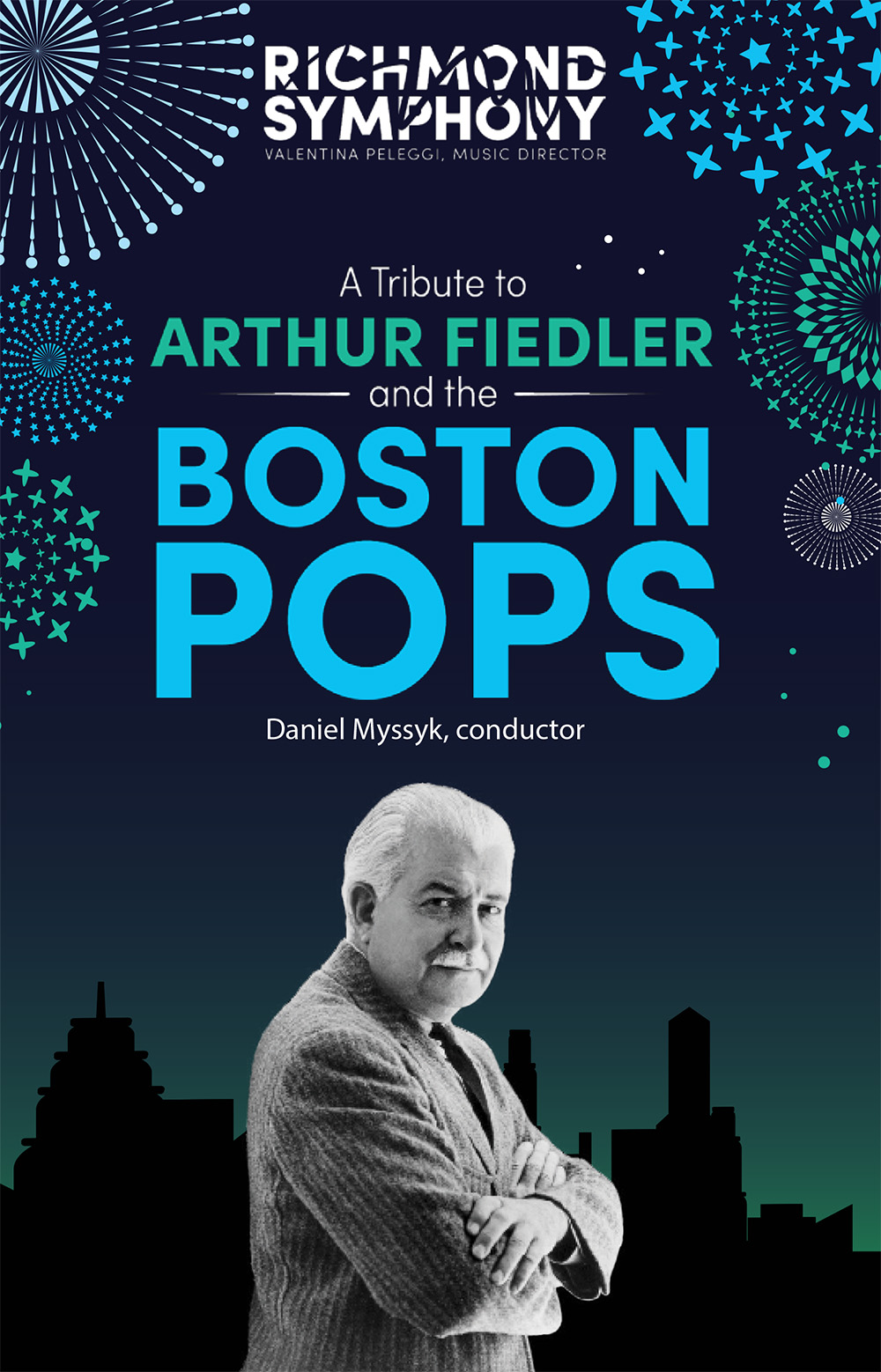
Arthur Fiedler (1894-1979), born in Boston to Austrian Jewish immigrant parents, had a simple but revolutionary idea: orchestral music should be fun. It should sparkle, swoop, surprise, delight, and above all, belong to everyone.
The Boston Pops — founded in 1885 as the lighter, more festive sibling of the Boston Symphony — had always dabbled in accessible repertoire, but under Fiedler, who took the podium in 1930 and remained for an extraordinary 49 years, it blossomed into the genre-blending institution America fell in love with.
Fiedler’s programs mixed classics with show tunes, film themes with novelty numbers, Viennese operetta with big-band flair — all delivered with a sense of style and playfulness that became the Pops’ signature.
The formula wasn’t “high” or “low” — it was simply music people loved, played with flair by a top-tier orchestra. “For this program,” says Music Director Valentina Peleggi, “we’re recreating the spirit audiences loved in mid-century Boston Pops shows. It’s a classical celebration of American popular music, inspired by the way Arthur Fiedler shaped these concerts for so many years.” Even the unusual two-intermission layout nods to that vintage Pops format, when concerts unfolded in lively, unhurried chapters.
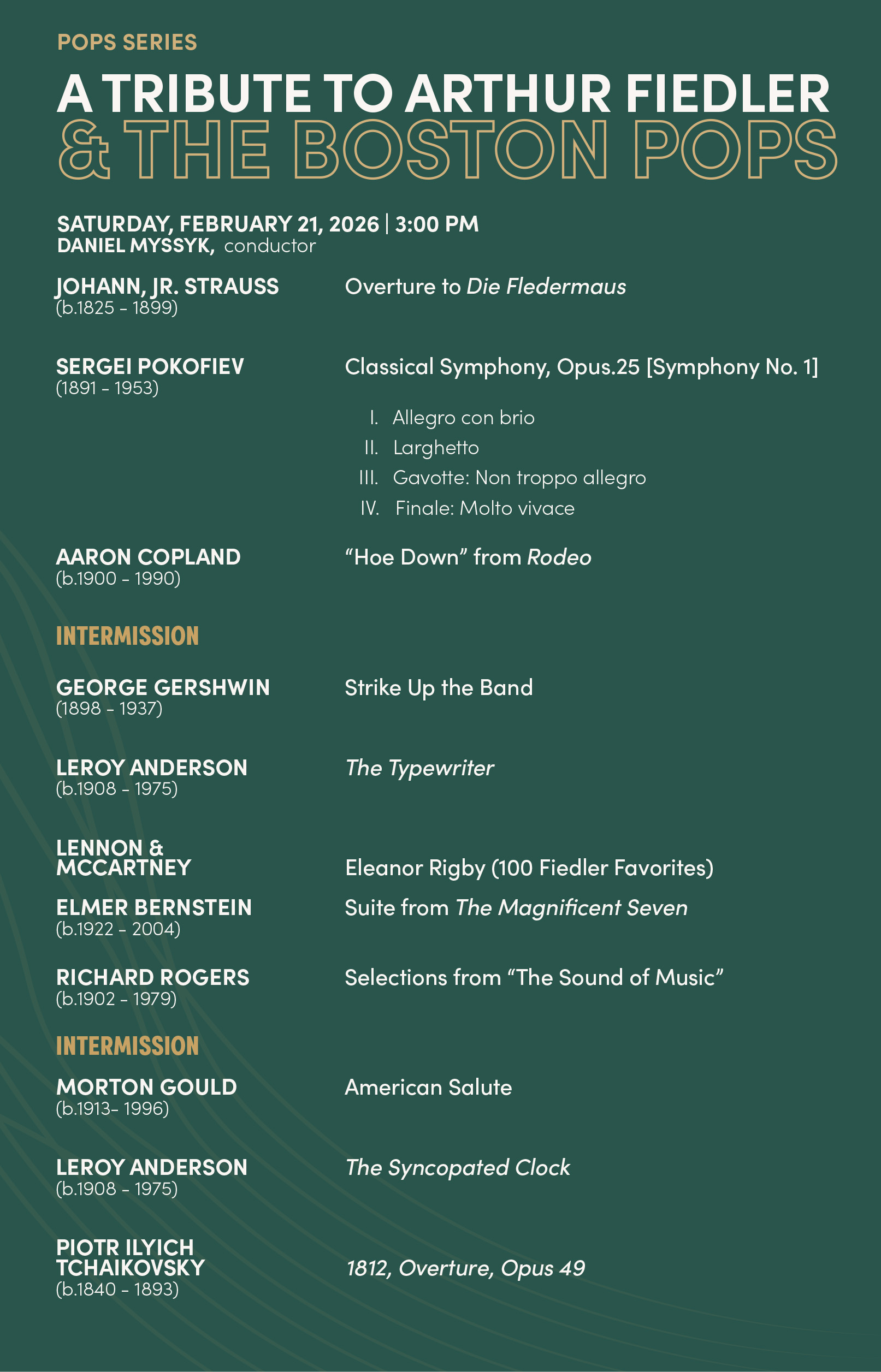
The curtain rises with the Overture to Die Fledermaus, Johann Strauss Jr.’s champagne-soaked 1874 operetta of hilariously mistaken identities and one of Fiedler’s longtime favorites. The overture distills everything audiences adore about Viennese operetta — effervescent melodies, sly humor, quick-footed waltzes — into nine minutes of sheer delight. Under Fiedler, it became practically synonymous with Pops panache: light on its feet and impossible to hear without smiling.
From Strauss’s glittering Vienna, we leap to Sergei Prokofiev’s Classical Symphony, an early-20th-century work that wears an 18th-century powdered wig with cheeky attitude. Prokofiev imagined how Haydn might have composed if he had lived into the 20th century — and the result is a four-movement burst of charm, clarity, and wit. The music is crisp, bright, and full of sly surprises, which made it perfect Pops material: classical in form, playful in spirit. Fiedler often programmed music like this because it reminded audiences that “classical” doesn’t have to mean heavy. Sometimes it’s as refreshing as a clean breeze.
Aaron Copland’s “Hoe-Down” from his 1942 ballet Rodeo adds a good dose of homegrown Americana to the mix — another hallmark of classic Pops concerts. By the 1940s, Copland had honed the clean, open, instantly recognizable sound we now think of as “American classical.” Rodeo was written for the choreographer Agnes de Mille, who wanted a score steeped in the folklore and musical grit of the American West. Copland drew on real cowboy fiddle tunes and traditional dance music in “Hoe-Down,” turning them into a brilliant burst of fiddle-fire and frontier energy that still lands with pure, boot-stomping joy.
George Gershwin’s Strike Up the Band, written in 1927 for the musical of the same name, is a jaunty, brassy miniature that practically struts into the room. Though the show itself went through several versions, the title number quickly took on a life of its own as a bright, optimistic anthem.
The Massachusetts-born Leroy Anderson was practically the in-house composer of the Boston Pops under Fiedler, turning out miniature showpieces designed to delight audiences instantly. The Typewriter (1950) is one of his signature gems: a novelty number in which a real typewriter becomes a solo instrument, clacking and dinging with virtuosic comic timing. Only Fiedler would have dared program something so gleefully absurd with a straight face — and only an orchestra with real finesse can make it come off so perfectly.
A change of mood comes with Eleanor Rigby, the hauntingly beautiful study of loneliness by Lennon & McCartney that became one of The Beatles’ most striking hit singles in 1966. Fiedler was among the first major conductors to bring their music into the orchestral concert hall, treating it not as crossover gimmickry but as pop art worthy of rich orchestral color. In this setting, the song’s aching string lines and poignant harmonies take on a kind of cinematic weight — a brief, touching moment of stillness.
The energy kicks back up with Elmer Bernstein’s suite from The Magnificent Seven (1960), the classic Hollywood Western that reimagined Kurosawa’s Seven Samurai on the American frontier. Bernstein’s score is one of the great achievements of film music — bold brass fanfares, galloping rhythms, and wide-open harmonies that summon the sweep of the Western landscape. Fiedler adored bringing Hollywood soundtracks into the concert hall, long before it became standard practice.
Selections from Richard Rodgers’s music for the 1959 musical The Sound of Music offer another piece of Pops history. Fiedler often placed Broadway medleys alongside Strauss and Tchaikovsky, showing how well great show tunes can hold their own. These melodies — “My Favorite Things,” “Edelweiss,” “Do-Re-Mi,” and others — have become part of America’s collective memory.
Morton Gould’s American Salute comes from a composer who embodied the spirit of American eclecticism. A New York–born prodigy who moved easily between classical, jazz, and popular styles, Gould was a natural favorite of Fiedler. American Salute is an orchestral fantasy built on the Civil War tune “When Johnny Comes Marching Home” and was famously written in a single evening during World War II.
between classical, jazz, and popular styles, Gould was a natural favorite of Fiedler. American Salute is an orchestral fantasy built on the Civil War tune “When Johnny Comes Marching Home” and was famously written in a single evening during World War II.
Leroy Anderson’s The Syncopated Clock also has a World War II backstory. Anderson wrote it in 1945 while serving in Army Intelligence, sketching out its gently ticking rhythms and playful syncopations during his wartime service. The piece later became a Pops staple for its charm and wit — a little musical joke that feels both nostalgic and irresistibly fresh.
Tchaikovsky’s 1812 Overture (1880) is one of classical music’s great blockbusters — a thundering, theatrical celebration originally written to mark the 70th anniversary of Russia’s victory over Napoleon. Its opening chant evokes the Russian people at prayer, soon challenged by the unmistakable strains of the “Marseillaise,” standing in for the invading French army. Folk melodies, sweeping orchestral panoramas, and brilliantly staged musical “battle scenes” lead to a triumphant finale complete with ringing bells and cannon effects.
The piece quickly outgrew its original patriotic purpose and has become a universal concert finale — especially in America, where its explosive ending made it a Fourth-of-July tradition. No matter how many times you’ve heard it, the last pages still deliver a guaranteed adrenaline rush.
Program notes (c) 2026 Thomas May
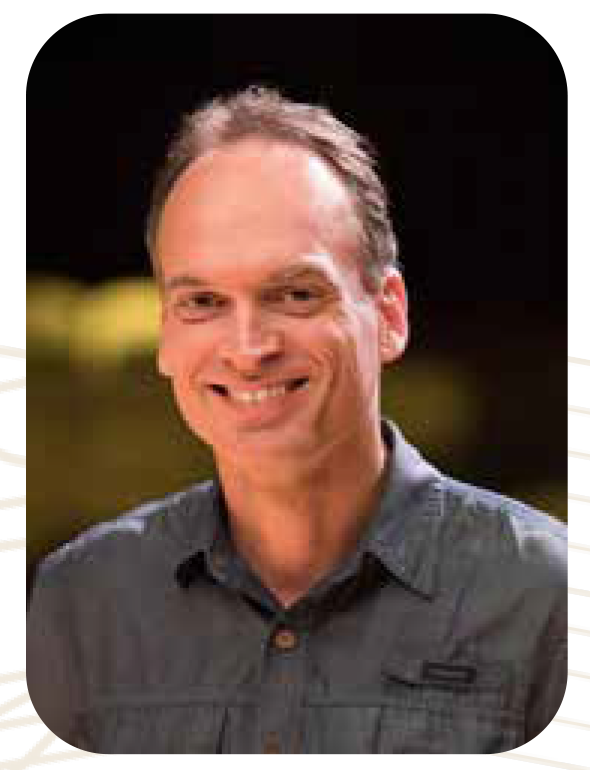
Director of Orchestral Activities at VCU since 2007, Canadian-American conductor Daniel Myssyk was Music Director of the Montreal based Orchestre de chambre Appassionata from 2000 to 2016. A few years ago, he led his orchestra on its first American tour, which included two concerts in Richmond. The group also toured before enthused audiences in Ontario in January of 2014. 2024 marks the end of his six-year association with the Richmond Symphony in his capacity as assistant conductor. Among other responsibilities, he was in charge of RSYO, RSO Youth Orchestra Program’s most advanced orchestra.
In recent years, he has made critically acclaimed appearances with Les Grands Ballets Canadiens, and the Lubbock Symphony Orchestra, among others. In 2015, Myssyk made his debut in Guanajuato (Mexico) where he has been returning frequently since, and also conducted the Michoacan State Orchestra. In 2019, return engagements have brought him back to Canada to conduct the Orchestre symphonique de Trois-Rivières and the Orchestre de la Francophonie.