
× Upcoming Events Welcome From Richmond Symphony About Us The Youth Orchestra Program Supporters Your Support Past Events
Home Welcome From Richmond Symphony About Us The Youth Orchestra Program Supporters Your Support
Image for American Originals
Program

SATURDAY, SEPTEMBER 19, 2026 | 7:30 PM
SUNDAY, SEPTEMBER 20, 2026 | 3:00 PM 

Kedrick Armstrong conductor
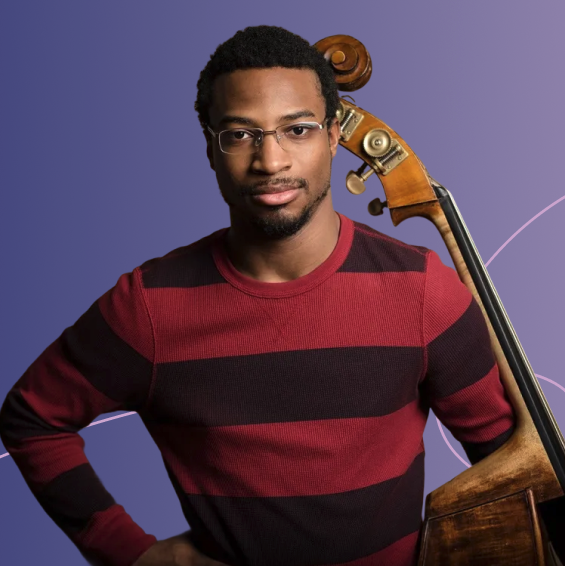
Xavier Foley  composer, bass

FRANCIS SCOTT KEY            
(1779-1843)

Star Spangled Banner


LEONARD BERNSTEIN  
(1918-1990)


Overture to Candide


XAVIER FOLEY 
(b.1994)


Soul Bass Concerto 

I. Prelude
II. Chorus
III. Fugue


INTERMISSION​


WILLIAM GRANT STILL
(1895-1978)


Symphony No.1 (“Afro-American Symphony”)
I. Longing: Moderato assai 
II. Sorrow: Adagio 
III. Humor: Animato 
IV. Aspiration: lento, con risoluzione

Today's Musician Roster

Violin 1
Daisuke Yamamoto
CONCERTMASTER
Tom & Elizabeth Allen Chair
Adrian Pintea
ASSOCIATE 
CONCERTMASTER

Susy Yim
Alana Carithers
Chih Chun Wang
Eugnia Cho
Alison Hall
Stacy Matthews
Susan Spafford
Delaney Hunt
Treesa Gold
Sarah Park

Violin 2
Ellen Cockerham Riccio 
PRINCIPAL 2ND VIOLIN
Jeanette Jang
ASSOCIATE PRINCIPAL 
2ND VIOLIN
The Bob & Nancy Hill Chair
Anna Rogers
Anna Bishop
Audrey Gray
Catherine Cary
Emily Monroe
Timothy Judd
Laura Frazelle
Alyssa Evans

ViolA
Hyo Joo Uh
ACTING PRINCIPAL
Jocelyn Smith
ACTING ASSOCIATE  
PRINCIPAL

Stephen Schmidt
Zsuzsanna Emödi
Wayne Graham
Johanna Beaver
Liz O’Hara

CELLO
Neal Cary
PRINCIPAL
Jason McComb
ASSOCIATE PRINCIPAL
Richmond Symphony 
League Chair
Ryan Lannon
Peter Greydanus
Amanda Gookin
Isabel Dimoff
Barbara Gaden
Adrienne Gifford-Yang

Bass
Lee Philip
PRINCIPAL
Rumano Solano
ASSOCIATE PRINCIPAL
Kelly Ali
Peter Spaar
Avery Robinson
Ben Crofut

Flute
Mary Boodell
PRINCIPAL
Jennifer Debiec Lawson
ASSOCIATE PRINCIPAL
Sandra Del Cid


Oboe
Victoria Chung
PRINCIPAL
Kara Poling
ASSOCIATE PRINCIPAL
Thomas Frieddle

Clarinet
David Lemelin
PRINCIPAL
Eddie Sundra
ASSOCIATE PRINCIPAL
Edna Huang
Daniel Frazelle

Bassoon
Thomas Schneider
PRINCIPAL
Felix Ren
ASSOCIATE PRINCIPAL
Dean Woods

Horn
Dominic Rotella
PRINCIPAL
Devin Gossett
The Luzi Wheeler Leisinger
and George Wheeler Chair

Erin Lano
ASSOCIATE PRINCIPAL
Roger Novak

Trumpet
Brian Strawley
ACTING PRINCIPAL
Zachary Hommel*
ACTING ASSOCIATE  
PRINCIPAL

Josh Carr

Trombone
Han Yun (Jonathan) Liang
PRINCIPAL
Scott Winger
Scott Cochran

Tuba
Conrad Shaw
PRINCIPAL

TIMPANI
James Jacobson
PRINCIPAL

PERCUSSION
Clifton Hardison
PRINCIPAL
David Foster
Davi Martinelli de Lira
Don Johns
Reid Stockdill

HarP
Lynette Wardle
PRINCIPAL

PIANO
Russell Wilson
PRINCIPAL
Quincy & Anne Owen Cole Chair

GUITAR
Andy Poxson


Program Notes

AMERICAN ORIGINALS: 
BERNSTEIN, FOLEY & STILL

SATURDAY, SEPTEMBER 19, 2026 | 7:30PM 
SUNDAY, SEPTEMBER 20, 2026 | 3:00PM
Kedrick Armstrong
  | conductor
Xavier Foley  |  double bass

As the Richmond Symphony continues its celebration of the 250th anniversary of the United States, the season’s opening program considers the American sound not as a single style, but as what Music Director Valentina Peleggi calls “a bigger palette.” Bernstein, Foley, and Still approach that idea from strikingly different directions, revealing the variety contained within the American orchestral tradition.

Bernstein’s Candide Overture sets the stage with a burst of theatrical wit before Xavier Foley steps forward as both composer and soloist in Soul Bass, a concerto for double bass that marries groove, jazz, and R&B idioms with the symphony orchestra. Foley is the orchestra’s first artist-in-residence of the season, continuing a practice Richmond has developed in recent years by inviting musicians who are both performers and composers to engage with the orchestra from multiple perspectives. Together with William Grant Still’s symphonic treatment of blues idioms in his Afro-American Symphony, the works on this program offer what Peleggi describes as “a beautiful look at the stories and complexity of the American repertoire.”

BERNSTEIN/ OVERTURE TO CANDIDE / 5 minutes

Leonard Bernstein continued tinkering with Candide long after it opened in 1956. An eclectic work with one foot in the opera house and the other on Broadway, Candide is based on Voltaire’s subversive novella from the Enlightenment: a satire of authority that was newly resonant for the politically anxious America of the 1950s. 

The work’s unusual blend of operetta, opera, musical theater, and parody challenged Broadway expectations. The Overture quickly took on a life of its own. Witty, breathless, and bursting with theatrical energy, it’s the musical equivalent of a champagne toast to open the season.

FOLEY/ SOUL BASS CONCERTO / 

For Xavier Dubois Foley, composing and performing are not separate careers but two sides of the same musical identity. Born in 1994 in Marietta, Georgia, he came to national attention after winning First Prize in the 2014 Sphinx Competition; in 2018, he received an Avery Fisher Career Grant. 

Foley has described his goal as becoming a “world artist,” absorbing music from across stylistic boundaries and reshaping those influences in his own voice. Peleggi describes Foley as “pushing the instrument to the limits.” While the double bass is usually heard in a supporting role, in Soul Bass it becomes the protagonist. The title of the concerto, which Foley premiered in 2022 with the Atlanta Symphony, pays playful homage to the long-running television program Soul Train. 

Soul Bass unfolds in three movements. “Prelude” begins with a brief orchestral establishing shot before the double bass enters with the catchy main theme that dominates and unifies the whole concerto. This idea keeps returning, anchoring music driven by a buoyantly syncopated groove. 

The briefer central “Chorus” revels in a more songful character, with a tender melody that reveals Foley’s ability to make the double bass sing. The final “Fugue” is the concerto’s most overtly virtuosic movement, propelled by thrilling passagework across the instrument’s vast range, right up into a surprisingly flute-like upper register.

STILL/ SYMPHONY NO. 1 (“AFRO-AMERICAN”)/ 30 minutes

Born in Woodville, Mississippi, in 1895 — the grandson of formerly enslaved people — William Grant Still spent a lifetime crossing barriers that American musical institutions had long enforced. His career ranged across concert music, popular entertainment, radio, film, and television. After studying at Oberlin and serving in the Navy during the First World War, he worked as an arranger for W.C. Handy and also studied with Edgard Varèse, a central figure of the avant-garde.

By the later 1920s, Still was moving away from Varèse’s experimental influence toward a language drawing more openly on African American music and culture. He completed the Afro-American Symphony, the first of his five symphonies, in a mere two months in 1930, and its premiere the following year marked the first time a major orchestra had performed a symphony by a Black American composer. It has become Still’s best-known work. 

Still’s early notebooks reveal a broad expressive design. While sketching his concept for the work in the 1920s, he associated its four movements with “Longing,” “Sorrow,” “Humor,” and “Aspiration,” respectively. The completed score places passages by the Black American poet Paul Laurence Dunbar before each movement. Still built the Afro-American Symphony using the idiom of the blues as a foundation, transforming this material through the resources of the orchestra across four movements. A muted trumpet introduces the principal blues theme in dialogue with horns. This theme reappears in different contexts across the work.

The Adagio’s melancholy atmosphere is reflected in Dunbar’s epigraph, which speaks of weariness with earthly suffering and the longing to “go ’long home.” The music’s restraint throws the animated rhythms of the brief third movement into sharp relief. A tenor banjo brings the timbre of 1920s popular music into the orchestral texture. 

More solemn and reminiscent of a spiritual, the last movement gathers and transforms ideas heard earlier in the symphony. Dunbar’s words from “Ode to Ethiopia” assert racial pride. In the Afro-American Symphony, Still repudiates the idea that blues and jazz were unworthy of the concert hall. Together with the language of the spiritual, these materials provide the substance for a symphonic journey and enlarge what the genre can contain.

(c)2026 Thomas May
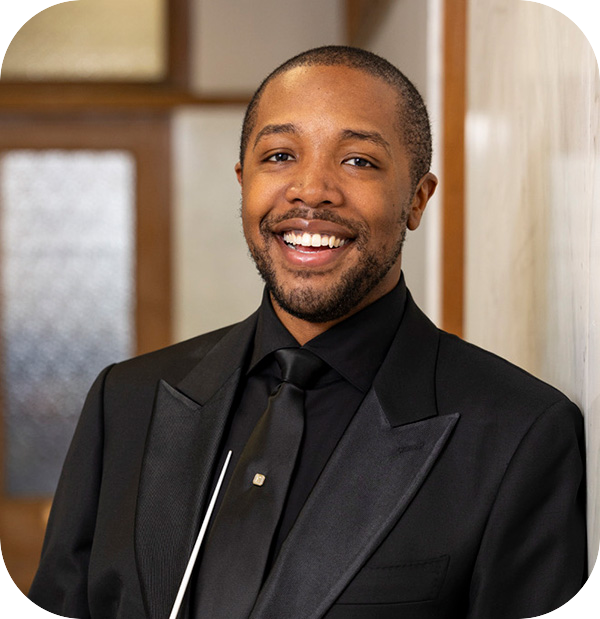
KEDRICK ARMSTRONG | CONDUCTOR

Kedrick Armstrong is Music Director of the Oakland Symphony. His first two seasons with the Oakland Symphony have been met with audience and critical praise for his programming, dynamic stage presence and palpable energy for music-making and audience connectivity. Kedrick’s 2026-2027 guest conducting appearances include debuts with the Atlanta, New Jersey, Richmond, and Fargo Moorhead Symphonies, and with American Composers Orchestra at Carnegie Hall.

Highlights of the 2025-2026 season included the world premiere of a new production of Scott Joplin’s 1910 opera, Treemonisha, with the Washington National Opera. In addition, he made his orchestral conducting debuts with the Minnesota Orchestra, Grant Park Music Festival, Springfield Symphony, as well as a return to Chicago Sinfonietta.

Kedrick spent several seasons as the music mentor/supervisor for “EmpowerYouth! Igniting Creativity through the Arts,” a unique collaboration with the Lyric Opera of Chicago and the Chicago Urban League. He also enjoyed working with young people through local outreach programs such as Ravinia Festival’s REACH*TEACH*PLAY, Chicago Musical Pathways Initiative, and Chicago Sinfonietta’s Audience Matters.

Kedrick is an alumnus of Chicago Sinfonietta’s Project Inclusion Freeman Conducting Fellow program, where he served as Assistant Conductor during the 2018-2019 season. He holds a B.M. in History and Literature from Wheaton College and an M.M. in Orchestral Conducting from the University of Colorado Boulder. He graduated from the South Carolina Governor’s School for the Arts and Humanities, and has studied with and assisted/covered conductors Mei-Ann Chen, Gary Lewis, John Nelson, Cliff Colnot, and Lidiya Yankovskaya, among others.
XAVIER FOLEY | COMPOSER, DOUBLE BASS

A trailblazing artist and recipient of the prestigious Avery Fisher Career Grant, Xavier Foley is redefining the role of the bassist in 21st-century music. A double bassist of staggering technical prowess and expressive depth, he is also a composer who brings his own voice to the stage, crafting works that showcase both his virtuosic playing and his distinct compositional language.

Xavier has composed five groundbreaking concerti for double bass, commissioned and performed by ensembles including the Atlanta Symphony Orchestra, the Sphinx Virtuosi in association with Carnegie Hall and the New World Symphony, and the Cabrillo Festival in association with the Mahler Foundation, as well as the Saint Paul Chamber Orchestra, Baltimore Symphony, Kansas City Symphony, Nashville Symphony, and the Mostly Mozart Festival Orchestra. He has collaborated with conductors including Mei-Ann Chen, Cristian Măcelaru, David Danzmayr, Michael Christie, Michael Stern, Carlos Kalmar, and Thomas Wilkins.

Xavier has captivated audiences with recital appearances at leading venues including the Kennedy Center, Shriver Hall, The Conrad Prebys Performing Arts Center,  Isabella Stewart Gardner Museum, Davies Symphony Hall, and the National Gallery of Art.

He regularly performs his original solo works in recital, often alongside Bach transcriptions, positioning the double bass as a bold and expressive solo voice. Beyond the stage, he reaches over 123,000 followers on Instagram (@xavierfoleybass), where his content has helped redefine the double bass for a global audience.

Originally from Marietta, Georgia, Xavier Foley is a graduate of the Curtis Institute of Music, where he studied with Edgar Meyer and Hal Robinson. He won the 2016 Young Concert Artists International Auditions and is an alumnus of the Perlman Music Program.
Image for American Originals
Program

SATURDAY, SEPTEMBER 19, 2026 | 7:30 PM
SUNDAY, SEPTEMBER 20, 2026 | 3:00 PM 

Kedrick Armstrong conductor
Xavier Foley  composer, bass

FRANCIS SCOTT KEY            
(1779-1843)

Star Spangled Banner


LEONARD BERNSTEIN  
(1918-1990)


Overture to Candide


XAVIER FOLEY 
(b.1994)


Soul Bass Concerto 

I. Prelude
II. Chorus
III. Fugue


INTERMISSION​


WILLIAM GRANT STILL
(1895-1978)


Symphony No.1 (“Afro-American Symphony”)
I. Longing: Moderato assai 
II. Sorrow: Adagio 
III. Humor: Animato 
IV. Aspiration: lento, con risoluzione

Today's Musician Roster

Violin 1
Daisuke Yamamoto
CONCERTMASTER
Tom & Elizabeth Allen Chair
Adrian Pintea
ASSOCIATE 
CONCERTMASTER

Susy Yim
Alana Carithers
Chih Chun Wang
Eugnia Cho
Alison Hall
Stacy Matthews
Susan Spafford
Delaney Hunt
Treesa Gold
Sarah Park

Violin 2
Ellen Cockerham Riccio 
PRINCIPAL 2ND VIOLIN
Jeanette Jang
ASSOCIATE PRINCIPAL 
2ND VIOLIN
The Bob & Nancy Hill Chair
Anna Rogers
Anna Bishop
Audrey Gray
Catherine Cary
Emily Monroe
Timothy Judd
Laura Frazelle
Alyssa Evans

ViolA
Hyo Joo Uh
ACTING PRINCIPAL
Jocelyn Smith
ACTING ASSOCIATE  
PRINCIPAL

Stephen Schmidt
Zsuzsanna Emödi
Wayne Graham
Johanna Beaver
Liz O’Hara

CELLO
Neal Cary
PRINCIPAL
Jason McComb
ASSOCIATE PRINCIPAL
Richmond Symphony 
League Chair
Ryan Lannon
Peter Greydanus
Amanda Gookin
Isabel Dimoff
Barbara Gaden
Adrienne Gifford-Yang

Bass
Lee Philip
PRINCIPAL
Rumano Solano
ASSOCIATE PRINCIPAL
Kelly Ali
Peter Spaar
Avery Robinson
Ben Crofut

Flute
Mary Boodell
PRINCIPAL
Jennifer Debiec Lawson
ASSOCIATE PRINCIPAL
Sandra Del Cid


Oboe
Victoria Chung
PRINCIPAL
Kara Poling
ASSOCIATE PRINCIPAL
Thomas Frieddle

Clarinet
David Lemelin
PRINCIPAL
Eddie Sundra
ASSOCIATE PRINCIPAL
Edna Huang
Daniel Frazelle

Bassoon
Thomas Schneider
PRINCIPAL
Felix Ren
ASSOCIATE PRINCIPAL
Dean Woods

Horn
Dominic Rotella
PRINCIPAL
Devin Gossett
The Luzi Wheeler Leisinger
and George Wheeler Chair

Erin Lano
ASSOCIATE PRINCIPAL
Roger Novak

Trumpet
Brian Strawley
ACTING PRINCIPAL
Zachary Hommel*
ACTING ASSOCIATE  
PRINCIPAL

Josh Carr

Trombone
Han Yun (Jonathan) Liang
PRINCIPAL
Scott Winger
Scott Cochran

Tuba
Conrad Shaw
PRINCIPAL

TIMPANI
James Jacobson
PRINCIPAL

PERCUSSION
Clifton Hardison
PRINCIPAL
David Foster
Davi Martinelli de Lira
Don Johns
Reid Stockdill

HarP
Lynette Wardle
PRINCIPAL

PIANO
Russell Wilson
PRINCIPAL
Quincy & Anne Owen Cole Chair

GUITAR
Andy Poxson


Program Notes

AMERICAN ORIGINALS: 
BERNSTEIN, FOLEY & STILL

SATURDAY, SEPTEMBER 19, 2026 | 7:30PM 
SUNDAY, SEPTEMBER 20, 2026 | 3:00PM
Kedrick Armstrong
  | conductor
Xavier Foley  |  double bass

As the Richmond Symphony continues its celebration of the 250th anniversary of the United States, the season’s opening program considers the American sound not as a single style, but as what Music Director Valentina Peleggi calls “a bigger palette.” Bernstein, Foley, and Still approach that idea from strikingly different directions, revealing the variety contained within the American orchestral tradition.

Bernstein’s Candide Overture sets the stage with a burst of theatrical wit before Xavier Foley steps forward as both composer and soloist in Soul Bass, a concerto for double bass that marries groove, jazz, and R&B idioms with the symphony orchestra. Foley is the orchestra’s first artist-in-residence of the season, continuing a practice Richmond has developed in recent years by inviting musicians who are both performers and composers to engage with the orchestra from multiple perspectives. Together with William Grant Still’s symphonic treatment of blues idioms in his Afro-American Symphony, the works on this program offer what Peleggi describes as “a beautiful look at the stories and complexity of the American repertoire.”

BERNSTEIN/ OVERTURE TO CANDIDE / 5 minutes

Leonard Bernstein continued tinkering with Candide long after it opened in 1956. An eclectic work with one foot in the opera house and the other on Broadway, Candide is based on Voltaire’s subversive novella from the Enlightenment: a satire of authority that was newly resonant for the politically anxious America of the 1950s. 

The work’s unusual blend of operetta, opera, musical theater, and parody challenged Broadway expectations. The Overture quickly took on a life of its own. Witty, breathless, and bursting with theatrical energy, it’s the musical equivalent of a champagne toast to open the season.

FOLEY/ SOUL BASS CONCERTO / 

For Xavier Dubois Foley, composing and performing are not separate careers but two sides of the same musical identity. Born in 1994 in Marietta, Georgia, he came to national attention after winning First Prize in the 2014 Sphinx Competition; in 2018, he received an Avery Fisher Career Grant. 

Foley has described his goal as becoming a “world artist,” absorbing music from across stylistic boundaries and reshaping those influences in his own voice. Peleggi describes Foley as “pushing the instrument to the limits.” While the double bass is usually heard in a supporting role, in Soul Bass it becomes the protagonist. The title of the concerto, which Foley premiered in 2022 with the Atlanta Symphony, pays playful homage to the long-running television program Soul Train. 

Soul Bass unfolds in three movements. “Prelude” begins with a brief orchestral establishing shot before the double bass enters with the catchy main theme that dominates and unifies the whole concerto. This idea keeps returning, anchoring music driven by a buoyantly syncopated groove. 

The briefer central “Chorus” revels in a more songful character, with a tender melody that reveals Foley’s ability to make the double bass sing. The final “Fugue” is the concerto’s most overtly virtuosic movement, propelled by thrilling passagework across the instrument’s vast range, right up into a surprisingly flute-like upper register.

STILL/ SYMPHONY NO. 1 (“AFRO-AMERICAN”)/ 30 minutes

Born in Woodville, Mississippi, in 1895 — the grandson of formerly enslaved people — William Grant Still spent a lifetime crossing barriers that American musical institutions had long enforced. His career ranged across concert music, popular entertainment, radio, film, and television. After studying at Oberlin and serving in the Navy during the First World War, he worked as an arranger for W.C. Handy and also studied with Edgard Varèse, a central figure of the avant-garde.

By the later 1920s, Still was moving away from Varèse’s experimental influence toward a language drawing more openly on African American music and culture. He completed the Afro-American Symphony, the first of his five symphonies, in a mere two months in 1930, and its premiere the following year marked the first time a major orchestra had performed a symphony by a Black American composer. It has become Still’s best-known work. 

Still’s early notebooks reveal a broad expressive design. While sketching his concept for the work in the 1920s, he associated its four movements with “Longing,” “Sorrow,” “Humor,” and “Aspiration,” respectively. The completed score places passages by the Black American poet Paul Laurence Dunbar before each movement. Still built the Afro-American Symphony using the idiom of the blues as a foundation, transforming this material through the resources of the orchestra across four movements. A muted trumpet introduces the principal blues theme in dialogue with horns. This theme reappears in different contexts across the work.

The Adagio’s melancholy atmosphere is reflected in Dunbar’s epigraph, which speaks of weariness with earthly suffering and the longing to “go ’long home.” The music’s restraint throws the animated rhythms of the brief third movement into sharp relief. A tenor banjo brings the timbre of 1920s popular music into the orchestral texture. 

More solemn and reminiscent of a spiritual, the last movement gathers and transforms ideas heard earlier in the symphony. Dunbar’s words from “Ode to Ethiopia” assert racial pride. In the Afro-American Symphony, Still repudiates the idea that blues and jazz were unworthy of the concert hall. Together with the language of the spiritual, these materials provide the substance for a symphonic journey and enlarge what the genre can contain.

(c)2026 Thomas May

KEDRICK ARMSTRONG | CONDUCTOR

Kedrick Armstrong is Music Director of the Oakland Symphony. His first two seasons with the Oakland Symphony have been met with audience and critical praise for his programming, dynamic stage presence and palpable energy for music-making and audience connectivity. Kedrick’s 2026-2027 guest conducting appearances include debuts with the Atlanta, New Jersey, Richmond, and Fargo Moorhead Symphonies, and with American Composers Orchestra at Carnegie Hall.

Highlights of the 2025-2026 season included the world premiere of a new production of Scott Joplin’s 1910 opera, Treemonisha, with the Washington National Opera. In addition, he made his orchestral conducting debuts with the Minnesota Orchestra, Grant Park Music Festival, Springfield Symphony, as well as a return to Chicago Sinfonietta.

Kedrick spent several seasons as the music mentor/supervisor for “EmpowerYouth! Igniting Creativity through the Arts,” a unique collaboration with the Lyric Opera of Chicago and the Chicago Urban League. He also enjoyed working with young people through local outreach programs such as Ravinia Festival’s REACH*TEACH*PLAY, Chicago Musical Pathways Initiative, and Chicago Sinfonietta’s Audience Matters.

Kedrick is an alumnus of Chicago Sinfonietta’s Project Inclusion Freeman Conducting Fellow program, where he served as Assistant Conductor during the 2018-2019 season. He holds a B.M. in History and Literature from Wheaton College and an M.M. in Orchestral Conducting from the University of Colorado Boulder. He graduated from the South Carolina Governor’s School for the Arts and Humanities, and has studied with and assisted/covered conductors Mei-Ann Chen, Gary Lewis, John Nelson, Cliff Colnot, and Lidiya Yankovskaya, among others.

XAVIER FOLEY | COMPOSER, DOUBLE BASS

A trailblazing artist and recipient of the prestigious Avery Fisher Career Grant, Xavier Foley is redefining the role of the bassist in 21st-century music. A double bassist of staggering technical prowess and expressive depth, he is also a composer who brings his own voice to the stage, crafting works that showcase both his virtuosic playing and his distinct compositional language.

Xavier has composed five groundbreaking concerti for double bass, commissioned and performed by ensembles including the Atlanta Symphony Orchestra, the Sphinx Virtuosi in association with Carnegie Hall and the New World Symphony, and the Cabrillo Festival in association with the Mahler Foundation, as well as the Saint Paul Chamber Orchestra, Baltimore Symphony, Kansas City Symphony, Nashville Symphony, and the Mostly Mozart Festival Orchestra. He has collaborated with conductors including Mei-Ann Chen, Cristian Măcelaru, David Danzmayr, Michael Christie, Michael Stern, Carlos Kalmar, and Thomas Wilkins.

Xavier has captivated audiences with recital appearances at leading venues including the Kennedy Center, Shriver Hall, The Conrad Prebys Performing Arts Center,  Isabella Stewart Gardner Museum, Davies Symphony Hall, and the National Gallery of Art.

He regularly performs his original solo works in recital, often alongside Bach transcriptions, positioning the double bass as a bold and expressive solo voice. Beyond the stage, he reaches over 123,000 followers on Instagram (@xavierfoleybass), where his content has helped redefine the double bass for a global audience.

Originally from Marietta, Georgia, Xavier Foley is a graduate of the Curtis Institute of Music, where he studied with Edgar Meyer and Hal Robinson. He won the 2016 Young Concert Artists International Auditions and is an alumnus of the Perlman Music Program.