× Upcoming Events Welcome From Richmond Symphony About Us The Youth Orchestra Program Supporters Your Support Past Events
Home Welcome From Richmond Symphony About Us The Youth Orchestra Program Supporters Your Support
Image for Dances & Fire
Program

Program Notes

RACHMANINOFF, GLASS
& STRAVINSKY

Valentina Peleggi | conductor
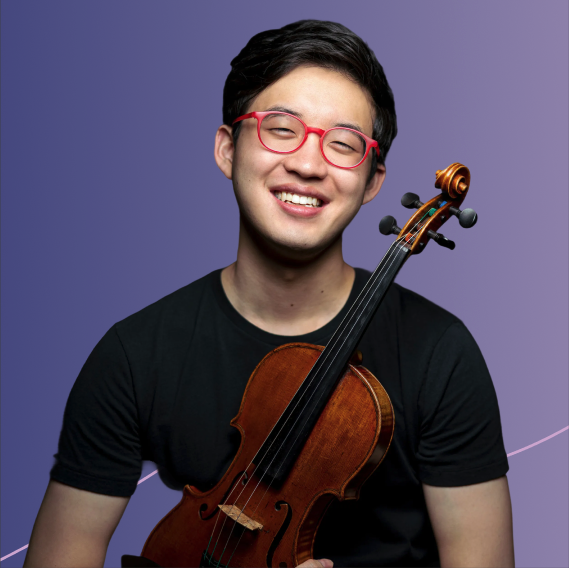
Julian Rhee |  violin

The Richmond Symphony’s celebration of America at 250 concludes by asking a question that extends far beyond birthplace: what makes a composer part of the American story? Philip Glass was born in Baltimore, while Igor Stravinsky and Sergei Rachmaninoff both came to the United States after leaving Europe behind and became naturalized citizens. Here they found new homes, new audiences, and a place within their adopted nation’s musical life. 

For Music Director Valentina Peleggi, that broader idea of belonging is central to the program. “I wanted to close with a look at what is American — not just artists who were born in the USA, but artists who came from another part of the world and were accepted here,” she says. They brought their own experience and cultural inheritance, all of which became part of an evolving American sound.

Stravinsky/ Suite from The Firebird (1919 version) / 19 minutes

Stravinsky was still in his late twenties and not yet widely known when Sergei Diaghilev approached him to write a ballet for his Paris-based Ballets Russes. The scenario had been assembled by choreographer Michel Fokine from several Russian fairy tales. It gave Stravinsky a story and an orchestra large enough to test his imagination on a new scale. 

Premiered in 1910, The Firebird unfolds in the enchanted garden of Kashchei the Immortal, an evil sorcerer who holds his victims captive through supernatural powers. Prince Ivan encounters the Firebird, a radiant creature whose fiery plumage links her to the legendary phoenix that rises from the ashes. He seizes her and then agrees to set her free. In return, she gives him a feather that will summon her help.

When Kashchei and his guards threaten Ivan, the Firebird returns, drives them into a frenzied dance, and reveals that the sorcerer’s soul is hidden inside an egg. Ivan destroys it, breaking Kashchei’s power and freeing his victims.

Stravinsky makes the difference between the supernatural and human worlds immediately audible. Ominous low strings set the scene of Kashchei’s garden, while the Firebird flashes across the orchestra in trills and abrupt changes of color; the Princesses’ dance draws on Russian folk music to define the human realm. The “Infernal Dance,” with its stabbing accents and relentless rhythmic drive, points ahead to The Rite of Spring. A gentle “Berceuse,” or lullaby, follows as the wizard and his guards are lulled into an enchanted sleep.

With Kashchei defeated, a solo horn introduces a simple but radiant Russian folk melody that leads into the jubilant final tableau, where Ivan marries the princess he loves. Stravinsky repeats the tune in increasingly animated and accelerated variations until the entire orchestra blazes and peals with exuberant light.

Glass/ Violin Concerto No. 1/26 minutes

Philip Glass is one of those rare contemporary composers whose music can be identified within seconds. Repetition, steady pulse, and gradual change are central to his language. When Glass wrote his First Violin Concerto in 1987, orchestral music was still relatively new territory for him. Conductor Dennis Russell Davies, a long-standing champion, encouraged him to write a piece for the orchestra he had cofounded. Glass had composed an earlier violin concerto in 1960 but later withdrew it; the 1987 work therefore became his official Violin Concerto No. 1. Its success opened the way for the many concertos and symphonies that followed.

The proposed soloist was Paul Zukofsky, who had appeared in Einstein on the Beach as the violin-playing physicist; Glass dedicated the score jointly to Zukofsky and Davies. On a deeper level, however, the concerto was written for Glass’s late father, Ben, who had owned a record store in Baltimore.

Although Glass initially envisioned five movements, the work took shape as a three-movement design. The first movement grows from a recurring chord sequence and persistent pulse, while the solo violin alternates rapid figuration with more expansive melodic writing, often high in its range.

The slow movement unfolds over a recurring pattern of descending chords. The music continues until it reaches a suspended point and simply ceases. The dance-like finale slows into a reflective coda that recalls the opening.

“I wanted to close with a look 
at what is American — not 
just artists who were born
 in the USA, but artists who 
came from another part of 
the world and were accepted 
here.”

RACHMANINOFF / SYMPHONIC DANCES / 35 minutes

Symphonic Dances was the last score Sergei Rachmaninoff completed — and the only one he composed entirely in the United States, where he spent his final years of voluntary exile. Written in 1940, during a time of world war, it looks back toward the Russia he had left after the Bolshevik Revolution, while revealing the leaner, more rhythmically charged style of his later music.

Rachmaninoff first considered the title Fantastic Dances and proposed names for its three movements — “Noon,” “Twilight,” and “Midnight” — perhaps suggesting stages of a human life, though he eventually removed the titles.

A brief introduction opens the first movement before the music gathers momentum around a potent three-note idea. Against it, an alto saxophone intones a broad, folk song-like melody. The opening rhythm gradually returns, and bell-like sonorities, which Rachmaninoff associated with memories of Russia, bring the movement to a subdued close.

The second movement is a strange and rueful waltz repeatedly unsettled by sudden turns and finely drawn solos. The final movement moves between extreme slowness and bursts of demonic energy. Rachmaninoff introduces the medieval Dies Irae, the chant associated with death and the Last Judgment that haunted many of his earlier works. Against it he places music rooted in Russian sacred chant.

(c)2026 Thomas May

Today's Musician Roster

Image for Dances & Fire
Program

Program Notes

RACHMANINOFF, GLASS
& STRAVINSKY

Valentina Peleggi | conductor
Julian Rhee |  violin

The Richmond Symphony’s celebration of America at 250 concludes by asking a question that extends far beyond birthplace: what makes a composer part of the American story? Philip Glass was born in Baltimore, while Igor Stravinsky and Sergei Rachmaninoff both came to the United States after leaving Europe behind and became naturalized citizens. Here they found new homes, new audiences, and a place within their adopted nation’s musical life. 

For Music Director Valentina Peleggi, that broader idea of belonging is central to the program. “I wanted to close with a look at what is American — not just artists who were born in the USA, but artists who came from another part of the world and were accepted here,” she says. They brought their own experience and cultural inheritance, all of which became part of an evolving American sound.

Stravinsky/ Suite from The Firebird (1919 version) / 19 minutes

Stravinsky was still in his late twenties and not yet widely known when Sergei Diaghilev approached him to write a ballet for his Paris-based Ballets Russes. The scenario had been assembled by choreographer Michel Fokine from several Russian fairy tales. It gave Stravinsky a story and an orchestra large enough to test his imagination on a new scale. 

Premiered in 1910, The Firebird unfolds in the enchanted garden of Kashchei the Immortal, an evil sorcerer who holds his victims captive through supernatural powers. Prince Ivan encounters the Firebird, a radiant creature whose fiery plumage links her to the legendary phoenix that rises from the ashes. He seizes her and then agrees to set her free. In return, she gives him a feather that will summon her help.

When Kashchei and his guards threaten Ivan, the Firebird returns, drives them into a frenzied dance, and reveals that the sorcerer’s soul is hidden inside an egg. Ivan destroys it, breaking Kashchei’s power and freeing his victims.

Stravinsky makes the difference between the supernatural and human worlds immediately audible. Ominous low strings set the scene of Kashchei’s garden, while the Firebird flashes across the orchestra in trills and abrupt changes of color; the Princesses’ dance draws on Russian folk music to define the human realm. The “Infernal Dance,” with its stabbing accents and relentless rhythmic drive, points ahead to The Rite of Spring. A gentle “Berceuse,” or lullaby, follows as the wizard and his guards are lulled into an enchanted sleep.

With Kashchei defeated, a solo horn introduces a simple but radiant Russian folk melody that leads into the jubilant final tableau, where Ivan marries the princess he loves. Stravinsky repeats the tune in increasingly animated and accelerated variations until the entire orchestra blazes and peals with exuberant light.

Glass/ Violin Concerto No. 1/26 minutes

Philip Glass is one of those rare contemporary composers whose music can be identified within seconds. Repetition, steady pulse, and gradual change are central to his language. When Glass wrote his First Violin Concerto in 1987, orchestral music was still relatively new territory for him. Conductor Dennis Russell Davies, a long-standing champion, encouraged him to write a piece for the orchestra he had cofounded. Glass had composed an earlier violin concerto in 1960 but later withdrew it; the 1987 work therefore became his official Violin Concerto No. 1. Its success opened the way for the many concertos and symphonies that followed.

The proposed soloist was Paul Zukofsky, who had appeared in Einstein on the Beach as the violin-playing physicist; Glass dedicated the score jointly to Zukofsky and Davies. On a deeper level, however, the concerto was written for Glass’s late father, Ben, who had owned a record store in Baltimore.

Although Glass initially envisioned five movements, the work took shape as a three-movement design. The first movement grows from a recurring chord sequence and persistent pulse, while the solo violin alternates rapid figuration with more expansive melodic writing, often high in its range.

The slow movement unfolds over a recurring pattern of descending chords. The music continues until it reaches a suspended point and simply ceases. The dance-like finale slows into a reflective coda that recalls the opening.

“I wanted to close with a look 
at what is American — not 
just artists who were born
 in the USA, but artists who 
came from another part of 
the world and were accepted 
here.”

RACHMANINOFF / SYMPHONIC DANCES / 35 minutes

Symphonic Dances was the last score Sergei Rachmaninoff completed — and the only one he composed entirely in the United States, where he spent his final years of voluntary exile. Written in 1940, during a time of world war, it looks back toward the Russia he had left after the Bolshevik Revolution, while revealing the leaner, more rhythmically charged style of his later music.

Rachmaninoff first considered the title Fantastic Dances and proposed names for its three movements — “Noon,” “Twilight,” and “Midnight” — perhaps suggesting stages of a human life, though he eventually removed the titles.

A brief introduction opens the first movement before the music gathers momentum around a potent three-note idea. Against it, an alto saxophone intones a broad, folk song-like melody. The opening rhythm gradually returns, and bell-like sonorities, which Rachmaninoff associated with memories of Russia, bring the movement to a subdued close.

The second movement is a strange and rueful waltz repeatedly unsettled by sudden turns and finely drawn solos. The final movement moves between extreme slowness and bursts of demonic energy. Rachmaninoff introduces the medieval Dies Irae, the chant associated with death and the Last Judgment that haunted many of his earlier works. Against it he places music rooted in Russian sacred chant.

(c)2026 Thomas May
Today's Musician Roster