Anton Bruckner
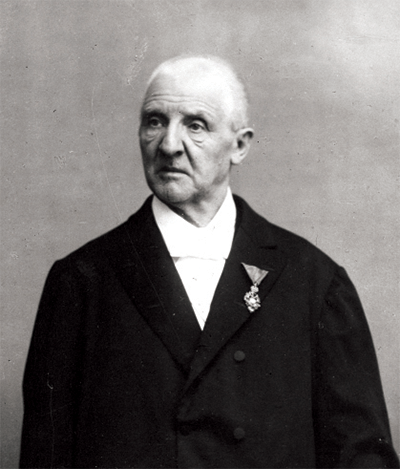
Born: September 4, 1824, Ansfelden, Upper Austria
Died: October 11, 1896, Vienna, Austria
Psalm 150
- Work Composed: 1892
- Premiere: November 13, 1892 in Vienna, William Gericke conducting
- Instrumentation: SATB chorus, soprano soloist, 2 flutes, 2 oboes, 2 clarinets, 2 bassoons, 4 horns, 3 trumpets, 3 trombones, tuba, timpani, strings
- Duration: approx. 9 minutes
Anton Bruckner first came to Vienna in 1867 as organist to the Imperial Court, when his reputation was founded entirely on his sacred choral compositions and his surpassing ability at the keyboard. Although his attention turned primarily to the symphony in the years that followed, his duties at court kept him in constant contact with sacred music, and his works for the church are among the most significant of any 19th-century composer. He wrote six Masses, a Te Deum, a Magnificat and almost three dozen smaller works, including settings of five Psalms. The last of the Psalm settings, that for Psalm 150, was written at the same time as the unfinished Ninth Symphony and was Bruckner’s next-to-last completed work. It was originally intended for a music festival of the Allgemeiner Deutscher Musikverein in Vienna in 1892, but the festival was canceled and the first performance was given by the Vienna Philharmonic.
Bruckner’s Psalm 150 is compact in musical design and stirring in its heartfelt praise of God. It opens with a jubilant proclamation of Hallelujah! by chorus and full orchestra, a refrain that recurs throughout the piece both to mark the important structural junctures and to maintain the exultant mood of the beginning. The next section (Lobet den Herrn — “Praise God”), full of joyful music-making, leads to a quieter episode (Alles, was Odem hat — “Let everything that hath breath”) with prominent parts for solo violin and soprano. The Hallelujah refrain returns before an extended, complex fugue begins, again using the text Alles, was Odem hat. One final time, Hallelujah is brought back as a coda to this majestic proclamation of Bruckner’s deep religious faith.
—©Dr. Richard E. Rodda