Alexander Zemlinsky
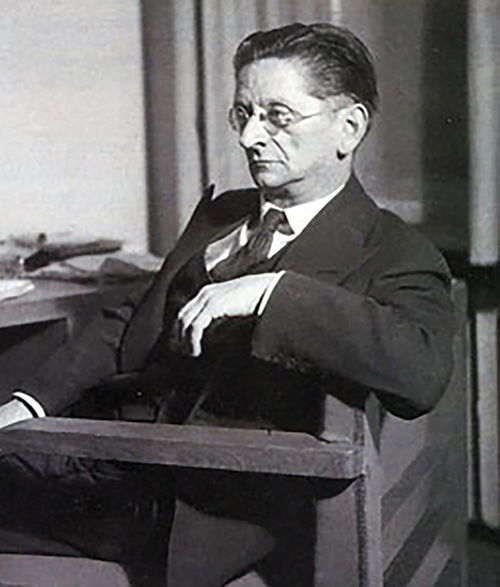
Born: October 14, 1871, Vienna, Austria
Died: March 15, 1942, Larchmont, New York
Symphonische Gesänge (“Symphonic Songs”), Op. 20
- Work Composed: 1929
- Premiere: April 8, 1935 in Brno, Czechoslovakia, Heinrich Jalowetz conducting
- Instrumentation: (with Margaret Bonds songs) soprano and baritone soloists, 2 flutes (incl. alto flute), piccolo, 3 oboes (incl. English horn), 3 clarinets (incl. E-flat clarinet, bass clarinet), 3 bassoons (incl. contrabassoon), 3 horns, 3 trumpets, 3 trombones, tuba, timpani, bass drum, crash cymbals, glockenspiel, high hat, jazz drums, rute, snare drum, suspended cymbals, tam-tam, tambour de Basque, triangle, vibraphone, wood drum, harp, piano, celeste, strings
- Duration: approx. 22 minutes (with Margaret Bonds songs)
The music of Alexander Zemlinsky synthesized the dominant strains of musical life in his native Vienna at the beginning of the 20th century. A protégé of Brahms (who persuaded his publisher, Fritz Simrock, to issue the score of the Piano Trio, Op. 3, of the 25-year-old composer) and a composition student of the brothers Robert and Johann Fuchs at the Vienna Conservatory, Zemlinsky integrated the ripe chromaticism and expansive expression of late Romanticism into his musical speech before trying out some of the avant-garde techniques of Arnold Schoenberg (who married Zemlinsky’s sister, Mathilde, in 1901). Zemlinsky remained more conservative than his brother-in-law, however, and he never eschewed traditional tonality with the serialists’ dedicated diligence. Like Mahler, Zemlinsky made his living as a conductor, in Prague and in Berlin, composing as his duties allowed. When the Nazi takeover in 1933 forced him back to Austria, he hoped to devote himself to composition, but the increasingly tense political situation — Zemlinsky had some Jewish blood — allowed him to complete only his final string quartet, write a few songs and draft the opera Der König Kandaules (“King Candaules,” after André Gide). By the time of the Nazi Anschluss, in 1938, Zemlinsky was ill and incapable of creative work. He fled first to Prague and then made his way to the United States when hostilities erupted the following year. His death, in Larchmont, New York on March 15, 1942, drew little notice. He remained in eclipse until the late 1970s, when British radio stations and a few German opera houses sponsored revivals of his music. Many of his works, including several of the operas, have since become available in recordings and scattered performances, and Zemlinsky’s full stature is finally being recognized by the musical world.
Zemlinsky composed his Symphonische Gesänge in 1929, choosing as his texts German translations of seven poems published that year by Viennese journalist and translator Anna Nussbaum, in a collection of works by several Black writers of the “Harlem Renaissance” titled Afrika Singt (“Africa Sings”).
American popular culture pervaded Europe in the 1920s — Gershwin musicals sold out in London; Josephine Baker was the hottest ticket in Paris; classical composers from Ravel to Shostakovich incorporated jazz elements into their works; American recordings filled European shops and played endlessly on radio stations; the Charleston, Black Bottom, Shimmy and Foxtrot created a dance craze — and the appearance of Afrika Singt created a sensation. Its poems provided the basis of both popular songs and classical works, many by Jewish composers, who not only found creative inspiration in jazz, but also recognized a parallel in the prejudice against Blacks in America to their own situation, in the years when the virulently anti-Semitic Nazi Party was becoming a force in the unsettled politics of the Weimar Republic.
Zemlinsky wrote his Symphonische Gesänge in the manner of a classical song cycle, with seven varied movements expressing the nature of these deeply disturbing poems while eschewing any reference to popular American musical idioms. “Zemlinsky does not yield to the temptation of approximating to the text as a colorist and musical exotic,” wrote German musicologist Wulf Konold. “Precisely because he keeps at a distance from a world that is foreign to him, the composition gains credibility, aiming not at the folkloric surface but at the basic air of suffering.”
—©Dr. Richard E. Rodda