Louise Farrenc
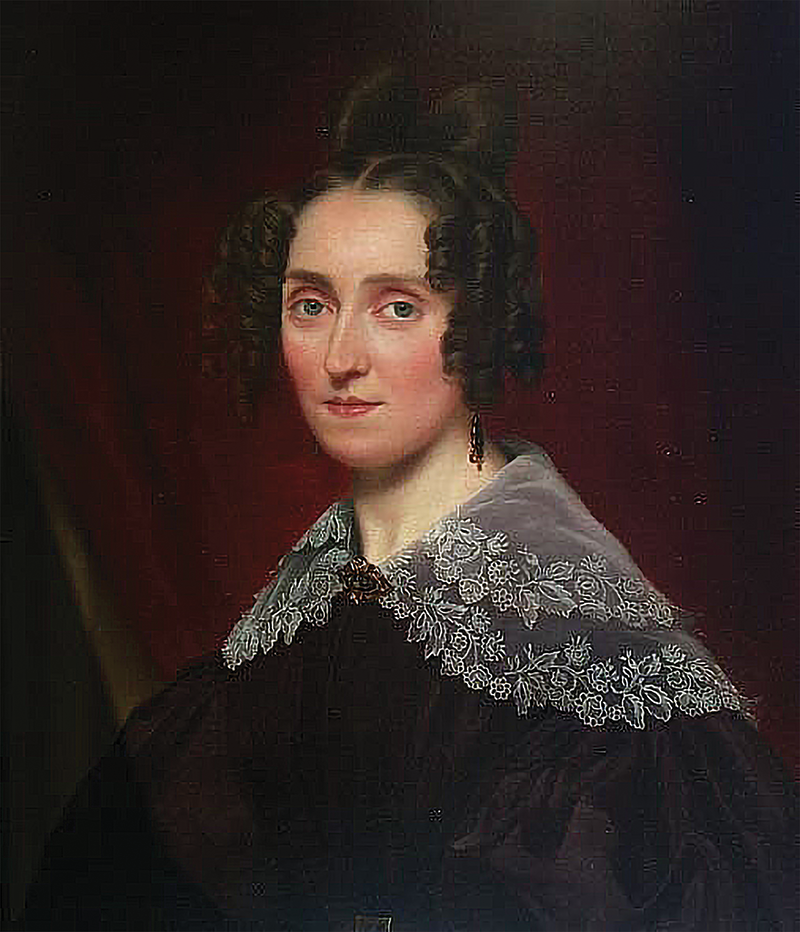
Born: May 31, 1804, Paris, France
Dead: September 15, 1875, Paris, France
Overture No. 2 in E-flat Major, Op. 24
- Composed: 1834
- Premiere: April 1840, Société des Concerts, Paris
- Instrumentation: 2 flutes, 2 oboes, 2 clarinets, 2 bassoons, 4 horns, 2 trumpets, 3 trombones, timpani, strings
- CSO notable performances: These are the first CSO performances of the Overture No. 2.
- Duration: approx. 7 minutes
Born Jeanne-Louise Dumont, Louise Farrenc grew up with her family at the Sorbonne, a culturally rich environment that presented her with opportunities for developing artistic and musical skills. She began playing piano and studying basic music theory at age six, and, as a teenager, she studied harmony with Anton Reicha, a professor at the Paris Conservatoire. Louise married flutist and music publisher Aristide Farrenc in 1821. After traveling through France with her husband, Louise resumed studies with Reicha, focusing on counterpoint, fugue, orchestration and composition. She also studied piano with Ignaz Moscheles and Johann Nepomuk Hummel.
Farrenc’s first compositions were written for solo piano and published by her husband’s publishing firm in the 1820s–30s. She soon ventured beyond piano repertoire and turned to orchestral and chamber music. Farrenc composed her two concert overtures within months of each other in 1834. She composed three symphonies in the 1840s, but her chamber music works — including piano trios, piano quintets, a nonet and a sextet — were perhaps the most notable of her output. Farrenc twice received the Chartier Prize from the Institut de France, in 1861 and 1869, for her contributions to chamber music.
In 1842, Farrenc was appointed professor of piano at the Paris Conservatoire, a position she held for 31 years. It was rare for a woman to hold a permanent position of such rank and prominence at the Paris Conservatoire at the time. Many of Farrenc’s students — including her own daughter Victorine — achieved success as pianists or teachers, demonstrating the excellence of her teaching. In 1861, Farrenc and her husband began compiling Le trésor des pianistes, an anthology of historical keyboard music from the 16th through the 19th centuries. Aristide had devoted years to scholarship on early music, and Louise advocated for its revival through historical concerts presented with her students. The first eight volumes of the anthology were published before Aristide’s death in 1865, and Louise completed the remaining 15 volumes before her own death in 1875.
Composing her overtures marked a turning point in Farrenc’s musical career, as she established herself as a composer of not just piano music but orchestral music as well. Although the overtures were not published, they received performances from manuscript parts. Both overtures have similar instrumentation and design, structured as single-movement works featuring a slow introduction and main Allegro section. Written just months after the first overture, Overture No. 2 is somewhat darker and more dramatic than the first. After the premiere of Overture No. 2 in April 1840, Hector Berlioz offered a positive review of Farrenc’s orchestration and quality of writing in the Gazette musicale.
Bold chords open the overture, beginning a dramatic introduction. A pause follows the introduction’s final sustained chord before launching into the piece proper, a faster and lighter Allegro. The main theme is presented here as a moving line in the violin in dialogue with soft chords in the woodwinds and horns. The brass joins the woodwind and horn chords, and the music grows in dynamics and texture. A transition of alternating notes in the flute and oboe leads into a secondary theme in the dominant key, characterized by pairs of wind instruments trading off a gentle falling figure.
Farrenc’s skill of orchestration becomes more evident as the piece continues. The full ensemble is balanced by individual instrumental voices and combinations of orchestral timbres. As the themes demonstrate, Farrenc achieves distinctive colors by pairing different instrumental sections together, and she effectively creates contrast by juxtaposing bodies of sound, especially the winds against the strings. Shortly after the secondary theme appears, a bubbling solo clarinet line rises above a layer of violins that have joined the theme. The full ensemble comes together before fading away to a moment featuring only the strings. Such treatment results in dramatic shifts in dynamics and texture that propel the piece forward. Brief pauses between sections lend further dramatic effect, defying expectations of continuous movement. Hints of the themes emerge throughout the piece before fully reappearing at the recapitulation. The remainder of the piece proceeds with high energy, with an emphatic coda bringing the music to a strong close.
Overture No. 2 falls into the genre of “concert overture,” a genre still quite new at the time of its composition in 1834. Conventionally, overtures preceded performances of opera or theatre as a musical introduction to the drama. As the 18th century progressed, it became more common for the overture to set the mood of the forthcoming opera, sharing emotional and dramatic settings and often presenting themes from the opera in anticipation of the musical drama to follow. In the early 19th century, the concert overture emerged as a stand-alone genre. Concert overtures sometimes appeared as existing operatic overtures detached from the opera performance and instead presented in a concert setting. Composers also began writing overtures exclusively for concert performance, without any connection to opera or theatre. Such overtures often still retained a suggestive title to convey a general sense of poetic or dramatic character. For example, Mendelssohn — widely considered to be the first composer of concert overtures — composed his overture to A Midsummer Night’s Dream in 1826, and it was not until many years later that he transformed the piece into incidental music for the theatre. The practice of adding an evocative title to a concert overture participated in the aesthetics of programmatic music, conveying extra-musical ideas through wordless instrumental music. By titling her pieces Overture No. 1 and Overture No. 2, Farrenc instead adhered to conventions of absolute music, or instrumental music with no extra-musical ideas suggested through the title or description.
Farrenc’s composition of her overtures and other orchestral and chamber music was a bold move. In the early- to mid-19th century, opera and salon music dominated the cultural life of Paris. Farrenc and Berlioz were among the few French composers who created orchestral music, as the medium at the time generally followed a German tradition after Beethoven and had little place in the French music scene. Although opera was the foremost genre for gaining fame as a composer in Paris, Farrenc opted for her instrumental pieces. Nevertheless, Farrenc successfully established herself in French culture, achieving her prominent tenure at the Paris Conservatoire, composing several works performed throughout her lifetime, and contributing to scholarship and performance practice. She was largely forgotten after her death, but, in recent years, the name and music of Louise Farrenc is being reintroduced to audiences and regaining acclaim.
—©Dr. Rebecca Schreiber