Max Bruch
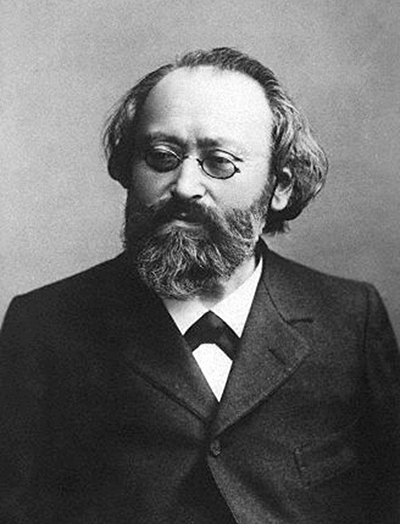
Born: January 6, 1838, Cologne, Germany
Died: October 2, 1920, Berlin, Germany
Scottish Fantasy for Violin and Orchestra, Op. 46
- Composed: 1880
- Premiere: February 22, 1881, Liverpool Philharmonic Society, England, Max Bruch conducting; Joseph Joachim, violin
- Instrumentation: solo violin, 2 flutes, 2 oboes, 2 clarinets, 2 bassoons, 4 horns, 2 trumpets, 3 trombones, tuba, timpani, bass drum, crash cymbals, harp, strings
- CSO Notable Performances:
- First: February 1895, Anton Seidl conducting; Eugène Ysaÿe, violin.
- Most Recent: May 2014, James Gaffigan conducting; Nicola Benedetti, violin.
- Duration: approx. 30 minutes
Despite having composed a number of operas, songs, chamber works, and pieces for chorus, orchestra and keyboard, German composer Max Bruch largely faded from the Western performance canon after his death. He is best known for his First Violin Concerto in G Minor, Op. 26, composed in 1868. His love of the violin and his personal and professional relationships with the distinguished violinists of the time — Joseph Joachim, Pablo de Sarasate, Ferdinand David — provided Bruch with the motivation and practical guidance to compose several works for violin. Bruch also drew inspiration from folk songs, turning to them as source material for his melodies and the spirit of his music. From these passions arose Bruch’s Scottish Fantasy, a four-movement composition of Scottish melodies written for violin and orchestra. Along with the First Violin Concerto, the Scottish Fantasy helped to prevent Max Bruch’s name from falling into obscurity and preserve his legacy.
Max Bruch first began learning music from his mother, a singer, in Cologne, Germany. He demonstrated musical talent at an early age, beginning to compose at age 9 and winning the Frankfurt Mozart-Stiftung Prize at age 14. This award gave him the opportunity to study with Carl Reinecke, Ferdinand Hiller and Ferdinand Breunung. After 1858, Bruch began to travel around Germany, composing and working in Mannheim, Koblenz and Sondershausen. Later, he held conducting posts in Berlin, Liverpool (England) and Breslau. Bruch spent the final two decades of his life in Berlin, teaching a masterclass in composition at the Hochschule für Musik. His students included Respighi and Vaughan Williams, and he was awarded an honorary doctorate by Cambridge University in 1893.
Bruch’s interest in folksong inspired his compositional work from an early stage. Over the course of his career, he composed works that incorporated Russian folksongs, Swedish melodies and Hebrew songs. In 1864, he published 12 schottische Volkslieder (“12 Scottish Folksongs”), drawing from the collection The Scots Musical Museum (Edinburgh, 1787–1803). Compiled by James Johnson, this collection of 600 folksongs featured a number of airs taken down by Robert Burns, the celebrated Scottish poet and lyricist. Sixteen years later, Bruch returned to Scottish folksongs to create his Scottish Fantasy.
Bruch composed the Scottish Fantasy while in Berlin, during the winter of 1879–80. Its full title is Fantasie unter freier Benutzung schottischer Volksmelodien (“Fantasy with Free Use of Scottish Folk Melodies”). The Scottish Fantasy is written for violin and orchestra and, with its four-movement structure, is much like a concerto. Although Bruch often referred to the work as a concerto while he composed it, he ultimately chose the title of Fantasy to reflect the free style of the form and his free use of folksong. Bruch attributed the inspiration of his Fantasy to the works of Scottish novelist and poet Sir Walter Scott, whom he had long admired. In 1875, he began working on a choral work titled Das Feuerkreuz (“The Fiery Cross”), inspired by Sir Walter Scott’s The Lady of the Lake. Bruch abandoned work on Das Feuerkreuz until 1889, but his initial ideas and eventual composition demonstrated that Scott’s writing had a lasting impact on him, an impact further evidenced in the Scottish Fantasy. Although Bruch dedicated his Fantasy to the Spanish violin virtuoso Pablo de Sarasate, Joseph Joachim performed the solo violin part when the piece premiered in 1881.
The Scottish Fantasy begins with a solemn chorale in the low winds introducing the solo violin, which enters with expressive recitative-like statements. According to Bruch biographer Christopher Fifield, the opening depicts “an old bard, who contemplates a ruined castle and laments the glorious times of old,” perhaps evoking the world of Sir Walter Scott. In the Adagio cantabile section that follows the introduction, all the winds and strings sweetly usher in the solo violin’s rendition of the folksong “Auld Rob Morris.” The violin gently sings the flowing melody, with double-stops and harp accompaniment evoking folksong harmonies.
The second movement is a Scherzo, a lively dance based on the folksong “The Dusty Miller.” The fast and boisterous energy transforms the violin into a Scottish fiddle, and the open fifths droning in the low strings are meant to imitate bagpipes. At the end of the Scherzo, the animated energy gives way to a somber reappearance of the first movement theme, now in a minor key. The violin melody continues without pause into the third movement, a nostalgic Andante sostenuto. This movement features a set of poignant variations on the folksong “I’m Down for Lack of Johnnie.”
The fourth movement Finale bears the marking Allegro guerriero, a “warrior” ending that alludes to the similarly named final movement of Mendelssohn’s Scottish Symphony No. 3. Entering with bold triple stops, the violin begins the movement with a melody based on “Scots Wha Hae.” The movement is energetic and “warlike,” conveying the spirit of the folksong, which became the war song of the Scots in the Middle Ages. As the story goes, Robert the Bruce sang “Scots Wha Hae” after he defeated the English at the 1314 Battle of Bannockburn, an important milestone in Scotland’s fight for independence from Britain. An extended cadenza section shows off the violin’s virtuosity before the full ensemble rejoins to conclude the piece with a vigorous rearticulation of the “Scots Wha Hae” melody.
While Bruch enjoyed a considerable amount of success during his lifetime, he did not achieve the same level of renown as many other Germanic composers of the time. Bruch was a close contemporary of Brahms, and it proved difficult for Bruch to elevate his reputation while working in the shadow of such a prestigious composer. The contentious compositional aesthetics of the mid to late 19th century also posed a challenge for Bruch. He strongly opposed the progressive ideals of Wagner, Liszt and the New German School. His resistance to their stylistic innovations resulted in his own compositions seeming conservative and unoriginal as aesthetic perspectives continued to evolve with the rise of figures such as Richard Strauss. While most of Bruch’s compositions remain unfamiliar to audiences today, a handful of his works, including the Scottish Fantasy, survived the test of time to remind us of his creative power and musical mastery.
—©Dr. Rebecca Schreiber