Richard Strauss
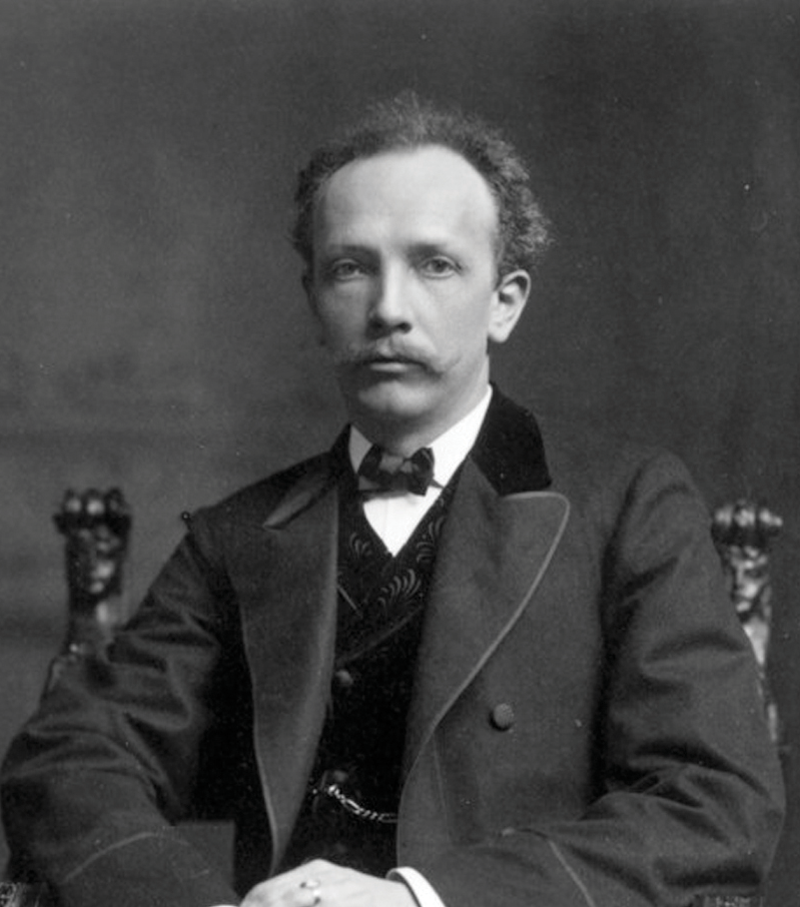
Born: June 11, 1864, Munich, Germany
Died: September 8, 1949, Garmisch-Partenkirchen, Germany
Concerto for Oboe and Small Orchestra in D Major
- Work Composed: 1945
- Premiere: February 1946, Volkmar Andreae conducting the Tonhalle-OrchesterZürich; Marcel Saillet, oboe
- Instrumentation: solo oboe, 2 flutes, English horn, 2 clarinets, 2 bassoons, 2 horns, strings
- CSO notable performances: First: April 1983, Michael Gielen conducting; HeinzHolliger, oboe. Most Recent: February 2017, Edo de Waart conducting; Dwight Parry, oboe.
- Duration: approx. 28 minutes
Art does not always imitate life; sometimes it bluntly contradicts it. In Richard Strauss’ Concerto for Oboe and Small Orchestra, his endless summer melodies, his transparent and autumn-tinted orchestration, his breezy harmonies, and his playful solo episodes all fly smack in the face of the reality confronting the composer: the world as he knew it had come to an end.
Garmisch-Partenkirchen, 1945
By 1945, the opera houses that had once been home to Strauss’ most famous works now lay in ruins in Dresden, Munich and Vienna. American military forces occupied the region of Upper Bavaria where he lived. He was under house arrest because he had accepted an appointment under the Nazi government as president of the Reichsmusikkammer, believing that he could protect his colleagues from Nazi fanaticism. He soon found himself stripped of his titles and his assets seized when he refused to terminate his association with his Jewish librettist.
On April 30, when his grandson spotted the first American tanks approaching, the 80-year-old composer went out to confront the G.I.s in person. “I’m Richard Strauss — the composer of Der Rosenkavalier,” Strauss reportedly told them. Against all odds, one of them not only knew his name, but also his reputation and his work. The military declared his villa off limits from confiscation, and, over the following weeks, G.I.s visited him regularly, enjoying his company and ensuring that he had necessities such as soap, coffee and salt.
The performing arts had already been decimated by the Nazi regime, and the composer had been living in isolation not only from the previous experiments of modernism, but also from emerging cultural movements deemed “degenerate,” such as jazz. When the American serviceman Joseph Kalm sat at his piano and played Gershwin’s “Summertime” for him, a clueless Strauss said, “Very nice. Did you compose that?”
Another one of the visiting G.I.s, John de Lancie, was a professional oboist from Philadelphia. He had graduated from the Curtis Institute of Music in 1940 and Fritz Reiner had immediately hired him as principal oboist with the Pittsburgh Symphony Orchestra. Two years into his tenure he had been drafted into the army, playing first in the military band before his reassignment to intelligence and covert operations. Thus, it was sheer coincidence that de Lancie happened to be stationed in Strauss’ town of Garmisch-Partenkirchen at that time. De Lancie took advantage of the opportunity to discuss art, literature and music — in French — with the elderly man for hours at a time. Recalling the soaring oboe lines in Strauss’ stage works, de Lancie asked whether the maestro had ever considered writing something for solo oboe. Strauss replied bluntly: no, and that settled the matter. But the seed had been planted, and the composer eventually began toying with ideas for an oboe concerto "as exercise for his wrist, to dispel the boredom."
Zurich, Switzerland
By October of that year, food had become unaffordable and fuel was unavailable. It would be impossible to remain in the Garmisch villa during the upcoming winter, so Strauss and his wife left in the early hours of the morning, carrying an armful of manuscripts and the unfinished oboe concerto. At the Swiss border they were detained, but after bribing the French border guard with a copy of the score of the Alpine Symphony, they crossed into Switzerland. Once they reached Zurich, their remaining manuscripts were confiscated by hotel staff as collateral against their hotel bill.
Strauss set about arranging concert opportunities to pay their bills, but the stigma of his former association with Nazi Germany made it nearly impossible to get his works performed. He did manage to finish and premiere the oboe concerto in February of 1946 to a favorable public response, not by “the oboist from Chicago” as Strauss referred to de Lancie, but by Swiss oboist Marcel Saillet.
The Concerto for Oboe and Small Orchestra was eventually published under the composer's supervision in two differing versions. The original score was printed in 1946, but the composer made some significant revisions for a second edition in 1948. Tempos were clarified, dynamics were balanced out, orchestrations adjusted, cadenzas were re-notated, more rests were inserted into the solo part and, most significantly, the final movement was rewritten to extend the 6/8 section in order to create greater rhythmic punctuation in the orchestra and highlight the dialogue between orchestral violins and the soloist.
In spite of the support of musical colleagues and a successful festival of his works organized by Sir Thomas Beecham, the composer was never fully able to rehabilitate his reputation before his death in 1949.
No Breathing Room
The Concerto for Oboe and Small Orchestra is fundamentally a chamber work, soaked in a cheerfulness that recalls the composer’s earliest years. As with Strauss’ operas, the three movements of the concerto are closely interwoven and unfold without interruption, one scene following the next. But as rewarding as the work is for the listener, it is merciless for the soloist, beginning with one-and-a-half pages of oboe melody without a break for the soloist to catch their breath. “That is certainly one of the greatest challenges,” reports German oboist Albrecht Mayer. “Richard Strauss certainly knew exactly what he was writing, and had perhaps already heard one or two oboists who could handle continuous breathing. It’s hard to imagine it any other way. Even today, if you can do circular breathing, these first two pages are among the most difficult and exhausting in the standard repertoire for an oboist.” The trick sounds impossible: to inhale while simultaneously exhaling. “Put simply, that means that while you’re playing, while you’re forcing air out through your lips, you are inhaling,” explains Mayer. “It’s a technique that’s certainly several thousand years old.”
Despite its sunny disposition, the concerto evokes moments from Strauss’ operas and symphonic poems, albeit scaled down and rendered in brighter colors. He had not yet composed his Four Last Songs, yet the second movement of the concerto presages the ripened palette and the mellow backdrop of that work in its interplay between oboe, clarinet, horns and strings. As with his stage works, the composer constructs the piece from a handful of motives. The Allegro moderato opens with an unhurried main theme in D major, becoming more and more chromatic to offset the nostalgic second theme. The following Andante is an aria that takes up motives from the first movement and builds them into the emotional peak of the concerto. The Vivace introduces a carefree tune that intertwines with the flute, and the work concludes with a de facto fourth movement: a coda in 6/8 that evokes the mischievousness of another Strauss work, Till Eulenspiegel, closing the work with a wink and a smile.
©Dr. Scot Buzza