THREE ROMANCES FOR VIOLIN AND PIANO, OP. 22
Clara Schumann, née Wieck
(b. Leipzig, September 13, 1819; d. Frankfurt, May 20, 1896)
Composed 1853; 9 minutes
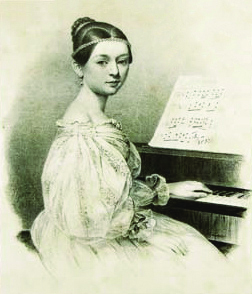
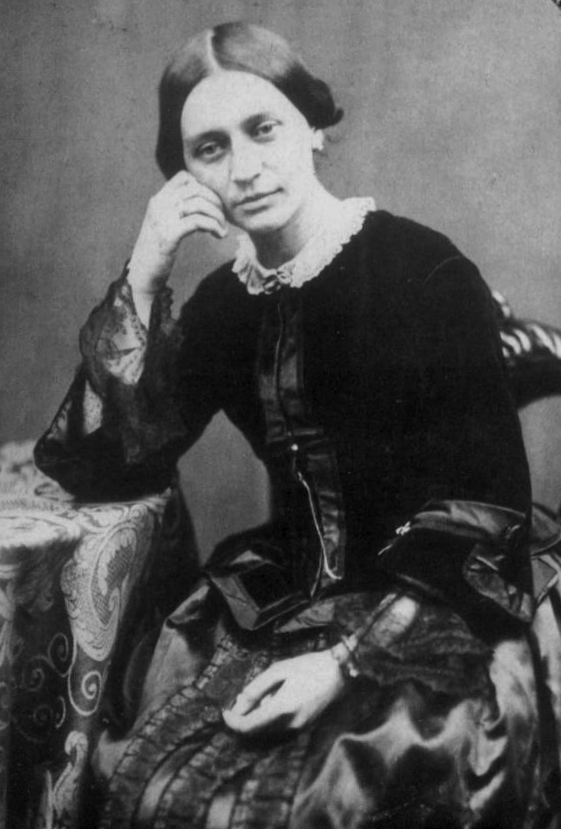 Brought up in a hot-house atmosphere, Clara Wieck composed from an early age, writing sets of variations and showpieces like many a virtuoso pianist of the day. She made her début in the Leipzig Gewandhaus when she was nine, her début in Paris when she was 12, and so impressed Vienna when she was 18 that she was appointed k.k. Kammervirtuosin, roughly, ‘Royal and Imperial Chamber Virtuoso,’ the greatest honor the Viennese court could bestow. Viennese cafés even began to serve Torte à la Wieck. Despite success with her compositions, uncertainty about her creative work began to appear well before her marriage to Robert Schumann. Her diary reveals many admissions that composition didn't come easily to her.
As a woman living in 19th century Germany, the odds were stacked against her success as a composer. Still, given the demands of her performing career, the birth of eight children and her husband’s deteriorating health and eventual commitment to an asylum for the last two years of his life, it is remarkable that she left behind some 30 compositions. Most are for piano or for voice. She wrote just two chamber works: a well-crafted Piano Trio that has been successfully revived in recent times and the Three Romances, Op. 22.
Clara Schumann wrote the Romances in 1853, after more than a decade married to Robert Schumann. Together, they had just met the 22-year-old violinist Joseph Joachim and would shortly afterwards first encounter the 20-year-old Johannes Brahms. Clara’s three Romances are carefully written hausmusik, music for the home, notably the gently melancholy first Romance. The third has a sentimental nature, while the second has the strongest echoes of Robert Schumann’s instrumental character pieces. “All three pieces display an individual character conceived in a truly sincere manner and written in a delicate and fragrant hand,” the Neue Berliner Musikzeitung wrote when the music was first published by Breitkopf und Härtel