SONATA IN E-FLAT MAJOR, FOR CLARINET AND PIANO, OP. 120, NO. 2
Johannes Brahms
(b. Hamburg, Germany, May 7, 1833; d. Vienna, Austria, April 3, 1897)
Composed 1894; 22 minutes
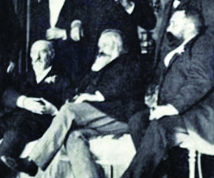 Brahms took his chamber music seriously and re-energized the medium for the late 19th century, raising it to the highest level of achievement. He was just 57 when his friend, the surgeon Theodor Billroth reported: “He rejects the idea that he is composing or will ever compose again.” Musicians, however, were eager to hear more from a composer whose musical bloodlines reached back through German romanticism and the great Viennese classical composers to Bach, almost a century and a half earlier. But honorary degrees and medals were no incentive for Brahms to create more. Then, in 1891, on a visit to Meiningen to hear the orchestra, Brahms discovered something new and stimulating in the playing of the court clarinetist Richard Mühlfeld. He was taken by the beauty of the young musician’s sound and eager to discuss technique with him. Their conversation and music-making led Brahms to write the beautiful, autumnal Clarinet Quintet and then a Clarinet Trio during the summer of 1891. Three years later, when Brahms again heard Mühlfeld, the musical fallout was a pair of sonatas that provided clarinetists with two of the finest works in the repertoire. Brahms also made them double as viola sonatas, giving viola players the first substantial works for their instrument.
The two sonatas are strongly juxtaposed—like Beethoven before him, Brahms had made a practice of simultaneously working on two contrasting compositions. The music flows seamlessly in the opening movement of the E-flat Sonata, the more relaxed of the two with a good deal of lightly worn technical craft masking the seams in this lyrical sonata-form movement. The middle movement is Brahms’s final scherzo and is, perhaps consciously, written in the same key and tempo as his first, over four decades earlier. There’s no slow movement as such, since the finale is a set of variations on a slow, understated but noble theme. Four ever fluid variations lead to an exhilarating fifth, which takes on the character of the traditional finale.