FANTASIESTÜCKE, FOR CLARINET AND PIANO, OP. 73
Robert Schumann
(b. Zwickau, Saxony, June 8, 1810; d. Endenich, nr. Bonn, July 29, 1856)
Composed 1849; 11 minutes
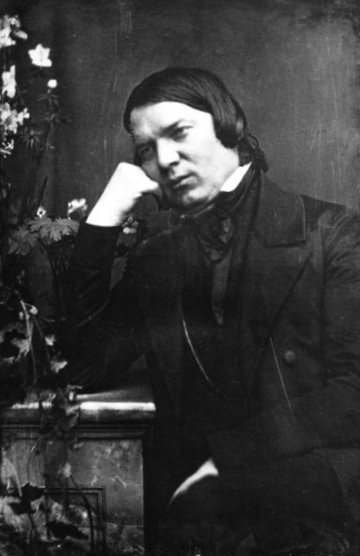 In 1849, a year Schumann described as his ‘most fruitful,’ he wrote some three dozen works in a wide variety of genres. They include a handful of chamber music pieces designed for the broader market of music lovers, as hausmusik. In each piece, he pairs the piano with a then often-neglected instrument: the Fantasy Pieces, Op. 73 for clarinet, Adagio and Allegro, Op. 70 for horn, Five Pieces in Folk Style, Op. 102 for cello and the Three Romances, Op. 94 for oboe. When first published, the Fantasy Pieces further broadened the market by suggesting ad libitum violin or cello in place of clarinet. Together with the Fairy-Tales, Op. 113 for viola, these poetic collections of miniatures show Schumann as storyteller; the pieces suggest an underlying conversational narrative as they pass one brief idea back and forth, from one instrument to another. The three pieces form an organic whole, since they are linked by both key and musical themes and follow one another with increasing momentum, without break. In the first, the violin introduces a dreamy, melancholy theme, while the piano presents another, complementing it. As the song-like second movement opens, this piano theme is heard again, quite transformed into something more joyful, now in the major key. Similarly, the second movement’s smoothly chromatic middle section later returns as a distant echo. Almost immediately, Schumann transforms it into a vigorous flourish that bursts into life at the beginning of the third movement. More references to themes from the opening movement underline the superb craft of these delightful pieces.