VIOLIN SONATA NO. 1, IN G MAJOR, OP. 78
Johannes Brahms
(b. Hamburg, Germany, May 7, 1833; d. Vienna, Austria, April 3, 1897)
Composed 1878-9; 28 minutes
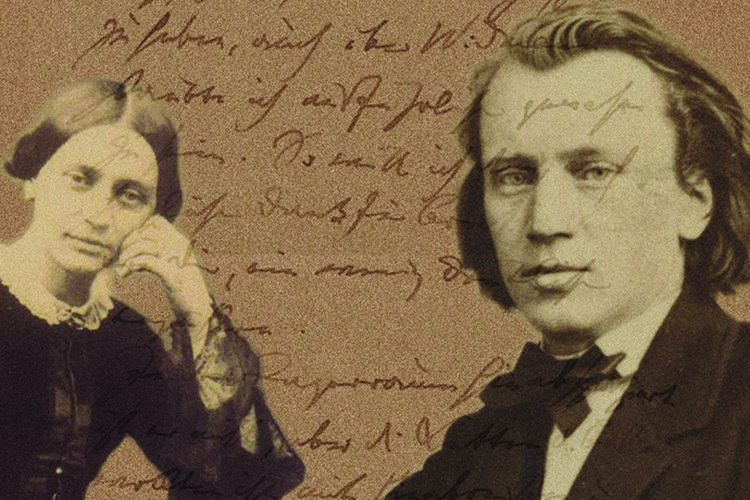 When she received the manuscript score of this newly completed sonata in 1879, Clara Wieck, by now Robert Schumann’s widow, at once realized its special significance. Clara recognized a key melody from two songs in Brahms’s earlier Regenlieder, Op. 59. The melody in these Rain Songs had consoled her a few years earlier over the death of her daughter Julie, the growing insanity of another son Ludwig and still more tragedy with the incurable tuberculosis of her gifted youngest son, Felix, Brahms’s godson. “It would bring me great joy if I could create some little thing in his memory,” Brahms wrote. This sonata, one of his gentlest, most lyrical creations, was that
little thing.
The music follows a similar emotional progression to that of the songs, both of which speak of a nostalgic but futile endeavor to recapture the lost innocence of youth. The melody makes far more than a token appearance in the sonata; it is its very lifeblood. Its most literal appearance is at the beginning of the third movement, where the violin takes over the vocal line and the piano is essentially the same as in the song. A prominent feature of the melody is its opening rhythmic pattern – a long-short-long figure on the same note. This becomes a feature of the piano accompaniment too and, ultimately, it grows into a unifying motto of the entire sonata, from the very beginning to the finale. It culminates in an intimate overlapping of the motif between the two instruments as a feeling of reconciliation permeates the score. This ‘Raindrop’ Sonata, as it is sometimes known, is the first of Brahms’s published violin sonatas, written in the peaceful setting of the village of Pörtschach in the Austrian Alps.
— All program notes copyright © 2023 Keith Horner. Comments welcomed: khnotes@sympatico.ca