October 16-24, 2026
The Davidson Theatre
Run Time: Approx. 2 hrs
Choreography: Dani Rowe
This show contains strobe lighting. Content warning: Act II of this production contains references to miscarriage.
Step into the dazzling world of Hollywood’s golden age with Marilyn, a brand-new ballet that celebrates the life and legacy of Marilyn Monroe. This spellbinding production weaves together the glitz and glamour of her stardom with the vulnerability and strength of the woman behind the icon. Featuring an original score by Shannon Rugani and stunning choreography from Dani Rowe, Marilyn takes audiences on an emotional journey through the highs and lows of life lived in the spotlight. This must-see performance pays tribute to one of the most enduring legends of the 20th century. This production is a collaboration between BalletMet, Oregon Ballet Theatre, and Tulsa Ballet.
Marilyn Monroe™; Rights of Publicity and Persona Rights are used with permission of The Estate of Marilyn Monroe LLC.
Follow BalletMet on Social Media and stay connected.


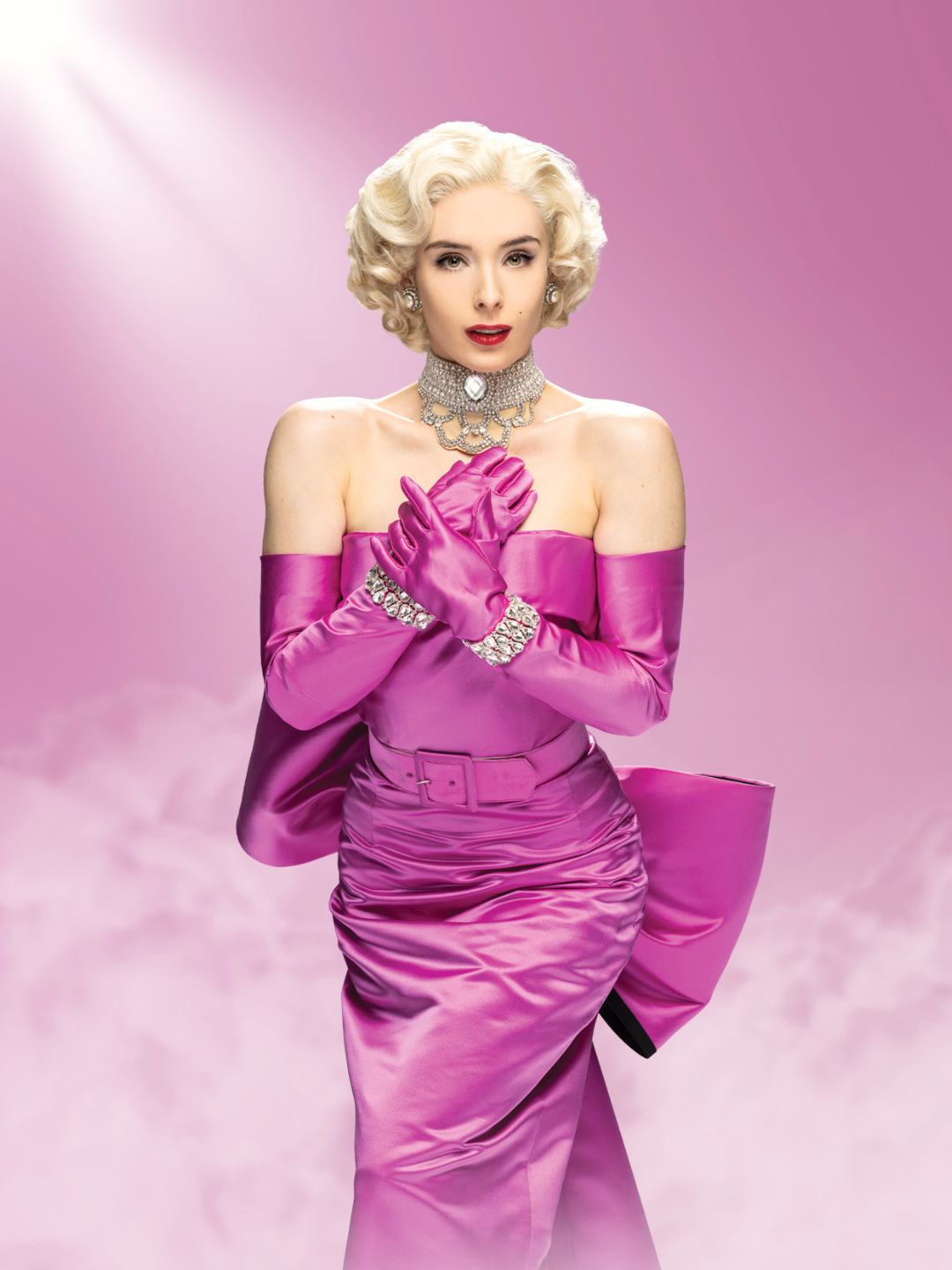
Dancer Sophie Miklosovic
Photo by Jennifer Zmuda Dance
ART INSPIRING ART
THE STORY BEHIND MARILYN
The idea for the ballet you're about to see took root during a phone conversation with Costume Designer Emma Kingsbury about Kim Kardashian's appearance at the Met Gala, wearing Marilyn Monroe's iconic "Happy Birthday, Mr. President" dress. As we discussed Marilyn's lasting cultural impact, Emma suggested "We should make a Marilyn ballet." Her idea sparked immediate excitement, and we began imagining how a ballet could capture Marilyn's layers - her glamour, vulnerability, and myth.
Shortly after joining Oregon Ballet Theatre, I had dinner with noted Portland philanthropist Jordan Schnitzer. When I mentioned the Marilyn ballet idea, Jordan spoke eloquently about his Andy Warhol collection and shared his insights into Warhol's fascination with celebrity culture, particularly his Marilyn Monroe series, created in 1962 after her death. These screen prints, based on a publicity photo from the film Niagara, showcased Marilyn's image in vibrant and sometimes jarring color palettes. Warhol's work wasn't just about fame - it explored the tension between mass production and individuality, revealing both the bright and dark sides of public personas.
Jordan later invited me to view these prints up close and learn more about Warhol's screen-printing process. The use of repetition created images that were both uniform and imperfect, hinting at the impossibility of perfectly replicating an icon like Marilyn. Each print revealed something slightly different - a fitting metaphor for Marilyn herself, who presented a carefully constructed image to the world, while her private life remained much more complex. The vibrant prints captured her public image, while the imperfections hinted at the vulnerability beneath. This duality inspired the emotional core of the ballet: the tension between performance and authenticity, between image and reality.
I also found thematic inspiration in Warhol's Marilyn Diptych, which juxtaposes colorful images of Marilyn with fading, black-and-white versions. This contrast speaks to the duality of her persona - the radiant star and the woman struggling with inner demons. The juxtaposition of brightness and darkness became central to the ballet's narrative.
From this foundation, I began crafting a libretto that explores the different versions of Marilyn - the ingenue, the star, the wife, and the lost soul. The ballet reflects her life's contradictions, drawing on Warhol's visual language to tell a story about fame, identity, and vulnerability.
What began as a playful idea has grown into a major artistic endeavor, supported by multiple ballet companies. Warhol's Marilyns challenged me to look beyond the surface, to see the layers of humanity beneath the icon, and to bring that depth to life on stage. Ultimately, this ballet explores the fragile line between image and reality, between performance and truth. It's a tribute to the enduring power of art to reveal the complexities of being human.
May it inspire you in turn.
DANI ROWE
Choreographer
1926 – Norma Jeane Mortenson is born into a tumultuous home. Like many American children, she’s captivated by movies.
1934 – Marilyn’s mother, Gladys Pearl Baker, is diagnosed with paranoid schizophrenia and committed to the Metropolitan State Hospital. Gladys spends the rest of her life in and out of hospitals.
Marilyn becomes a ward of the state, staying with different families and, at one point, an orphanage.
1942 – At age 16, Marilyn leaves high school and marries her neighbor James Dougherty, who enlists in the Merchant Marine.
1944 – James is shipped to the Pacific and Marilyn starts a job at a drone aircraft factory where she’s discovered by a photographer assigned to shoot photos of factory workers.
1945 – Against James’ wishes, Marilyn quits her job and begins modeling for local photographers, then as a model for Blue Book Model Agency, appearing in advertising and on 33 magazine covers. She dyes her hair blonde.
1946 – Marilyn lands a contract with 20th Century Fox and renames herself Marilyn Monroe. She divorces James and embarks on a performing career.
1950 – After a series of small movie roles, she lands a seven-year contract with Fox and finally breaks through as a bonafide movie star. Her past as a nude model causes some controversy, but she’s branded as a sex symbol and her star continues to rise.
1954 – Marilyn marries professional baseball player Joe DiMaggio.
To publicize her film The Seven Year Itch, the studio stages the filming of the scene where Marilyn stands on a subway grate and her skirt blows up. This infuriates the already jealous Joe. Marilyn divorces him.
1955 – Marilyn moves to Manhattan and begins psychoanalysis in addition to attending classes at the Actors Studio. She forms Marilyn Monroe Productions, becoming just the second woman to have her own production company.
1956 – Marilyn wins a fight with Fox for a better contract and legally changes her name to Marilyn Monroe. Against the studio’s wishes, she marries playwright Arthur Miller.
1958 – After taking a break from Hollywood to focus on her family, Marilyn has a miscarriage. She’s hospitalized for barbiturate overdose during this time.
1961 – Arthur and Marilyn divorce.
1962 – Amid rising professional tensions with Fox, Marilyn takes a break from her shooting schedule to perform at President John F. Kennedy’s birthday celebration, where she sings “Happy Birthday, Mr. President” in a glittering, nude-inspired dress.
1962 – At age 36, after completing 29 films and shaping herself into an iconic American movie star, Marilyn is found dead in her home with a fatal dose of barbiturates in her system. The L.A. County Coroners Office deems it a probable suicide.