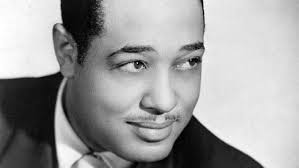
Duke Ellington’s The River: A symphonic jazz celebration |

Mary Lou Williams (1910-1981) I. Aries Mason Bates (b. 1977) | ............... | 16’ |
João Guilherme Ripper (b. 1959) I. Uma música que seja | ............... | 27’ |
Liquid Interface 23’ I. Glaciers Calving | ............... | 23’ |
Intermission | ||
Duke Ellington (1899-1974) I. Spring | ............... | 30’ |
Duke Ellington’s The River: A Symphonic Jazz Celebration
Program Notes by Paul Hyde
Zodiac Suite
Mary Lou William (1910-1981)
Mary Lou Williams' Zodiac Suite is a remarkable jazz composition that blends the jazz pianist’s deep understanding of both jazz and classical music. Composed in 1945, it was inspired by the 12 signs of the zodiac, with each movement corresponding to a different astrological sign.
The suite is one of Williams’ most innovative and complex works, pushing the boundaries of jazz and orchestral music. The suite is not just a musical exploration of the zodiac signs, but also a representation of the characteristics associated with each sign.
Here is a brief outline of the movements:
- (March 21 - April 19) – Bold and energetic, reflecting the assertive and pioneering nature of Aries.
- (April 20 - May 20) – Rich and earthy, conveying Taurus' steady and sensual characteristics.
- (May 21 - June 20) – Playful and changing, reflecting Gemini’s dual nature and intellectual curiosity.
- (June 21 - July 22) – Emotional and introspective, symbolizing Cancer's nurturing and protective qualities.
- (July 23 - August 22) – Majestic and dramatic, capturing the confident and expressive nature of Leo.
- (August 23 - September 22) – Precise and analytical, with a focus on structure and clarity.
- (September 23 - October 22) – Elegant and balanced, reflecting Libra's sense of harmony and justice.
- (October 23 - November 21) – Intense and mysterious, embodying the depth and passion of Scorpio.
- (November 22 - December 21) – Adventurous and free-spirited, reflecting Sagittarius' love for exploration.
- (December 22 - January 19) – Disciplined and determined, with a strong focus on tradition and achievement.
- (January 20 - February 18) – Innovative and unconventional, symbolizing Aquarius' forward-thinking nature.
- (February 19 - March 20) – Dreamy and spiritual, reflecting the intuitive and artistic characteristics of Pisces.
The Zodiac Suite was groundbreaking in that it blended the improvisational elements of jazz with the more structured, formal aspects of orchestral music.
Liquid Interface
Mason Bates (born 1977)
Mason Bates’ Liquid Interface (2007) is an innovative orchestral composition that merges classical elements with electronic music, reflecting Bates’ signature style of blending acoustic instruments with electronic soundscapes.
Bates wrote the following notes about the four-movement piece:
“Water has influenced countless musical endeavors — La Mer and Siegfried’s Rhine Journey quickly come to mind — but it was only after living on Berlin’s enormous Lake Wannsee did I become consumed with a new take on the idea. Over the course of barely two months, I watched this huge body of water transform from an ice sheet thick enough to support sausage venders, to a refreshing swimming destination heavy with humidity. If the play of the waves inspired Debussy, then what about water in its variety of forms?
“Liquid Interface moves through all of them, inhabiting an increasingly hotter world in each progressive movement. ‘Glaciers Calving’ opens with huge blocks of sound drifting slowly upwards through the orchestra, finally cracking off in the upper register. (Snippets of actual recordings of glaciers breaking into the Antarctic, supplied by the adventurous radio journalist Daniel Grossman, appear at the opening.) As the thaw continues, these sonic blocks melt into aqueous, blurry figuration. The beats of the electronics evolve from slow trip-hop into energetic drum ’n’ bass, and at the movement’s climax the orchestra blazes in turbulent figuration.
“The ensuing ‘Scherzo Liquido’ explores water on a micro-level: droplets splash from the speakers in the form of a variety of nimble electronica beats, with the orchestra swirling around them.
“The temperature continues to rise as we move into ‘Crescent City,’ which examines the destructive force as water grows from the small-scale to the enormous. This is illustrated in a theme-and-variations form in which the opening melody, at first quiet and lyrical, gradually accumulates a trail of echoing figuration behind it. In a nod to New Orleans, which knows the power of water all too well, the instruments trail the melody in a reimagination of Dixieland swing.
“At the peak of the movement, with an enormous wake of figuration swirling behind the soaring melody, the orchestra is buried in an electronic hurricane of processed storm sounds. We are swept into the muffled depths of the ocean.
“This water-covered world, which relaxes into a kind of balmy, greenhouse paradise, is where we end the symphony in ‘On the Wannsee.’ A simple, lazy tune bends in the strings above ambient sounds recorded at a dock on Lake Wannsee. Gentle beats echo quietly in the moist heat. At near pianissimo throughout, the melody floats lazily upwards through the humidity and — at the work’s end — finally evaporates.”
Suite from “The River”
Duke Ellington (1899-1974)
Duke Ellington's Suite from The River is a remarkable work composed in 1970, which highlights Ellington's mastery of orchestral jazz and his ability to blend classical and jazz elements. The suite was created as a ballet.
Ellington considered the piece to be a metaphor for life, as a river grows from a spring into a mighty waterway flowing into the sea.
It’s composed in several movements. “The Spring” features gentle wind solos that seem improvisatory in nature but build into forceful brass exclamations. “The Meander” offers a film noir atmosphere of the 1950s and swinging big band sounds and rhythms. “The Giggling Rapids” spotlights be-bop rhythms punctuated by syncopated brass riffs. “The Lake” is characterized by a lush melancholy. Other movements offer a variety of musical moods from the introspective to the boldly dramatic.
The entire work is a blend of jazz spontaneity, classical structure, and Ellington's unparalleled ability to mix musical colors and moods through his compositions. It celebrates American landscape and culture.
Paul Hyde, a longtime Upstate arts journalist, is an English instructor at Tri-County Technical College. He writes regularly for the Greenville Journal, the S.C. Daily Gazette, EarRelevant, ArtsATL, and the Atlanta Journal-Constitution.
Concert Hall Series
Saturday performances at 7:30
Sunday at 3:00 pm
Opening Night: Mozart Requiem
September 26 & 27
Beethoven’s Violin Concerto
November 21 & 22
Tchivzhel Conducts Mendelssohn and Tchaikovsky
February 6 & 7
Bartók Concerto for Orchestra
March 13 & 14
Beethoven 7 + Jacqueline Tso Plays Butterfly Lovers’ Concerto
April 10 & 111
Ravel’s Bolero + Maxim Lando
May 15 & 16
Gunter Theatre Series
Saturday performances at 7:30
Sunday at 3:00 pm
Mozart Among Friends
October 31 & November 1
Carmen in Concert
February 20 & 21
Rhythm Rising: A Percussion Celebration
March 20 & 21
Haydn Symphony 102 + Stravinsky’s Pulcinella
April 24 & 25
Special Concerts
How to Train Your Dragon in Concert
November 7 at 2:00 pm & 7:00 pm
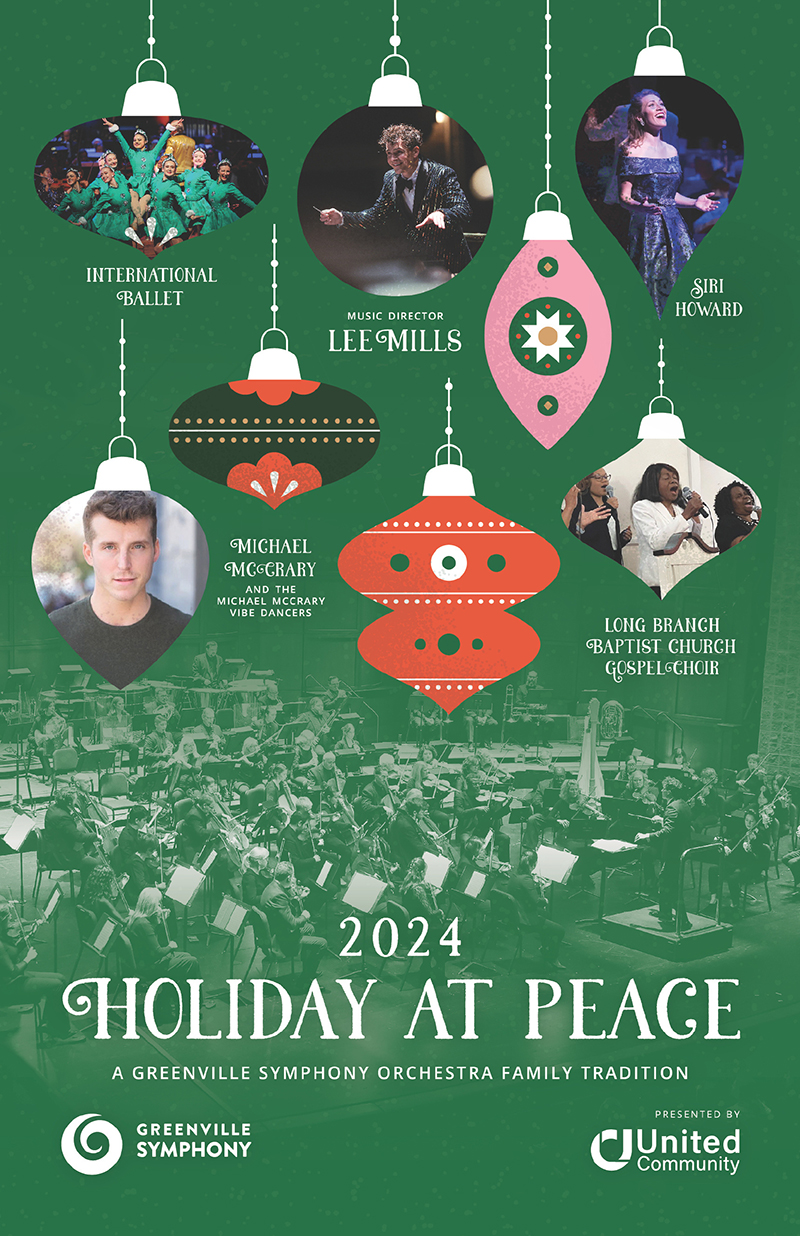
Holiday at Peace
December 4 at 7:00 pm
December 5 at 7:00 pm
December 6 at 2:00 pm
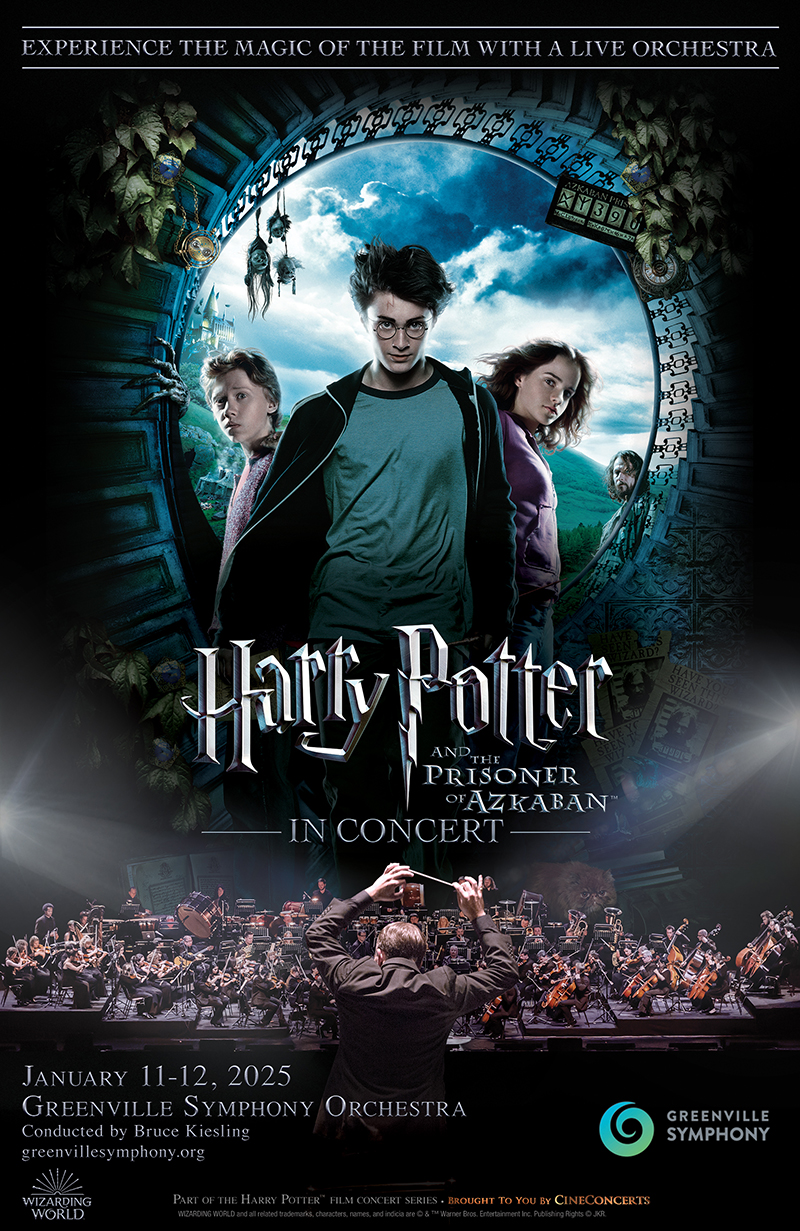
Harry Potter and the Goblet of Fire™ in Concert
January 9 at 1:00 pm and 7:00 pm
January 10 at 2:00
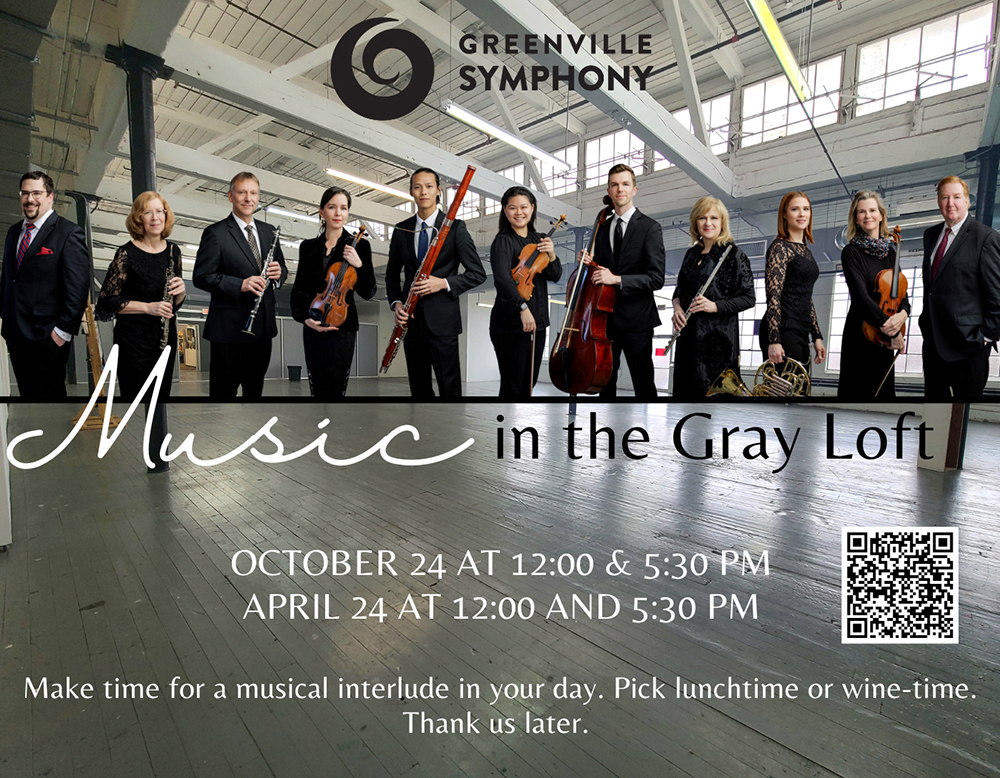
Chamber Music Series
Principal Winds of the Greenville Symphony
September 15 at 5:30 pm, Poe Mill Music
September 16 at 7:00 pm, Cascades Verdae
Principal Strings of the Greenville Symphony
March 16 at 5:30 pm, Centre Stage
March 17 at 7:00 pm, Hotel Hartness
Details and tickets available at greenvillesymphony.org