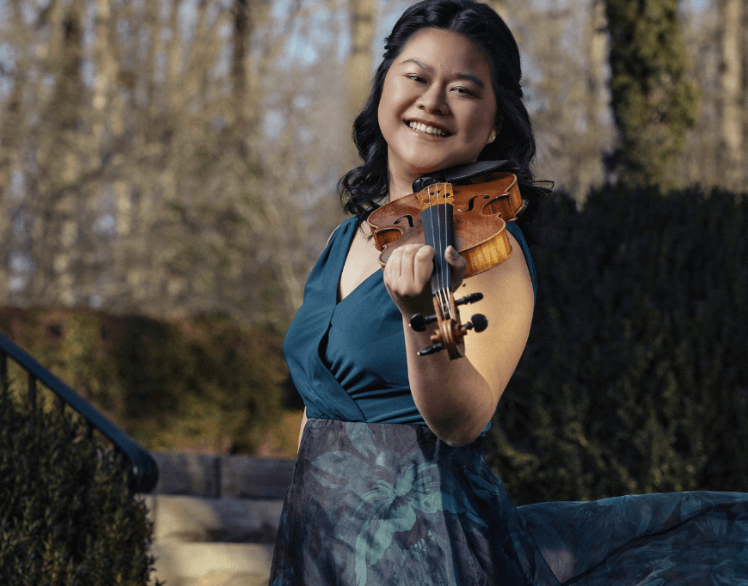
Jacqueline Tso plays Bruch’s Scottish Fantasy SOLOIST |

Max Bruch (1838-1920) I. Introduction: Grave. Adagio cantabile | ............... | 30’ |
Intermission | ||
Amy Beach (1867-1944) I. Allegro con fuoco | ............... | 41’ |
Jacqueline Tso Plays Bruch’s Scottish Fantasy
Program Notes by Paul Hyde
Scottish Fantasy
Max Bruch (1838-1920)
Max Bruch’s Scottish Fantasy is a lively and evocative work for violin and orchestra, composed in 1880. This piece captures the spirit of Scotland through its rich melodies and vibrant rhythms, though it is not strictly based on traditional Scottish music. Bruch, a German composer, was inspired by the culture and folklore of Scotland, and he sought to infuse his work with the flavor of the Scottish Highlands.
The Scottish Fantasy is structured in four movements:
- First Movement: "A Scotch Fantasia" – The opening movement begins with a lively introduction by the orchestra before the solo violin enters with a theme based on a traditional Scottish folk song. It’s marked by a sense of grandeur and mystery, with themes that alternately evoke a feeling of nostalgia and dramatic energy.
- Second Movement: "Andante sostenuto" – This movement is more lyrical and serene, drawing on the beauty of the violin’s tone. The violin weaves a gentle, melancholic melody that contrasts beautifully with the more spirited character of the first movement.
- Third Movement: "Allegro" – The third movement is fast-paced and lively, featuring a vibrant folk dance-like rhythm. It brings back the energy of the opening, with playful exchanges between the soloist and the orchestra, creating a sense of celebration and joy.
- Fourth Movement: "Finale – Allegro" – The finale is a rousing conclusion to the fantasy, drawing on more traditional Scottish folk melodies. It’s fast, exuberant, and filled with energetic passages for the violin, making it a virtuosic and thrilling conclusion to the work.
The Scottish Fantasy is known for its lush orchestration, virtuosic violin writing, and the way it paints a musical picture of Scotland through both direct and indirect references to folk music. It’s a piece that has remained popular in the violin repertoire, often performed by violinists who enjoy its combination of emotional depth and technical brilliance.
Symphony in E minor, Gaelic
Amy Beach (1867-1944)
Amy Beach's Symphony No. 1 in E minor, Op. 32, also known as the Gaelic Symphony, is one of her most celebrated and significant works, composed in 1894. It was groundbreaking in that it was the first symphony composed by an American woman to be performed by a major orchestra. The symphony is deeply influenced by both American folk melodies and the European romantic tradition, blending these influences in a distinctive way.
Structure
The symphony follows a four-movement structure typical of many Romantic symphonies:
I. Allegro con fuoco – A bold and energetic opening movement, with sweeping melodies and dramatic contrasts.
II. Romance: Largo – A lyrical, emotionally rich movement featuring a tender, song-like theme.
III. Scherzo: Vivace – A playful, energetic movement with rhythmic drive and light-hearted character.
IV. Finale: Allegro – The final movement combines vigor with elements of American folk melodies and rhythm, bringing the symphony to a triumphant conclusion.
Influence of Gaelic Elements
The Gaelic title refers to Beach’s use of Irish folk music as inspiration. This can be heard most clearly in the third and fourth movements, where she integrates thematic material that evokes Celtic traditions, though these elements are often original rather than direct quotes from traditional songs.
Orchestration
Beach’s orchestration is lush and colorful, rich in Romantic-style harmonies and textures. The symphony showcases her skillful handling of the orchestra, utilizing full, sweeping string sections, brass fanfares, and woodwind flourishes. She manages to create a deep, resonant sound while maintaining clarity of textures.
Style and Reception
Her symphony demonstrates her grounding in late-Romantic harmonic language, with influences from composers such as Brahms and Wagner. Though it was somewhat overshadowed by the dominance of European composers during her time, it received positive attention when it premiered and has been rediscovered as a significant work by American orchestras. The symphony also reflects Beach’s ability to bridge American nationalism with European classical traditions.
Overall, the Gaelic Symphony is a richly emotional and ambitious work, celebrating both Beach’s unique voice and her place in the development of American symphonic music.
Paul Hyde, a longtime Upstate arts journalist, is an English instructor at Tri-County Technical College. He writes regularly for the Greenville Journal, the S.C. Daily Gazette, EarRelevant, ArtsATL, and the Atlanta Journal-Constitution. Readers may write to him at pah598@g.harvard.edu.
Concert Hall Series
Saturday performances at 7:30
Sunday at 3:00 pm
Opening Night: Mozart Requiem
September 26 & 27
Beethoven’s Violin Concerto
November 21 & 22
Tchivzhel Conducts Mendelssohn and Tchaikovsky
February 6 & 7
Bartók Concerto for Orchestra
March 13 & 14
Beethoven 7 + Jacqueline Tso Plays Butterfly Lovers’ Concerto
April 10 & 111
Ravel’s Bolero + Maxim Lando
May 15 & 16
Gunter Theatre Series
Saturday performances at 7:30
Sunday at 3:00 pm
Mozart Among Friends
October 31 & November 1
Carmen in Concert
February 20 & 21
Rhythm Rising: A Percussion Celebration
March 20 & 21
Haydn Symphony 102 + Stravinsky’s Pulcinella
April 24 & 25
Special Concerts
How to Train Your Dragon in Concert
November 7 at 2:00 pm & 7:00 pm
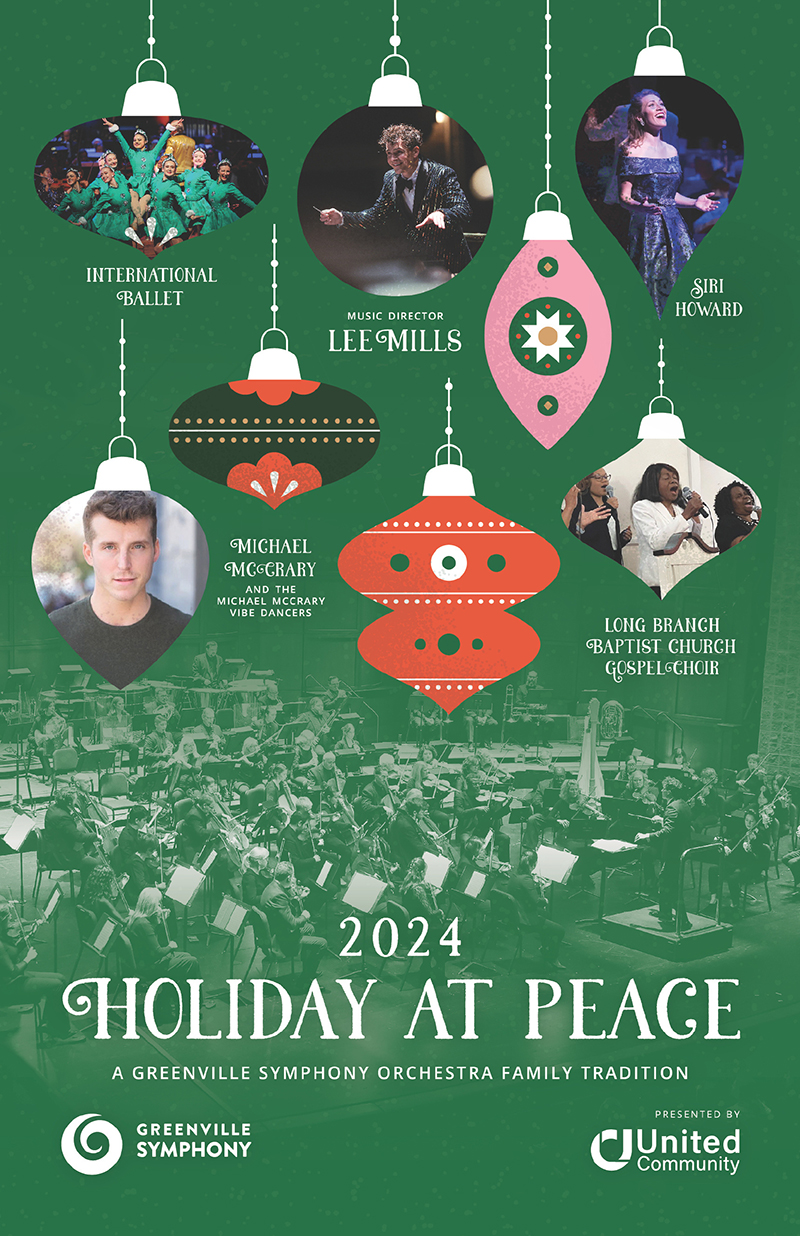
Holiday at Peace
December 4 at 7:00 pm
December 5 at 7:00 pm
December 6 at 2:00 pm
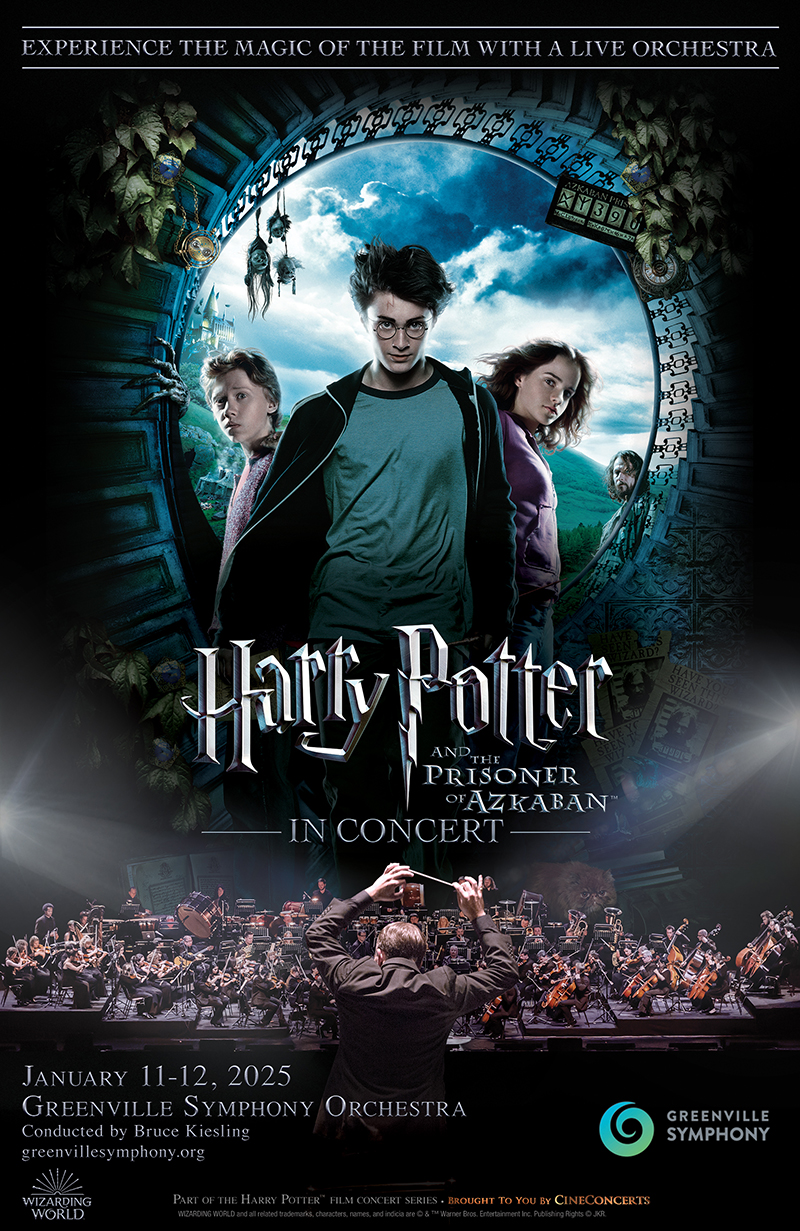
Harry Potter and the Goblet of Fire™ in Concert
January 9 at 1:00 pm and 7:00 pm
January 10 at 2:00
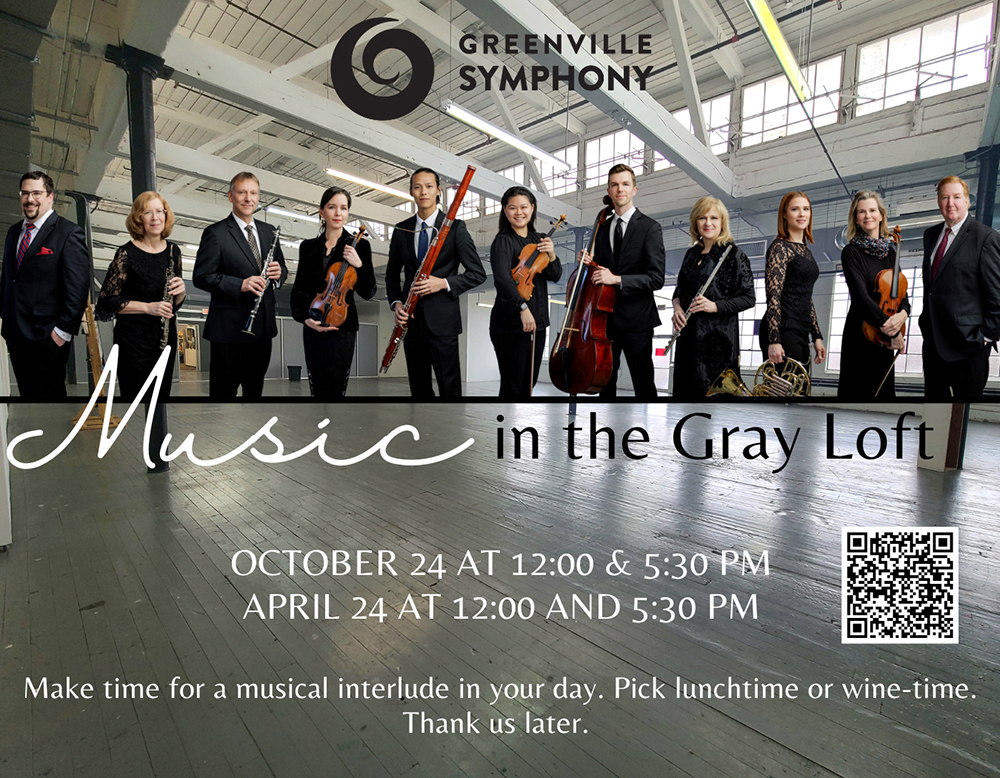
Chamber Music Series
Principal Winds of the Greenville Symphony
September 15 at 5:30 pm, Poe Mill Music
September 16 at 7:00 pm, Cascades Verdae
Principal Strings of the Greenville Symphony
March 16 at 5:30 pm, Centre Stage
March 17 at 7:00 pm, Hotel Hartness
Details and tickets available at greenvillesymphony.org