GUESTS
Jonathan Mamora | Piano
DeLesslin George-Warren (Catawba Nation) | Narrator
Sergei Rachmaninoff (1873-1953)
Piano Concerto No. 2 in C minor, Op. 18
I. Moderato
II. Adagio sostenuto
III. Allegro scherzando
First half 33 minutes
INTERMISSION
Jerod Impichchaachaaha' Tate (b. 1968)
Spider Brings Fire
Ferde Grofé (1892-1972)
Grand Canyon Suite
Sunrise
Painted Desert
On the Trail
Sunset
Cloudburst
Second half 49 minutes
Susan and Steven Bichel
Presenting Sponsors
Steinway Piano Selected from Steinway Piano Gallery-Greenville
www.steinwaycarolina.com

Piano Concert No. 2
Sergei Rachmaninoff (1873-1943)
Rachmaninoff’s Second Piano Concerto — perhaps the most popular concerto of the 20th century — owes its existence in part to the healing influence of a hypnotist.
The story of the concerto’s creation is among the more colorful in the history of concert music. Rachmaninoff, long prone to depression, was so devastated by the abysmal failure of his First Piano Concerto in 1897 — the conductor was drunk and the critics were merciless — that he found himself unable to compose a single note. Friends eventually brought him to a specialist in hypnotism, Dr. Nikolai Dahl.
Dahl’s treatment — consisting of positive affirmations repeated to a half-dozing Rachmaninoff — worked. A grateful composer dedicated his Second Piano Concerto to Dahl.
Moving from mournful introspection to triumphant affirmation, the concerto seems to trace Rachmaninoff’s own path out of depression. Big, bold, and rich in technical challenges, it unfolds in the traditional three-movement form.
- The first movement (Moderato) opens with one of the most famous beginnings in all of concert music: a series of tolling piano chords, rising gradually from quiet introspection to emphatic strength. These solemn chords, almost like a summons, seem to clear emotional space before the orchestra introduces the expansive principal theme. Throughout the movement, the piano alternates between thunderous virtuosity and lyrical reflection, weaving long, arching melodies that feel both heroic and vulnerable. The sense of struggle is palpable, yet the movement closes not in despair but with hard-won resolve.
- The second movement (Adagio sostenuto) offers a moment of repose and introspection. A hushed orchestral introduction leads to one of Rachmaninoff’s most beloved melodies, first sung by the flute and clarinet before being taken up by the piano. Here, virtuosity recedes in favor of rapturous lyricism. The piano’s role is less confrontational and more conversational, spinning gentle arpeggios and warmly expressive lines. Though shadows occasionally intrude, the prevailing mood is one of tenderness and quiet hope, as if confidence is slowly returning.
- The finale (Allegro scherzando) bursts forth with renewed energy and optimism. Rhythmic drive replaces introspection, and the piano part bristles with brilliance and athleticism. Rachmaninoff introduces a bold, sweeping theme that builds inexorably toward a triumphant climax, transforming earlier tension into affirmation. In its jubilant closing pages, the concerto achieves a sense of emotional release and celebration, completing the journey from darkness to light and confirming the work as both a technical showpiece and a deeply human statement.
Spider Brings Fire
Jerod Impichchaachaaha’ Tate (born 1968)
Jerod Impichchaachaaha’ Tate’s Spider Brings Fire (2009) is a vibrant orchestral work inspired by a traditional Chickasaw legend about how fire came to the people. A citizen of the Chickasaw Nation, Tate has been a leading voice in bringing Indigenous stories and perspectives into classical concert music.
In the story, many animals attempt — and fail — to steal fire from a powerful source, until Spider, small but clever, succeeds through ingenuity rather than strength. Tate translates this tale into music that is rhythmic, colorful, and dramatically direct.
The piece opens with propulsive energy, driven by sharp rhythms and bright orchestral colors that suggest both urgency and ritual. Trained in both classical composition and jazz, Tate often emphasizes rhythm as a primary expressive force, and percussion plays a central role here.
Bold brass and woodwind figures evoke the danger and excitement of the quest, while his contemporary orchestral language draws on Indigenous sensibilities through repetition, drive, and narrative clarity rather than literal quotation.
As Spider Brings Fire unfolds, contrasting textures and sudden shifts in mood mirror the story’s twists and challenges. Tate, who has written extensively for orchestra and opera and is a frequent advocate for Native composers, uses the symphony orchestra as a storytelling instrument.
The triumphant conclusion celebrates Spider’s success and the gift of fire itself — a symbol of survival, knowledge, and cultural continuity — making the piece an exciting and powerful expression of Indigenous storytelling through symphonic sound.
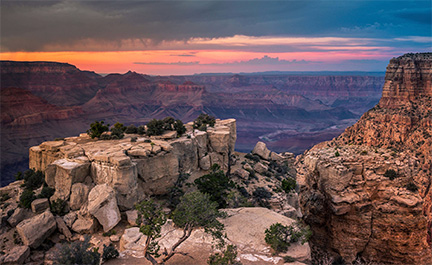
Grand Canyon Suite
Ferde Grofé (born 1892-1972)
Ferde Grofé’s Grand Canyon Suite is one of the most enduring works of American orchestral music, a vivid tone poem that captures the scale, color, and drama of the American Southwest.
First premiered in 1931, the suite reflects Grofé’s gift for orchestration and his deep interest in musical storytelling. Rather than presenting an abstract symphonic argument, Grofé offers five sharply characterized movements, each evoking a different aspect of the canyon’s landscape and atmosphere.
- The opening movement, “Sunrise,” begins in near stillness. Soft, sustained strings and gentle harmonies suggest the vast canyon emerging slowly from darkness. As the music unfolds, the orchestration grows warmer and more expansive, mirroring the gradual illumination of the rock formations by the rising sun. Grofé’s sense of pacing is especially effective here, allowing the listener to feel both the immensity and serenity of the scene.
- “The Painted Desert” follows, with shimmering textures and drifting melodies that evoke heat, distance, and mirage-like colors. Grofé uses muted brass and delicate woodwind writing to suggest the desert’s subtle hues and vast horizons. The movement’s unhurried flow conveys a sense of timelessness, as though the landscape exists far beyond human scale or urgency.
- In sharp contrast, “On the Trail” introduces one of the suite’s most famous moments. A jaunty, syncopated rhythm and the unmistakable sound of a donkey’s bray — created by the bassoon and muted trumpet — bring humor and character to the music. This movement portrays a mule ride down the canyon trails, combining folksy charm with brisk energy. Notice the delicious detail of the mule’s somewhat awkward gait. Grofé’s ability to balance pictorial detail with formal coherence makes the movement both entertaining and musically satisfying.
- The fourth movement, “Sunset,” returns to a more reflective mood. Warm strings and lyrical themes suggest the fading light and deepening shadows of evening. There is a quiet poignancy here, as if the canyon’s grandeur inspires contemplation as much as awe. Grofé’s harmonies grow richer and more introspective, preparing the listener for the suite’s final transformation.
- The concluding movement, “Cloudburst,” is the most dramatic of the five. Thunderous percussion, lightning-like brass flashes, and swirling string figures depict a sudden and furious desert storm. The violence of the cloudburst is followed by calm, as the storm passes and the landscape is renewed. The suite ends with a sense of resolution and wonder, as nature reasserts its vast, elemental power.
Taken as a whole, Grand Canyon Suite is a quintessentially American work — cinematic, accessible, and vividly descriptive. Grofé’s mastery lies not only in his colorful orchestration but in his ability to translate a monumental natural landmark into music that feels immediate, human, and unforgettable.
© 2025 Paul Hyde
Paul Hyde, a longtime arts journalist, is an English instructor at Tri-County Technical College. He writes regularly for the Greenville Journal, the S.C. Daily Gazette, EarRelevant, ArtsATL, and the Atlanta Journal-Constitution. Readers may write to him at paulhydeus@yahoo.com.
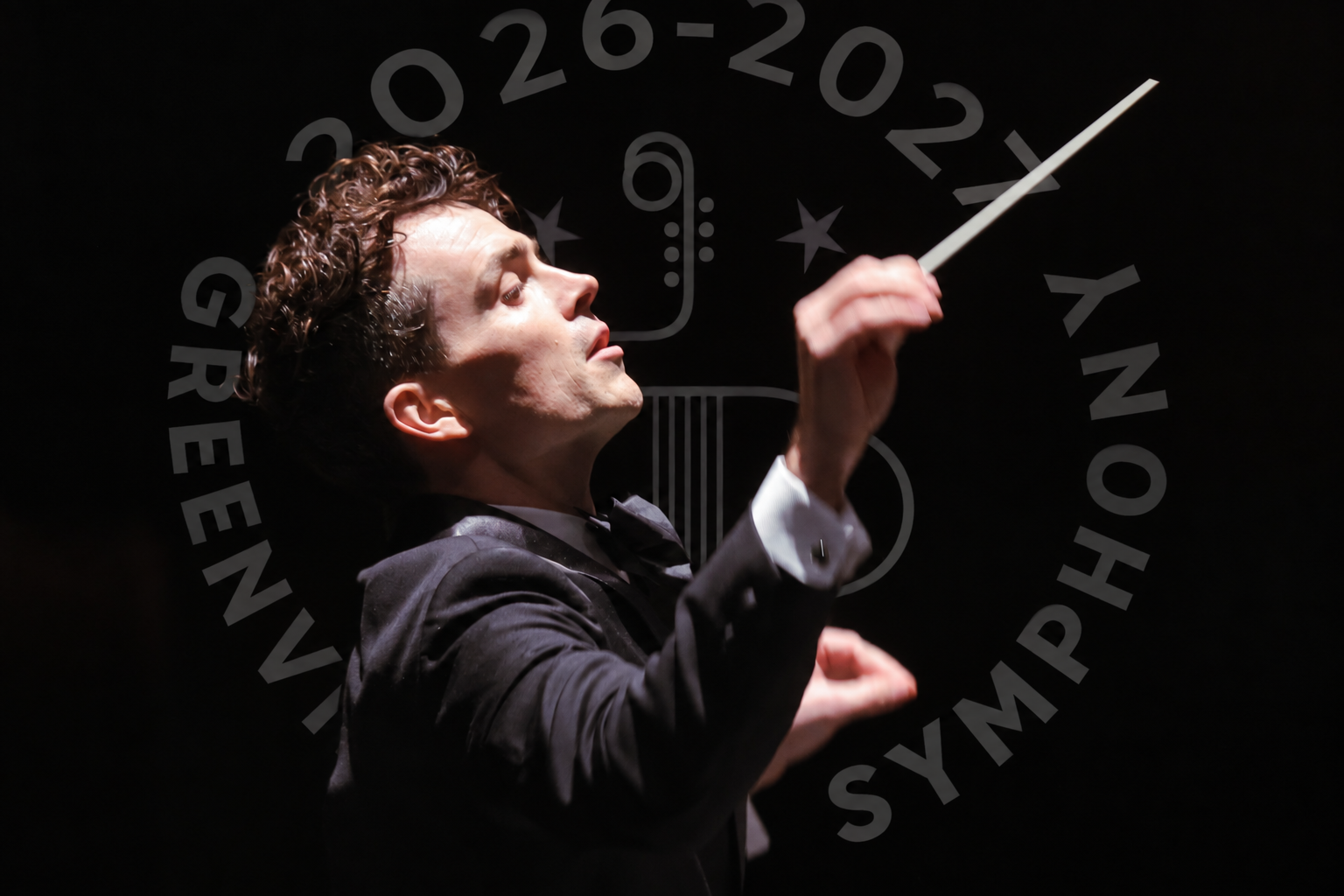
Concert Hall Series
Saturday performances at 7:30
Sunday at 3:00 pm
Opening Night: Mozart Requiem
September 26 & 27
Beethoven’s Violin Concerto
November 21 & 22
Tchivzhel Conducts Mendelssohn and Tchaikovsky
February 6 & 7
Bartók Concerto for Orchestra
March 13 & 14
Beethoven 7 + Jacqueline Tso Plays Butterfly Lovers’ Concerto
April 10 & 111
Ravel’s Bolero + Maxim Lando
May 15 & 16
Gunter Theatre Series
Saturday performances at 7:30
Sunday at 3:00 pm
Mozart Among Friends
October 31 & November 1
Carmen in Concert
February 20 & 21
Rhythm Rising: A Percussion Celebration
March 20 & 21
Haydn Symphony 102 + Stravinsky’s Pulcinella
April 24 & 25
Special Concerts
How to Train Your Dragon in Concert
November 7 at 2:00 pm & 7:00 pm
Holiday at Peace
December 4 at 7:00 pm
December 5 at 7:00 pm
December 6 at 2:00 pm
Harry Potter and the Goblet of Fire™ in Concert
January 9 at 1:00 pm and 7:00 pm
January 10 at 2:00
Chamber Music Series
Principal Winds of the Greenville Symphony
September 15 at 5:30 pm, Poe Mill Music
September 16 at 7:00 pm, Cascades Verdae
Principal Strings of the Greenville Symphony
March 16 at 5:30 pm, Centre Stage
March 17 at 7:00 pm, Hotel Hartness
Details and tickets available at greenvillesymphony.org