
Greenville Symphony Orchestra
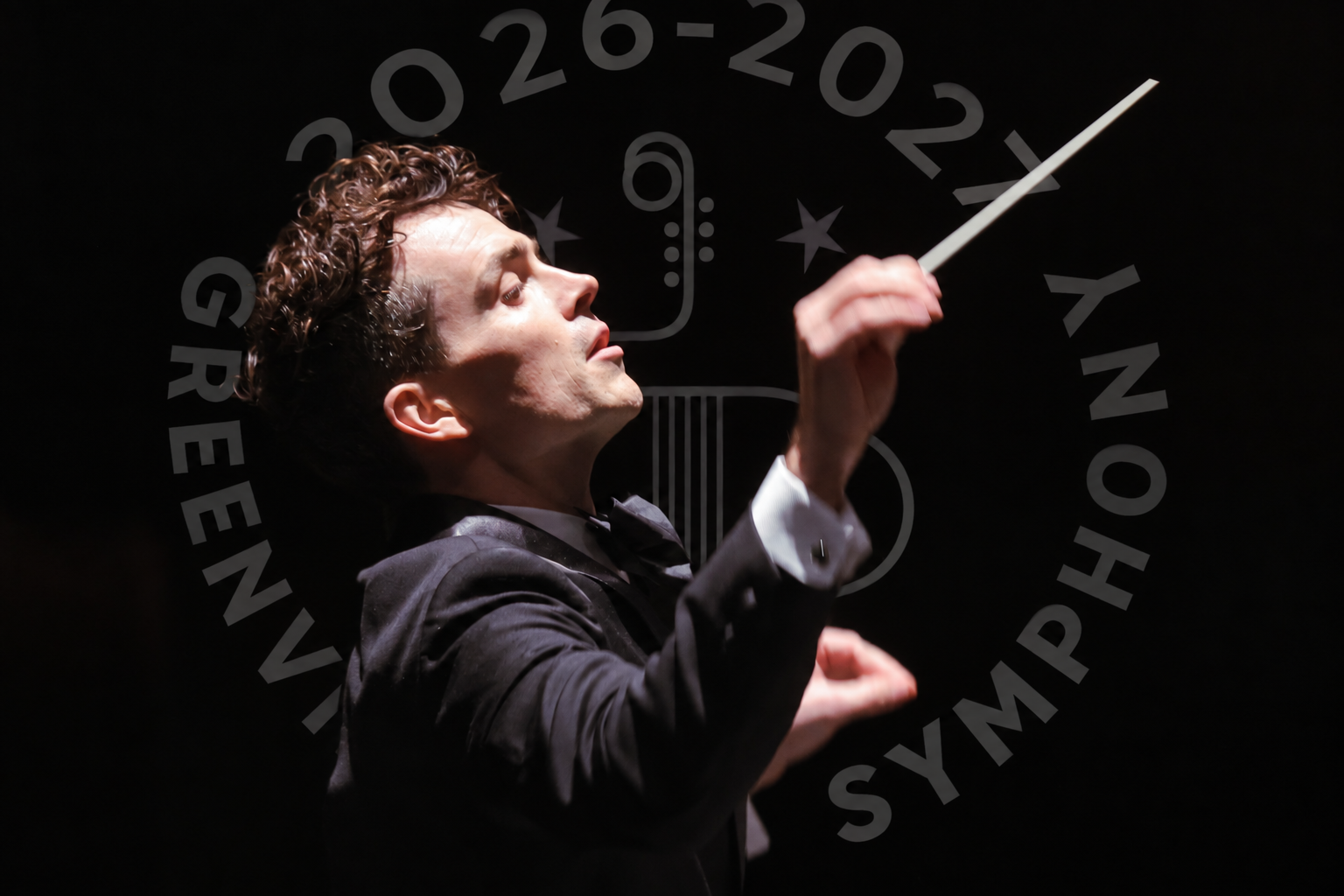
Lee Mills, Music Director
Thomas A. and Shirley W. Roe Podium Fund
Opening Night:Mozart Requiem
| Peace Concert Hall Saturday, September 26 at 7:30 pm |
Lee Mills | Conductor
SOLOISTS
Amanda Sheriff | soprano
Stephanie Foley | mezzo-soprano
Randall Umstead | tenor
Edwin Jhamaal Davis | bass
SPECIAL guestS
Clemson University Singers
Anthony Bernarducci | Director
Furman Singers
Stephen Gusukuma | Director
Glenis Redmond | Narrator
Clemson University Singers and Furman Singers appear thanks to the generosity of A.T. Locke.

Caroline Shaw (b. 1982) | 12' |
Anna Clyne (b. 1980) | 16' |
“Tomorrow, and tomorrow, and tomorrow, | |
INTERMISSION | |
Wolfgang Amadeus Mozart (1756-1791) | 46' |
Opening Weekend Supporting Sponsor
Wyche, P.A.
I. Introit: Requiem Requiem aeternam dona eis, Domine, et lux perpetua luceat eis. Te decet hymnus, Deus, in Sion, et tibi reddetur votum in Jerusalem. Exaudi orationem meam, ad te omnis caro veniet. Requiem aeternam dona eis, Domine, et lux perpetua luceat eis. II. Kyrie Kyrie, eleison. Christe, eleison. Kyrie, eleison. III. Sequence 1. Dies irae Dies irae, dies illa Solvet saeclum in favilla, teste David cum Sibylla. Quantus tremor est futurus, quando judex est venturus, cuncta stricte discussurus! 2. Tuba mirum Tuba mirum spargens sonum per sepulcra regionum, coget omnes ante thronum. Mors stupebit et natura, cum resurget creatura, judicanti responsura. Liber scriptus proferetur, in quo totum continetur, unde mundus judicetur. Judex ergo cum sedebit, quidquid latet, apparebit, nil inultum remanebit. Quid sum miser tunc dicturus? quem patronum rogaturus, cum vix justus sit securus? 3. Rex tremendae Rex tremendae majestatis, qui salvandos savas gratis, salve me, fons pietatis. 4. Recordare Recordare, Jesu pie, quod sum causa tuae viae; ne me perdas illa die. Quaerens me, sedisti lassus, redemisti crucem passus; tantus labor non sit cassus. Juste judex ultionis, donum fac remissionis ante diem rationis. Ingemisco, tamquam reus: culpa rubet vultus meus; supplicanti parce, Deus. Qui Mariam absolvisti, et latronem exaudisti, mihi quoque spem dedisti. Preces meae non sunt dignae, sed tu, bonus, fac benigne, ne perenni cremer igne. Inter oves locum praesta, Et ab haedis me sequestra, Statuens in parte dextra. 5. Confutatis Confutatis maledictis, flammis acribus addictis, voca me cum benedictus. Oro supplex et acclinis, cor contritum quasi cinis, gere curam mei finis. 6. Lacrimosa Lacrimosa dies illa, qua resurget ex favilla judicandus homo reus. Huic ergo parce, Deus, pie Jesu Domine, dona eis requiem. Amen. IV. Offertory 1. Domine Jesu Domine Jesu Christe, Rex gloriae, libera animas omnium fidelium defunctorum de poenis inferni et de profundo lacu. Libera eas de ore leonis, ne absorbeat eas tartarus, ne cadant in obscurum. Sed signifer sanctus Michael repraesentet eas in lucem sanctam. Quam olim Abrahae promisisti et semini ejus. 2. Hostias Hostias et preces tibi, Domine, laudis offerimus. Tu sucipe pro animabus illis, quaram hodie memoriam facimus. Fac eas, Domine, de morte transire ad vitam, Quam olim Abrahae promisisti et semini ejus. V. Agnus Dei Agnus Dei, qui tollis peccata mundi, dona eis requiem. Agnus Dei, qui tollis peccata mundi, dona eis requiem. Agnus Dei, qui tollis peccata mundi, dona eis requiem sempiternam. VI. Communion: Lux aeterna Lux aeterna luceat eis, Domine, cum sanctis tuis in aeternum, quia pius es. Requiem aeternum dona eis, Domine, et Lux perpetua luceat eis, cum Sanctus tuis in aeternum, quia pius es. | Grant them eternal rest, Lord, and let perpetual light shine on them. You are praised, God, in Zion, and homage will be paid to You in Jerusalem. Hear my prayer; to You all flesh will come. Grant them eternal rest, Lord, and let perpetual light shine on them.
Lord, have mercy on us. Christ, have mercy on us. Lord, have mercy on us.
Day of wrath, day of anger will dissolve the world in ashes, as foretold by David and the Sibyl. Great trembling there will be when the Judge descends from heaven to examine all things closely. The trumpet will send its wondrous sound throughout earth's sepulchres and gather all before the throne. Death and nature will be astounded when all creation rises again to answer the judgement. A book will be brought forth in which all will be written, by which the world will be judged. When the judge takes his place, what is hidden will be revealed. Nothing will remain unavenged. What shall a wretch like me say? Who shall intercede for me, when even the just need mercy? King of tremendous majesty, who freely saves those worthy ones, save me, source of mercy. Remember, kind Jesus, my salvation caused your suffering; do not forsake me on that day. Faint and weary you have sought me, redeemed me, suffering on the cross; may such great effort not be in vain. Righteous judge of vengeance, grant me the gift of absolution before the day of retribution. I moan as one who is guilty: owning my shame with a red face; suppliant before you, Lord. You, who absolved Mary, and listened to the thief, give me hope also. My prayers are unworthy, but, good Lord, have mercy, and rescue me from eternal fire. Provide me a place among the sheep, and separate me from the goats, guiding me to Your right hand. When the accused are confounded and doomed to flames of woe, call me among the blessed. I kneel with submissive heart, my contrition is like ashes, help me in my final condition. That day of tears and mourning, when from the ashes shall arise all humanity to be judged. Spare us by your mercy, Lord. Amen. Lord Jesus Christ, King of glory, liberate the souls of the faithful departed from the pains of hell and from the bottomless pit. Deliver them from the lion’s mouth, lest hell swallow them up, lest they fall into darkness. Let the standard-bearer, holy Michael, bring them into holy light. Which was promised to Abraham and his descendants. Sacrifices and prayers of praise, Lord, we offer to You. Receive them in behalf of those souls we commemorate today. And let them, Lord, pass from death to life, which was promised to Abraham and his descendants. Lamb of God, who takes away the sins of the world, grant them eternal rest. Lamb of God, who takes away the sins of the world, grant them eternal rest. Lamb of God, who takes away the sins of the world, grant them eternal rest forever. Let eternal light shine on them, Lord, as with Your saints in eternity, because You are merciful. Grant them eternal rest, Lord, and let perpetual light shine on them, as with Your saints in eternity, because You are merciful. |
Program Notes by Paul Hyde
Entr-acte
Caroline Shaw (born 1982)
Caroline Shaw was born in another Greenville — the one in North Carolina. A composer, singer and violinist, Shaw was the youngest person ever to win the Pulitzer Prize in Music, which she earned at age 30 in 2013.
Shaw’s Entr’acte (2011) takes its title from the French word for “intermission,” and its music has the character of a musical interlude — a brief, intriguing interruption that invites us to hear familiar sounds in unfamiliar ways. Shaw originally wrote the piece for string quartet; she later created this version for string orchestra.
The work was inspired in part by Haydn’s string quartets, particularly the composer’s habit of playing with listeners’ expectations. Shaw does something similar, taking gestures that might seem to belong to the classical tradition and leading them in surprising directions. A phrase may begin with the poise and balance of an 18th-century dance, only to fracture into shimmering harmonics, pizzicato, sliding tones or unexpected rhythmic accents.
The title also suggests a moment between worlds. Rather than developing its ideas in a conventional, linear fashion, Entr’acte moves through contrasting episodes, sometimes with abrupt changes of texture and mood.
There is humor here, but also considerable beauty. Shaw’s music asks us to listen closely to the boundaries between the old and the new, the composed and the spontaneous, the familiar and the strange. Entr’acte ultimately feels like a playful conversation with musical tradition — one in which the past keeps resurfacing, but never quite in the form we expect.
Sound and Fury
Anna Clyne (born 1980)
Anna Clyne’s Sound and Fury (2019) is a compact orchestral work inspired by the tumultuous world of Shakespeare’s Macbeth. Its title comes from one of the play’s most famous lines: Life, Macbeth says, is “a tale told by an idiot, full of sound and fury, signifying nothing.” Clyne turns that bleak observation into music of extraordinary energy and momentum.
Sound and Fury unfolds as a whirlwind of sharply contrasting textures. The music combines frenetic energy with eerie lyricism. A hymn-like episode ushers in a short recitation of Shakespeare’s “Sound and Fury” monologue from Macbeth. In performances, sometimes the monologue is presented in a recording but here it is spoken live by Greenville poet Glenis Redmond.
Clyne’s orchestration is particularly vivid. Strings and winds contribute swirling, agitated gestures that seem constantly to propel the music forward. At moments, the orchestra sounds almost like a machine gathering speed; at others, the texture suddenly clears, allowing a mysterious stillness to emerge.
The result is not a musical retelling of Macbeth but something more visceral: a portrait of a world in which reason has given way to obsession, violence and supernatural uncertainty. Shakespeare’s “sound and fury” becomes, in Clyne’s hands, an exhilarating orchestral experience.
Requiem
Wolfgang Amadeus Mozart (1756-1791)
Mozart’s Requiem is considered one of the masterworks of the choral-and-orchestra literature, much loved for its haunting beauty and fiery drama. With tremendous emotional depth, the work explores fundamentals of the human experience — grief, fear, hope and transcendence. The blend of spiritual solemnity with theatrical drama makes it timelessly powerful, resonating with audiences across cultures and eras.
The work is scored for chorus, orchestra and four soloists.
Considerable myth surrounds the creation of the Requiem, some of it promoted in a spirited 1984 biopic, Amadeus. Mozart was not poisoned by his older colleague Antonio Salieri, as the film suggests, nor did Salieri pose as a mysterious masked figure intent on stealing the Requiem.
In fact, Mozart was commissioned to write a Requiem Mass by the wealthy Count Franz von Walsegg in memory of the Count’s wife Anna, who had passed away at the age of 20 in February 1791. The arrangement was rather secretive, however, as the Count planned to present a public performance of the work as his own composition, giving Mozart no credit.
As Mozart worked away at the Requiem later that year amid the decline of his own physical and mental health, he became obsessed with the project, thinking he was writing the Requiem for his own funeral. That even prompted his wife Constanze to take the score away from the composer in October 1791. Mozart returned to it in November of that year, however, and may have been working on it as late as December 3, two days before his death at the age of 35.
Mozart left the work unfinished, but it was completed by Mozart’s student, Franz Xaver Süssmayr, using Mozart’s sketches and deathbed guidance. Süssmayr, though only 25 years old at the time, was probably the right choice to complete the work as he was in steady and close contact with Mozart, working with the composer on the piece in 1791. It is this version of the Requiem that has been most-often performed through the decades, though sometimes with various alterations by generations of scholars. Süssmayr perhaps does not get enough credit for his work, even though he wrote virtually entire sections of the Requiem, including the Sanctus, Benedictus, Agnus Dei and Communio.
The Requiem is set as a traditional Roman Catholic Mass for the dead, composed of several sections:
- Introitus ("Requiem aeternam"): The piece opens with a somber and majestic theme, introducing the eternal rest motif. The music is dark, prayerful and deeply poignant.
- Kyrie: A powerful fugue, perhaps inspired by Handel, showcases Mozart’s command of contrapuntal writing. Mozart demands considerable vocal dexterity from his chorus.
- Sequence: This extraordinarily dramatic section includes the famous Dies irae (Day of Wrath), filled with thunderous urgency and anguish, and the beautifully yearning Lacrimosa, reportedly one of the last sections Mozart composed. (Mozart completed the vocal parts and a considerable portion of the string parts in this section.) Throughout this extended sequence, Mozart alternates powerful assertions with poignant pleas.
- Offertory, Sanctus, Benedictus, and Agnus Dei: These movements continue the spiritual journey, with reverent, soaring melodies and rich harmonies. These sections were mostly or entirely written by Süssmayr.
- Communio ("Lux aeterna"): For the conclusion, Süssmayr seems to have had clear instructions from Mozart on his deathbed. He returns to Mozart’s themes, including the great fugue from the opening of the work, to create a sense of cyclical peace. Mozart thus has the last word.
Though the Requiem was completed by Süssmayr, its soul unmistakably bears Mozart’s mark. It stands not only as an artistic triumph but also as a poignant farewell from one of the great voices of Western civilization.
© 2026 Paul Hyde
Paul Hyde, a longtime arts journalist, is an English instructor at Tri-County Technical College in South Carolina. He writes regularly for the Washington Post, Greenville Journal, the S.C. Daily Gazette, ArtsATL, and the Atlanta Journal-Constitution. Readers may write to him at pah598@g.harvard.edu.
Concert Hall Series
Saturday performances at 7:30
Sunday at 3:00 pm
Opening Night: Mozart Requiem
September 26 & 27
Beethoven’s Violin Concerto
November 21 & 22
Tchivzhel Conducts Mendelssohn and Tchaikovsky
February 6 & 7
Bartók Concerto for Orchestra
March 13 & 14
Beethoven 7 + Jacqueline Tso Plays Butterfly Lovers’ Concerto
April 10 & 111
Ravel’s Bolero + Maxim Lando
May 15 & 16
Gunter Theatre Series
Saturday performances at 7:30
Sunday at 3:00 pm
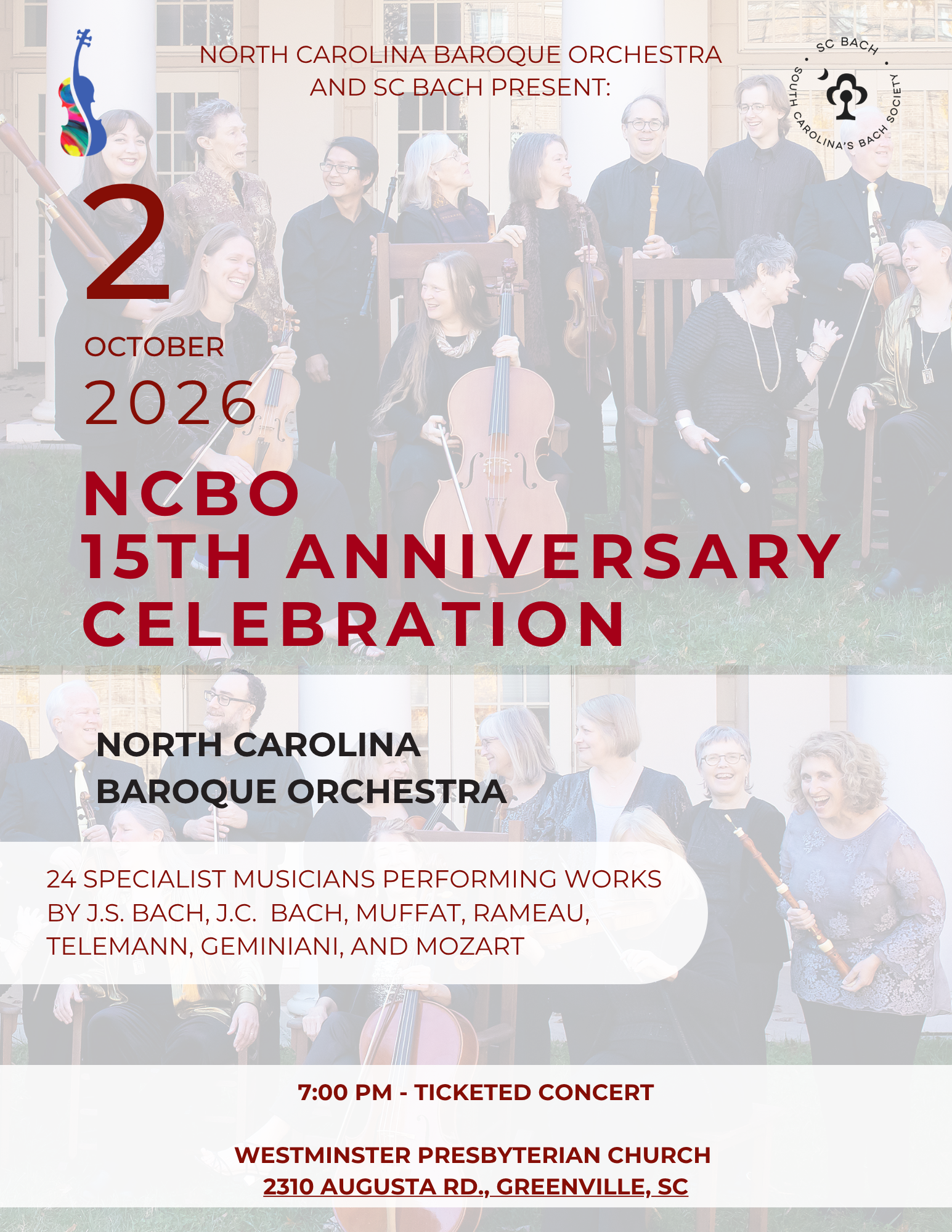
Mozart Among Friends
October 31 & November 1
Carmen in Concert
February 20 & 21
Rhythm Rising: A Percussion Celebration
March 20 & 21
Haydn Symphony 102 + Stravinsky’s Pulcinella
April 24 & 25
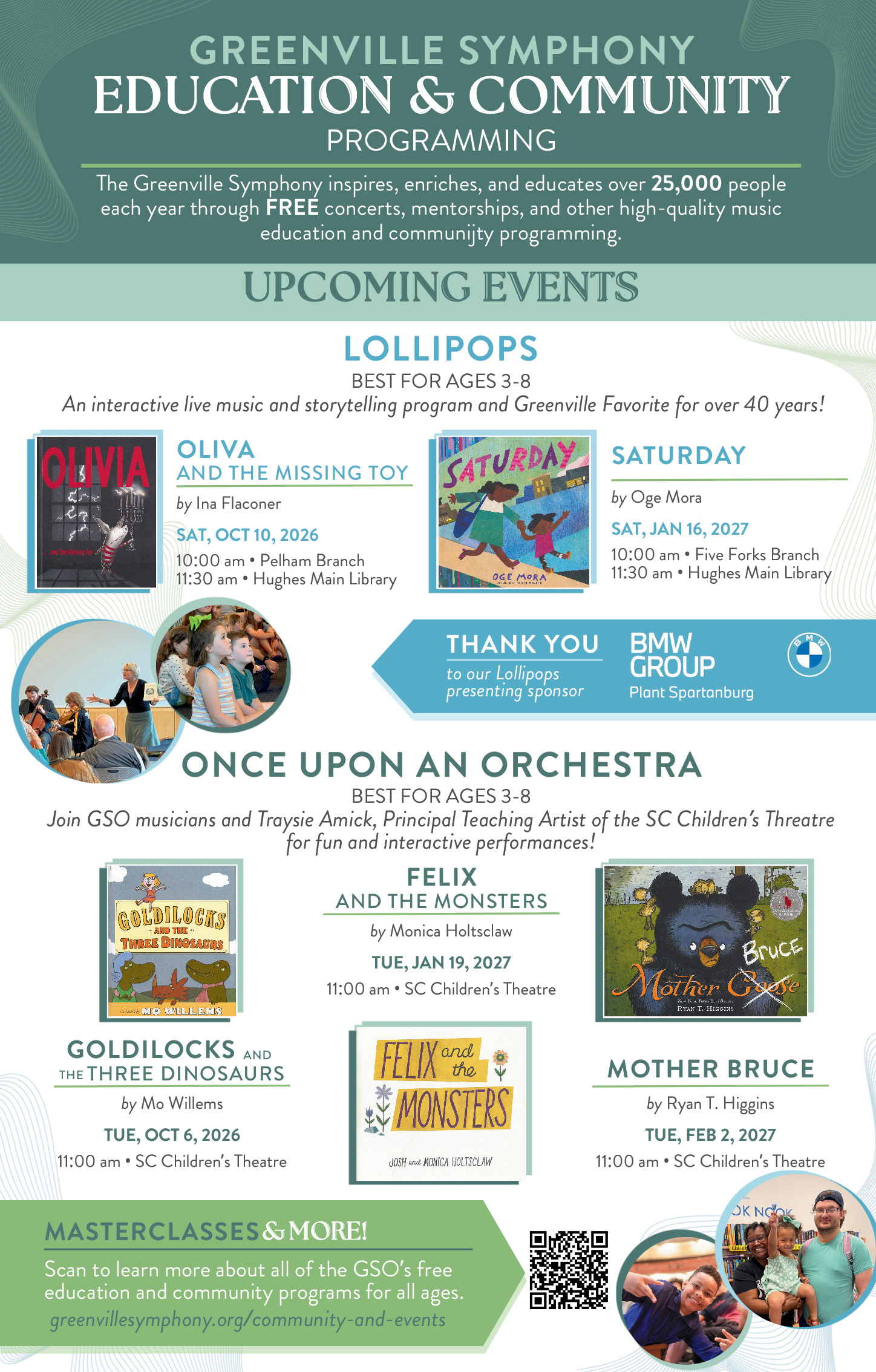
Special Concerts
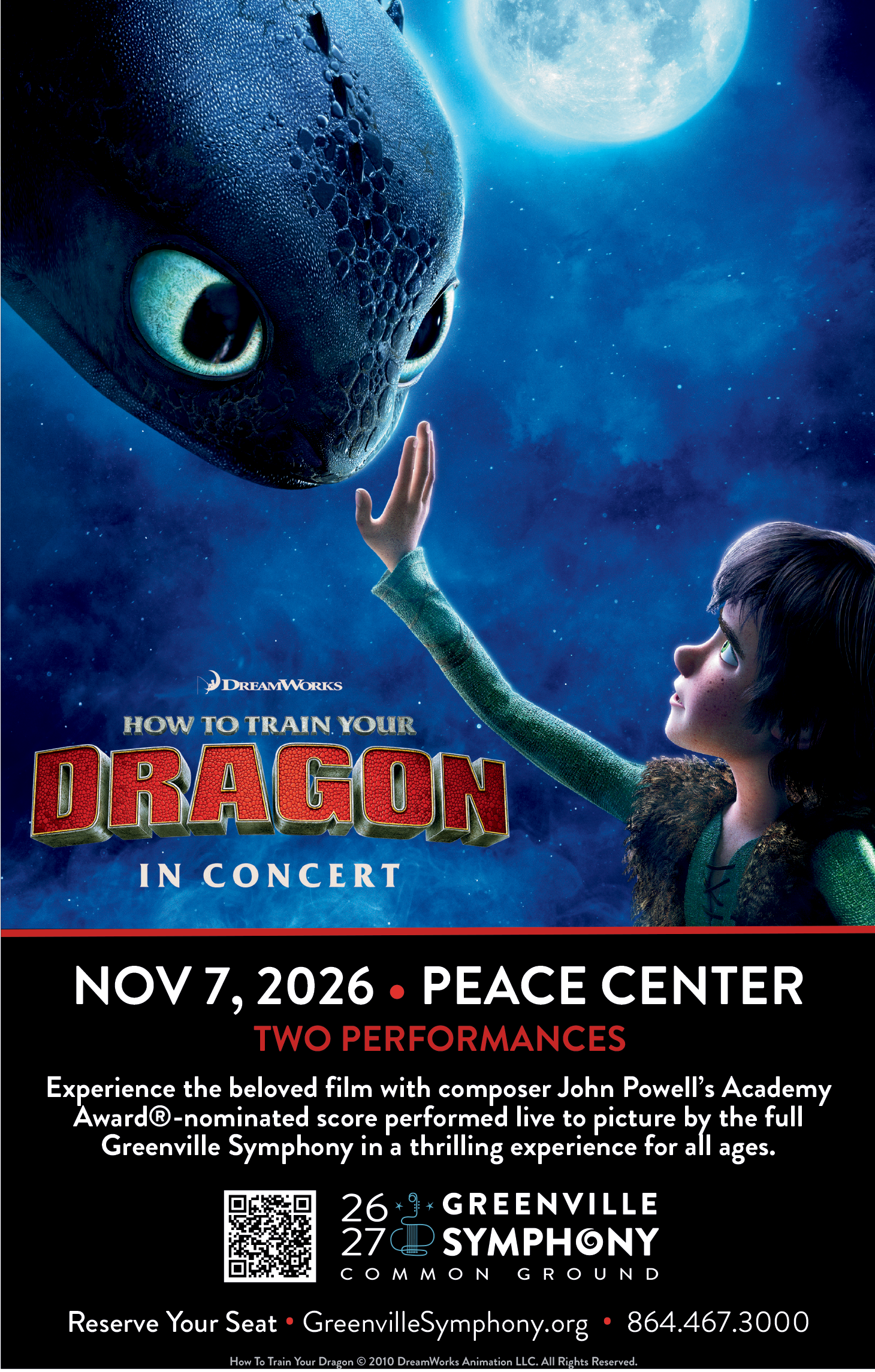
How to Train Your Dragon in Concert
November 7 at 2:00 pm & 7:00 pm
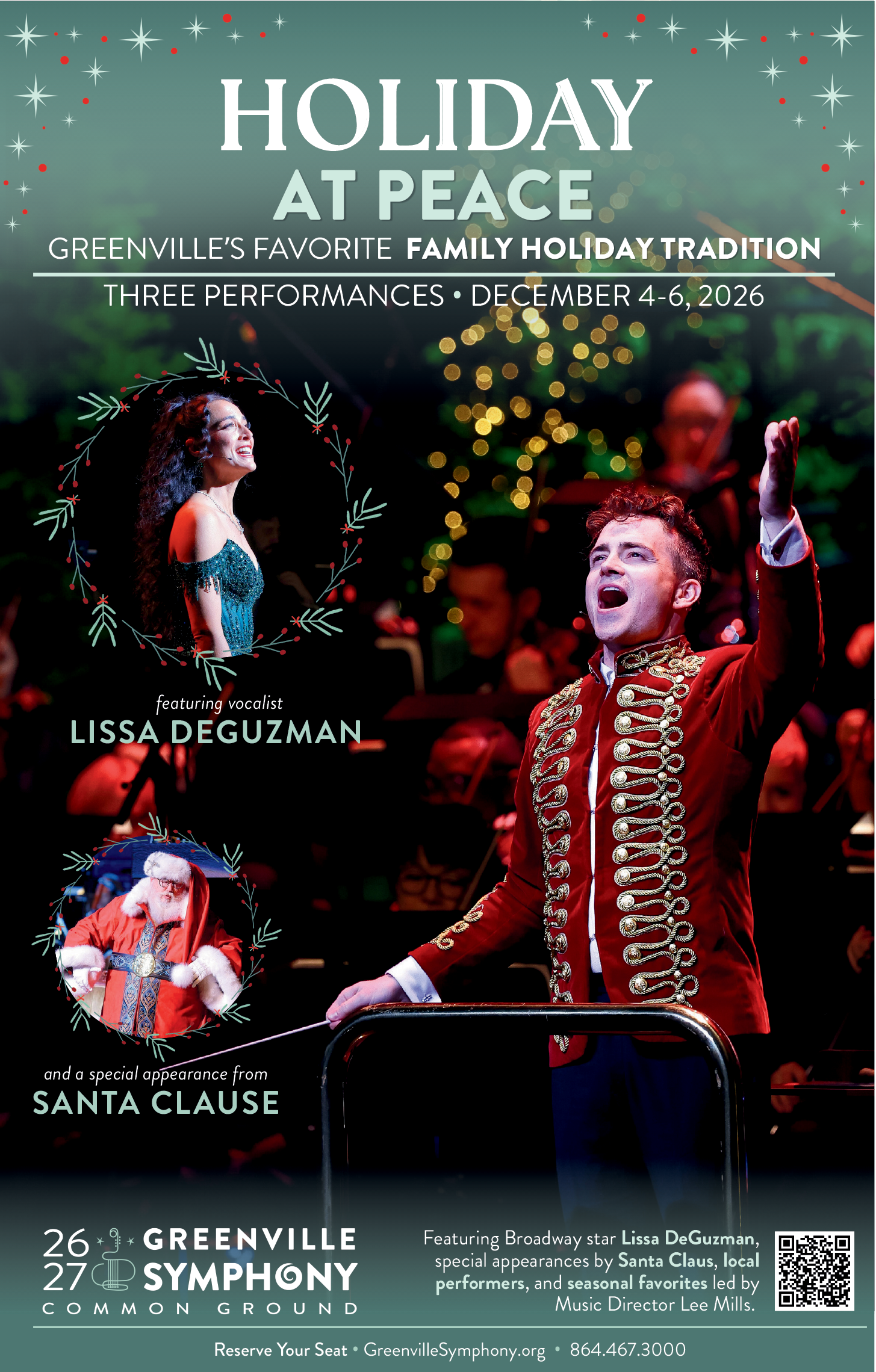
Holiday at Peace
December 4 at 7:00 pm
December 5 at 7:00 pm
December 6 at 2:00 pm
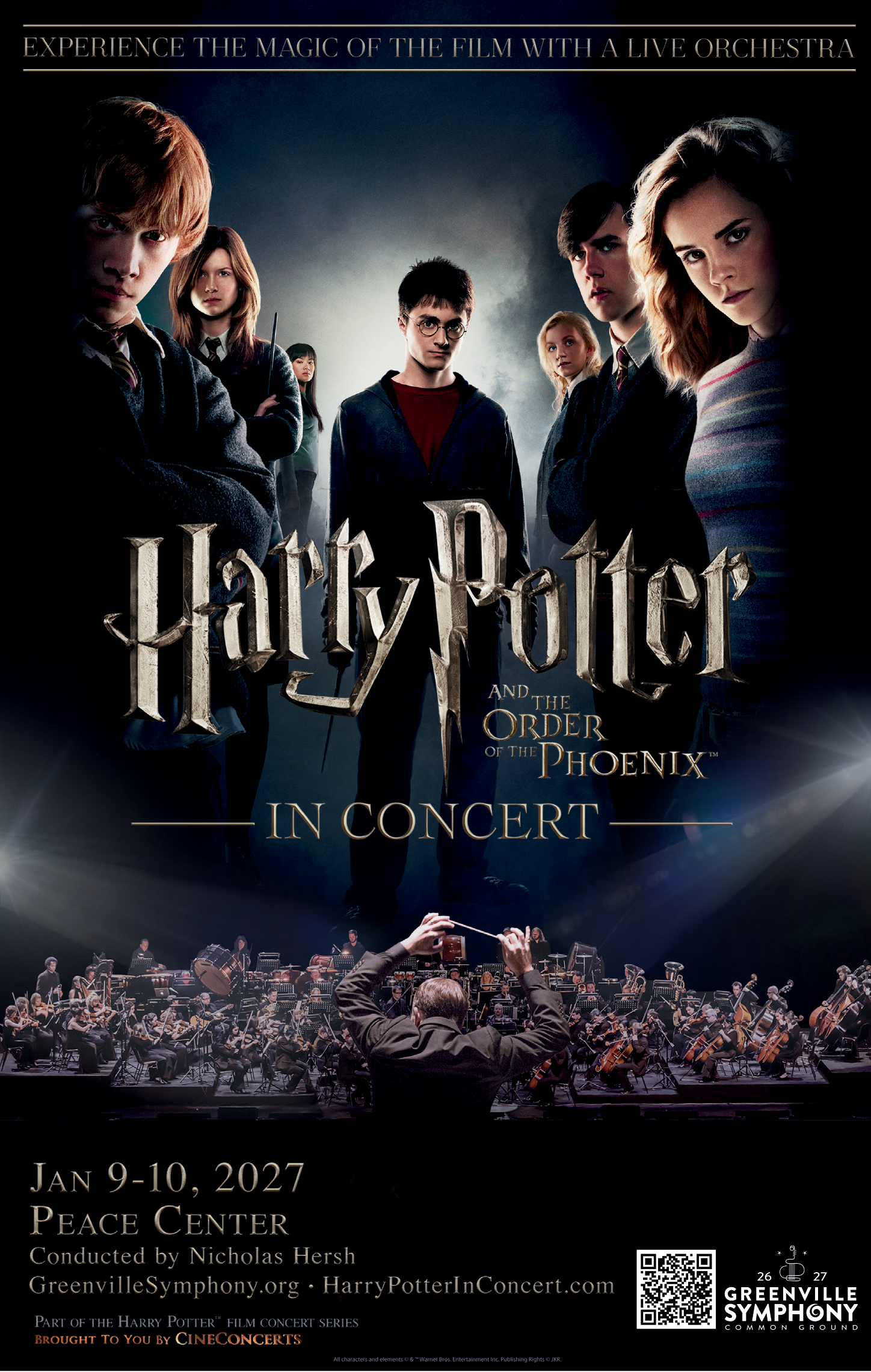
Harry Potter and the Goblet of Fire™ in Concert
January 9 at 1:00 pm and 7:00 pm
January 10 at 2:00
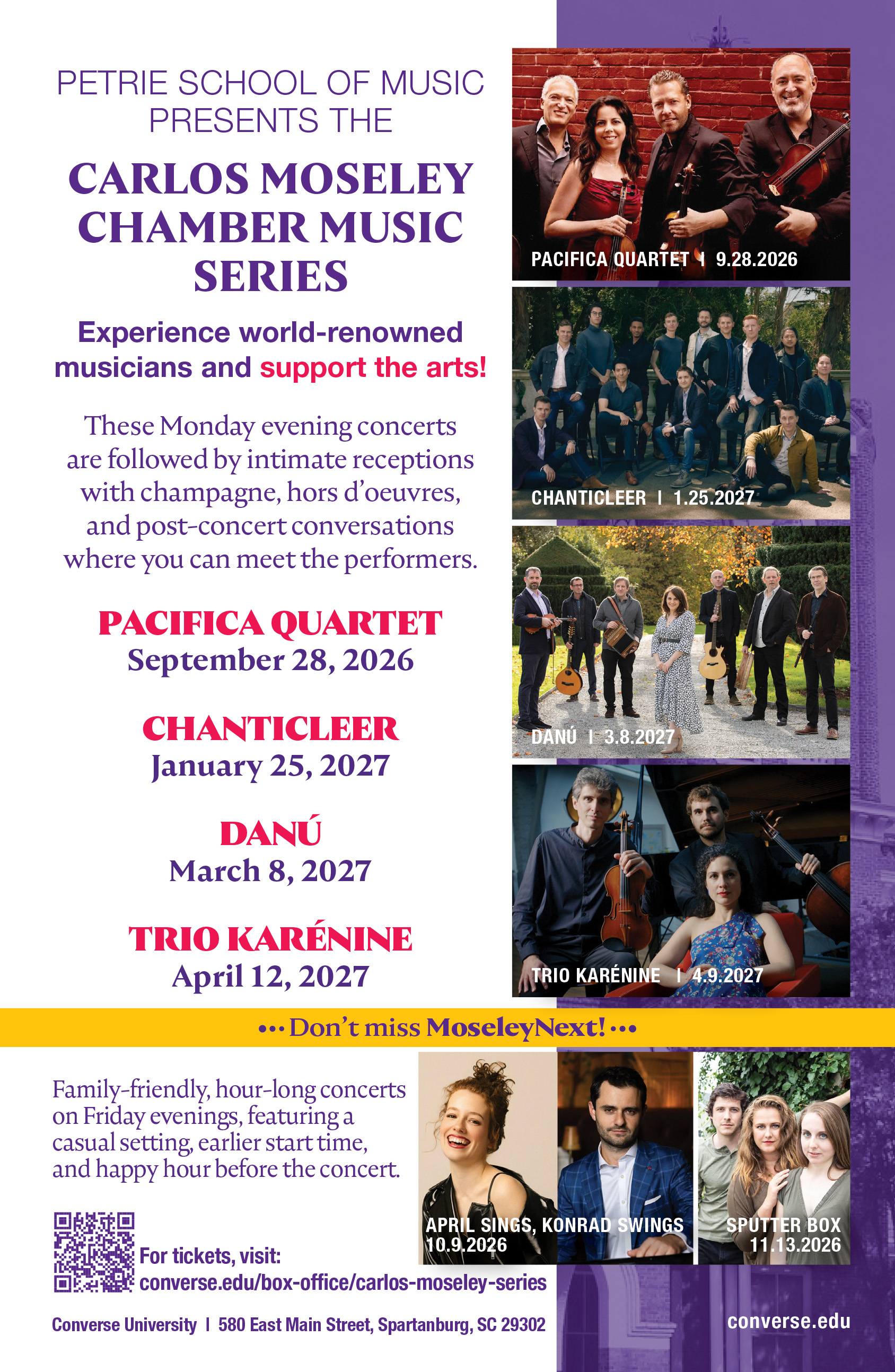
Chamber Music Series
Principal Winds of the Greenville Symphony
September 15 at 5:30 pm, Poe Mill Music
September 16 at 7:00 pm, Cascades Verdae
Principal Strings of the Greenville Symphony
March 16 at 5:30 pm, Centre Stage
March 17 at 7:00 pm, Hotel Hartness
Details and tickets available at greenvillesymphony.org