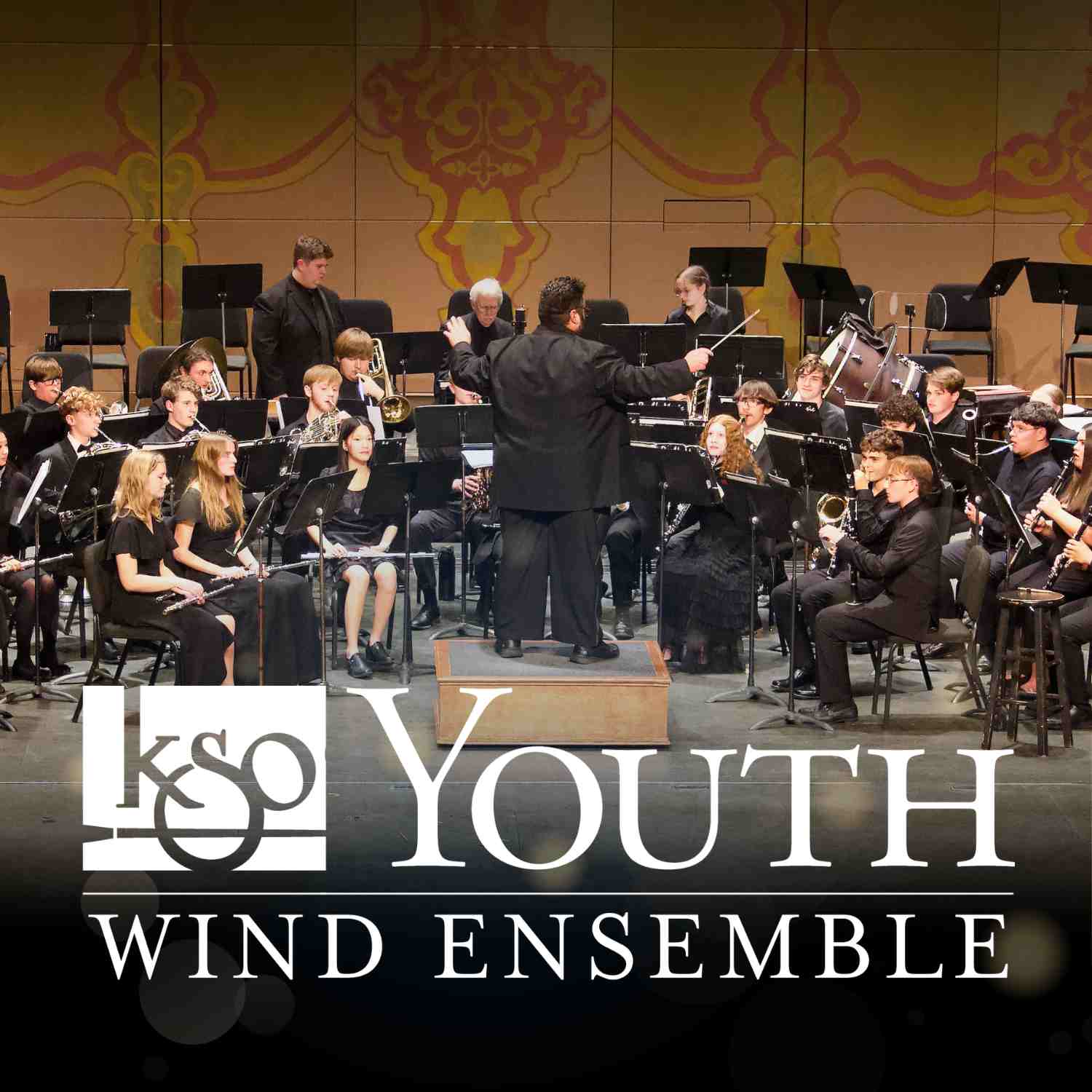
Knoxville Symphony Youth Wind Ensemble
Landscapes & Legends
Program Notes
Tonight’s program, Landscapes & Legends, explores how music captures both the places that shape human experience and the stories that endure through time. From rivers and countrysides to ancient cities and cultural traditions, each work reflects a distinct landscape—geographical, cultural, or historical—and the legends that emerge from it. Some of these legends are passed down through generations in folk song, while others are tied to moments of great historical significance or natural forces that have left lasting marks on civilization.
The program moves across continents and cultures, connecting the British Isles, East Asia, and the Mediterranean world. Through these works, we hear how composers draw inspiration from land and memory, transforming them into musical narratives that continue to resonate. Whether rooted in tradition or shaped by dramatic events, each piece invites us to consider how place and story are inseparably linked.
Army of the Nile – Kenneth J. Alford (1881–1945)
Composed in 1941, Army of the Nile is one of the most recognized marches by British composer Kenneth J. Alford, often referred to as the “British March King.” Written during World War II, the march reflects the British military presence in North Africa and evokes the imagery of the Nile River—one of the most historically significant landscapes in the world.
While not a literal depiction of ancient Egypt, the work carries a strong sense of place, conjuring images of vast desert landscapes and the enduring importance of the Nile as a lifeline for civilization. Its bold rhythms, strong melodic lines, and traditional march structure make it a fitting opening, setting the stage for a program rooted in place and history.
Irish Tune from County Derry – Percy Grainger (1882–1961)
Irish Tune from County Derry is Grainger’s setting of the traditional melody commonly known as “Londonderry Air.” This folk song has been passed down through generations and is deeply connected to the cultural identity of Ireland.
Grainger’s arrangement highlights the expressive potential of the wind band, using rich harmonies and carefully shaped phrasing to bring out the emotional depth of the melody. The piece serves as a musical “legend,” representing the enduring power of folk traditions and their ability to connect people across time and place.
Shepherd’s Hey – Percy Grainger
In contrast to the lyrical nature of Irish Tune, Shepherd’s Hey is a lively setting of an English Morris dance tune. Rooted in rural traditions, Morris dancing was historically performed in villages across England as part of seasonal celebrations.
Grainger’s arrangement captures the energy and character of this dance through light articulation, rhythmic vitality, and playful interaction between sections. Together with Irish Tune, this work represents the “legends” of everyday life—music shaped by community, tradition, and celebration.
Variations on a Korean Folk Song – John Barnes Chance (1932–1972)
Based on the Korean folk melody “Arirang,” Variations on a Korean Folk Song is one of the most important works in the wind band repertoire. The melody itself has existed for centuries and is considered a cultural symbol of Korea, reflecting themes of love, loss, and resilience.
Chance presents the tune through a series of contrasting variations, each exploring different textures, styles, and emotional characters. From delicate simplicity to rhythmic intensity, the piece demonstrates how a single melody can evolve while retaining its identity. It stands as a powerful example of how cultural “legends” are preserved and reimagined through music.
Vesuvius – Frank Ticheli (b. 1958)
Vesuvius is inspired by Mount Vesuvius, the volcano whose eruption in 79 A.D. destroyed the Roman city of Pompeii. Unlike the folk-based works earlier in the program, this piece reflects a legend born from a natural disaster—one that has fascinated historians and artists for centuries.
Ticheli’s music captures both the energy of the volcano and the human story connected to it. Driving rhythms, powerful brass writing, and dramatic contrasts create a vivid musical depiction of eruption and destruction. As the final work on the program, Vesuvius represents the moment when landscape itself becomes legend—when a place is forever changed and remembered through history.