THE TRAGEDY OF MACBETH: PARTY OF CRUELTY
By William Shakespeare
Adapted by D Wilkerson
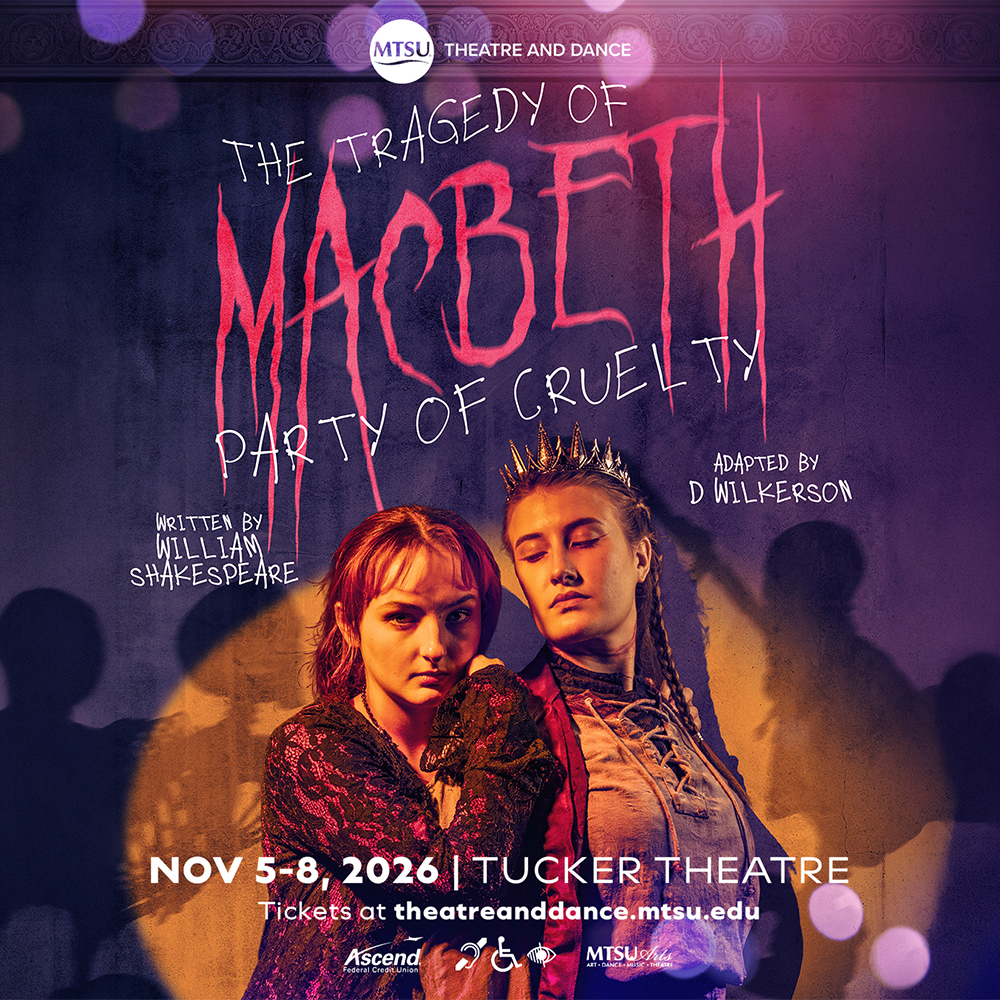
Step into a chilling reimagining of Shakespeare’s The Tragedy of Macbeth, where ambition, prophecy, and betrayal unfold beneath moonlit tombstones. Adapted by D. Wilkerson, this haunting production is set in a shadowed cemetery, blending classic verse with eerie Halloween atmosphere. Ghosts linger, witches whisper, and the line between the living and the dead begins to blur as Macbeth’s ruthless rise consumes all in its path. Dark, immersive, and visually striking, this is a Macbeth that will leave audiences thrilled, unsettled, and spellbound.
MTSU Theatre and Dance is a proud participant of The American Collegiate Theatre Festival
I’ve always been drawn to Macbeth. I directed it originally in 2019 when we were being encouraged at the highest levels to deny the humanity in others, to focus on what separates us instead of the countless things that bind us together as humans. And of the many themes inherent in Macbeth, that’s always been a dominant one for me: a dark warning about the results of denying the humanity in others. For both the victimized and for the ones victimizing, the consequences are deadly and dire. Now, in 2026, empathy and not cruelty is actually being cast as the problem, the weakness to be excised. Empathy—the essence of humanity. The essence of art. Theatre has long shown us what it means to be human and how to celebrate the humanity in others. So, it’s time for Macbeth once more.
In our story, the Witches are throwing a party to end all parties, and they’re inviting some of their closest (corpse) friends. Only the most stylish and cruel undead have made the list. There might even be a very special, invited (demonic) patron. And for entertainment, the Witches have arranged for (read: captured) a very special show to entertain their inhuman guests (and perhaps their modern-day cruelty-loving counterparts). Their spell that has captured the souls of the cast is fed by the cruelty inflicted on them during the story (and encouraged by the party goers), allowing the fete to continue on and on and on, potentially for eternity. You’re invited to sit in and witness the dark merriment and hopefully empathize with those unlucky bound souls. And their real-life reviled counterparts? We leave their fate in your hands.
| Director | D Wilkerson (they/them) |
| Assistant Director | Jayla Scott |
| Choreographer | Joi Ware |
| Fight Choreographer | Carrie Brewer |
| Asst. Fight Choreographer | Eve Petty |
| Dramaturg | Luke Yates |
| Asst. Dramaturg | Auto Payne |
| Scenic Designer | Scott Boyd |
| Asst. Scenic Designer | Josiah Johnson |
| Scenic Painter | Josiah Johnson |
| Costume Designer | Regan Hudson |
| Asst. Costume Designer | Norah Younger |
| Lighting Designer | Darren E. Levin |
| Asst. Lighting Designer | Emily Lamb |
| Properties Coordinator | Robin Phelps |
| Asst. Properties Coordinator | David Sharp |
| Composer, Sound Designer | Kevin O'Donnell |
| Wigs, Hair, Makeup Designer | Jadyn Peters |
| Stage Manager | Gracie Lynch |
| ASM | Caden Ashton |
| ASM | Delanie Oestreich |
| ASM | Aivree Byram |
| Tech ASM | Keziah McPhee |
| Technical Director | Scott McElheney |
| Lead Carpenter | Josh Bennett |
| Sound Engineer | Madelyn Lutz |
| Audio Assistant | Isaiah Smith |
| Audio Assistant | Johnathan Whited |
| Wigs, Hair, Makeup Technician | Dante Walker |
| Wigs, Hair, Makeup Technician | Cassie Cochran |
| Production Electrician | Catherine M. Pratt |
| Asst. Production Electrician | Abigail Creekmore |
| Wardrobe Head | Brandi Lokey |
| Wardrobe Crew | Students of THEA 3200 |
| Light hang / focus crew | Mekiah Hayslett Joshua Leslie Emily Litzenberger Rivera Gracie Lynch Robin Phelps Austyn Taylor The Students of THEA 3400 |
| Light Board Op | Jackson Leatherwood |
| Followspot Op | Emily Foster |
| Followspot Op | Kaylee Payne |
| Production Manager | John Underwood |
The Curse of Macbeth: A History
Macbeth is deemed “the Scottish Play” in reference to its location in context of the lore and the climate. It’s not only an engrossing tragedy, but also a relic of history. Amid social instability and cultural changes, peoples sought for answers to the problems that plagued them. With this came the witchcraft trials, where “hags”, young women, and children were frequently sentenced to imprisonment, exile, or execution for the practice of black magic. William Shakespeare wrote The Tragedy of Macbeth with King James I in mind—the king’s obsessive paranoia surrounding witchcraft contributing much inspiration for the three witches seen in the play. After suffering an incident as sea so scarring, King James presumed otherworldly forces were at play. With this, he wrote Daemonologie, a philosophical dissertation on the reality of witchcraft. Naturally, citizens followed suit, and soon, most people found witches to be real. The Weird Sisters were cultivated characters from Shakespeare’s compelling imagination, created to leave a lasting mark in the eyes of theatre and history. Many skeptics believed Shakespeare’s inclusion of the witches to be a grave mistake, one that has not left the production alone since. The curse of Macbeth was allegedly cast by real covens in the time of its release because of Shakespeare’s inclusion of “real spells and materials” used in witchcraft. The production became instantly controversial, pulling terror and fear from the audience with the horrifying portrayals of the witches and their “demonic” manipulation. So, when you hear “Double, double toil and trouble…” don’t be frightened, this witch’s brew can’t hurt you!
To Counteract the Curse of Macbeth:
Leave the Theater (after the show),
Spin Three Times,
Spit on the Ground,
Say your favorite Shakespeare Quote!
Who twists your sorrow into an inescapable spiral of misery? Who concocts your fear and hatred into a vile shower of vitriol? Who stokes your noble aspirations into covetous blood-soaked malice? Tonight, these inhumane—yet all too human—vices are the most wicked witches around, and they are hosting a grand party of cruelty. With their ghoulish friends and one extra demonic V.I.P, they resurrect The Tragedy of Macbeth to harvest all of its delicious inhumanity.
Shakespeare’s Macbeth remains prevalent today due to its accessibility and long lasting relevancy. The play has remained topical since its debut in 1611. Shakespeare was writing the script in the wake of the 1605 Gunpowder plot: a failed scheme by Guy Fawkes and Jesuit rebels to assassinate King James I by detonating barrels of gunpowder beneath the parliament building. Appealing to royal audiences on the regular, Shakespeare writes in solidarity with James I as seen in the unnatural omens that haunt the kingdom in the wake of Duncan’s murder.
Macbeth shows us a world we may find disturbingly familiar, rife with: temptation, greed, tyranny, war, and betrayal. Adapted by D Wilkerson, this universe is one where we lose our souls by being a perpetrator of dehumanization or the victim of it. Duncan misplaces his trust. Ross and Lennox make fatal mistakes. Banquo is backstabbed. Macduff if consumed with regret. Seyton’s indifference breeds complicity. Lady Macbeth is strangled by grief. And who else is guilty of embracing their darkest desires, like Macbeth? Tonight, fair is foul and foul is fair
| Dramaturgy Faculty Advisor | Dr. Cate Heiner |
| Stage Management Faculty advisor | Scott Wray |
| Costume Design Faculty Advisor | Tommy Macon |
| Lighting Design Faculty advisor | Darren E. Levin |
| Lighting Technology/PE Faculty advisor | Catherine M. Pratt |
| Scenic Design Faculty Advisor | Scott Boyd |
| Technical Direction Faculty advisor | Scott McElheney |
| Sound Design Faculty Advisor | Kevin O'Donnell |
| Makeup, Hair, Wigs Advisor | Maria Mignone |
| Scenic and Properties Specialist | Josh Bennett |
| Costume Shop Supervisor | Katie Sellers |
Thank you, Ascend Federal Credit Union, for sponsoring MTSU Arts.