Henri Frédien Tomasi
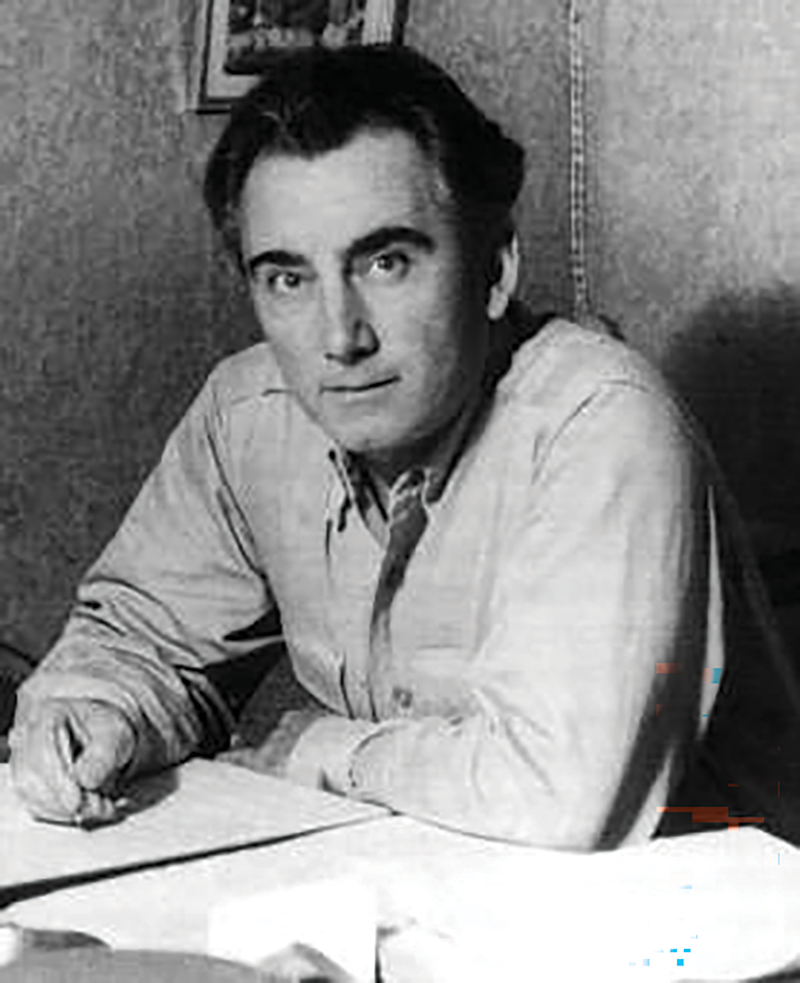
Born: August 17, 1901, Marseille, France
Died: January 13, 1971, Paris, France
Trumpet Concerto
- Work Composed: 1948
- Premiere: April 1948 in Paris with the Orchestre National de France, LudovicVaillant, trumpet
- Instrumentation: solo trumpet, 2 flutes (incl. piccolo), 2 oboes (incl. English horn),2 clarinets, 2 bassoons, 4 horns, 3 trombones, tuba, timpani, harp, celeste, strings
- CSO notable performances: These are the first CSO performances of the Trumpet Concerto.
- Duration: approx. 16 minutes
Composer and conductor Henri Tomasi, born in Marseille in August 1901 into a working-class family of Corsican descent, began studying music at age seven at the city’s conservatory and progressed so rapidly on piano that he complained about feeling “humiliated to be on show like a trained animal” when his father introduced him at social gatherings as a child prodigy. Young Henri supplemented the family’s finances during World War I by playing anywhere there was work, from fancy hotels to brothels and movie houses. In 1921, he received a scholarship from the city of Marseille to attend the Paris Conservatoire to study composition with Georges Caussade and Paul Vidal and conducting with Philippe Gaubert; he also studied privately with Vincent d’Indy. Tomasi proved to be a model student — one classmate marveled that “he showed up with a new fugue every week. He was indefatigable, an inveterate workaholic!” — and he took second place in the Prix de Rome upon his graduation in 1927. He established parallel careers as composer and conductor soon after leaving the school, and, from 1930 to 1935, he worked for the French National Radio as music director of its programs beamed to Indochina and other Far Eastern lands — an experience that stimulated his interest in world music and influenced the settings and style of several of his compositions. Tomasi was inducted into the French army in 1939 and served as a band director near Nice until the Germans overran the country the following year. He continued to compose during the war and also conducted the Orchestre National, which had been moved from Paris to Marseille because of the hostilities. Tomasi was named principal conductor of the Monte Carlo Opera in 1946, and he enjoyed considerable success conducting many of France’s finest orchestras until 1957, when the loss of hearing in his right ear forced him to retire from the concert stage. He thereafter devoted himself to composition until his death in Paris in 1971.
Tomasi’s creative output includes nine ballets, five operas, 16 concertos (for most of the orchestral instruments), an oratorio, a few independent orchestral works and some chamber pieces. Among his last works are a Chant pour le Vietnam and Third-World Symphony, in which he expressed his outrage at contemporary events. Of Tomasi’s creative personality, the French composer Arthur Hoérée wrote, “He excelled in evoking wide spaces by means of great frescoes, rich in contrasts and sometimes violent or exotic. His music is intensely direct in feeling, occasionally dissonant and highly colored; he absorbed influences from his French contemporaries (chiefly Ravel) while retaining an individual voice.”
The Trumpet Concerto, composed in 1948 for Ludovic Vaillant, principal trumpet of the Orchestre National de France, is in the melodious and sharply etched neoclassical idiom characteristic of Tomasi’s style. The opening movement, brilliant and virtuosic, is based on scintillating fanfare-like thematic material. It ends with an extended cadenza that evokes a variety of moods. The Nocturne is introspective and nostalgic, rising to an expressive climax at its mid-point. The witty and energetic finale recalls the popular songs of the Parisian boulevards and cafés.
©Dr. Richard E. Rodda