World Premiere: April 18, 2024
Last HSO Performance: HSO Premiere
Instrumentation: laptop, strings, solo violin
Duration: 40 minutes
Curtis Stewart
On December 14, 1725, the Gazette d’Amsterdam announced the issuance by the local publisher Michele Carlo Le Cène of a collection of twelve concertos for solo violin and orchestra by Antonio Vivaldi — Il Cimento dell’Armonia e dell’Inventione, or “The Contest between Harmony and Invention,” Op. 8. The works were printed with a flowery dedication typical of the time to the Bohemian Count Wenzel von Morzin, a distant cousin of Joseph Haydn’s patron before he came into the employ of the Esterházy family in 1761. On the title page, Vivaldi described himself as the “maestro in Italy” to the Count, though there is no record of his having held a formal position with him. Vivaldi probably met Morzin when he worked in Mantua from 1718 to 1720 for the Habsburg governor of that city, Prince Philipp of Hessen-Darmstadt, and apparently provided the Bohemian Count with an occasional composition on demand. (A bassoon concerto, RV 496, is headed with Morzin’s name.)
Vivaldi claimed that Morzin had been enjoying the concertos of Le Cène’s Op. 8 publication “for some years,” implying earlier composition dates and a certain circulation of this music in manuscript copies, and hoped that their appearance in print would please his patron. The first four concertos, those depicting the seasons of the year, seem to have especially excited Morzin’s admiration, and quickly became among Vivaldi’s most popular works. A pirated edition appeared in Paris within weeks of the Amsterdam publication, and by 1728, the concertos had become regular items on the programs of the Concert Spirituel in Paris. The Spring Concerto was adapted in 1755 as an unaccompanied flute solo by Jean Jacques Rousseau, the philosopher and dilettante composer who was attracted by the work’s musical portrayal of Nature, and as a motet (!) by Michel Corrette to the text “Laudate Dominum de coelis” in 1765. Today, The Four Seasons remains Vivaldi’s best-known work, one of the most beloved and frequently recorded compositions in the orchestral repertory.
* * *
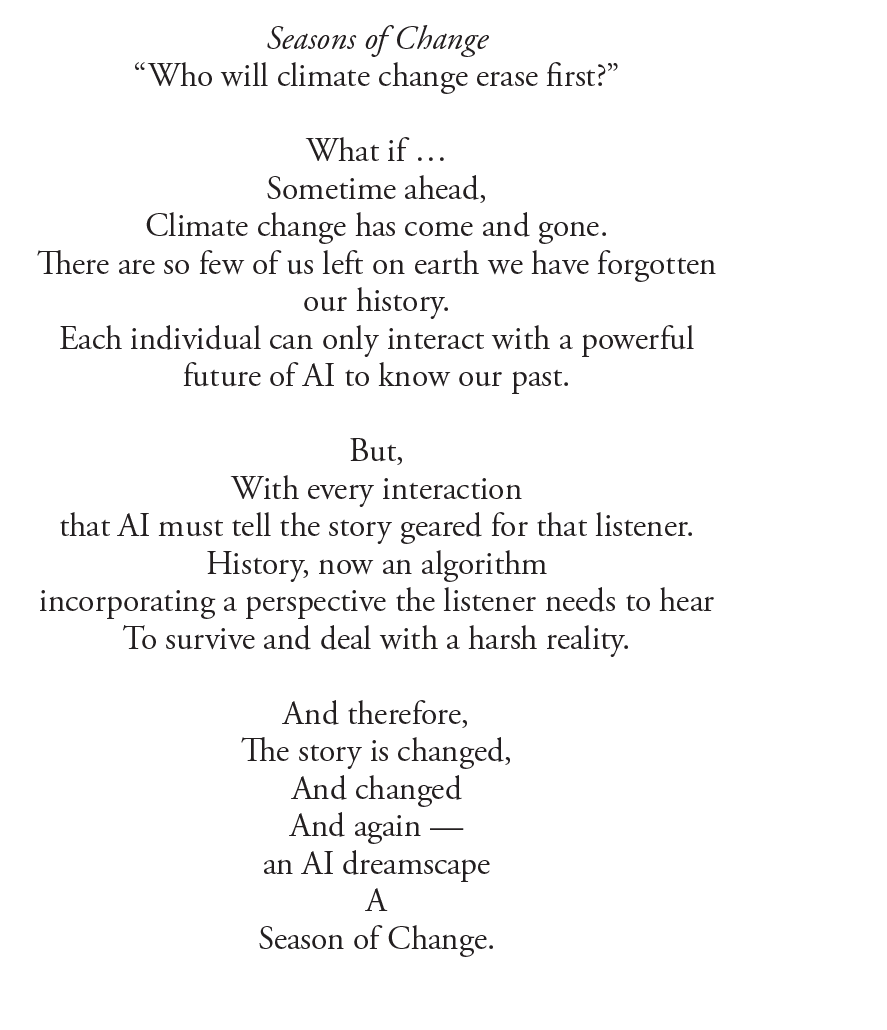
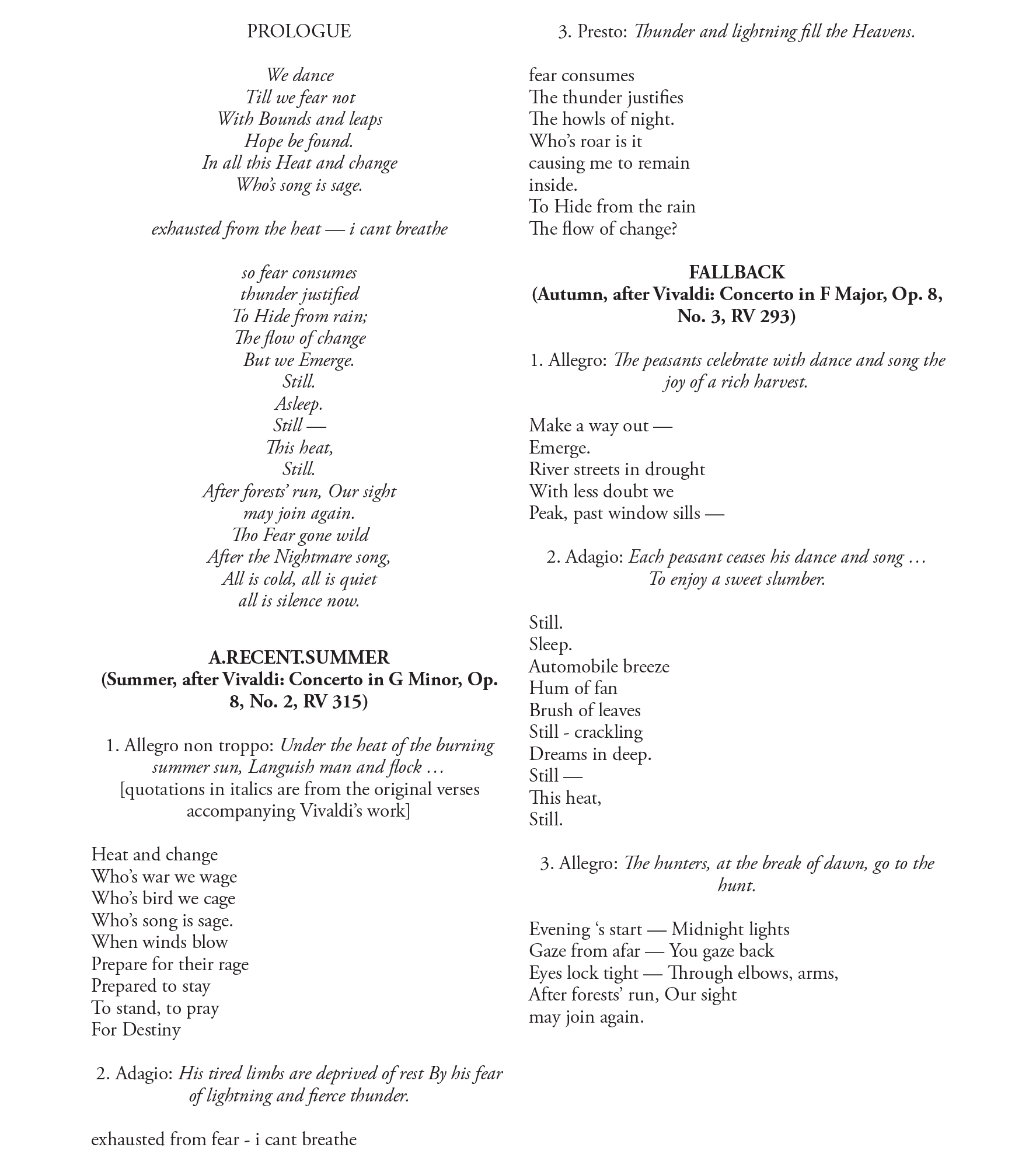
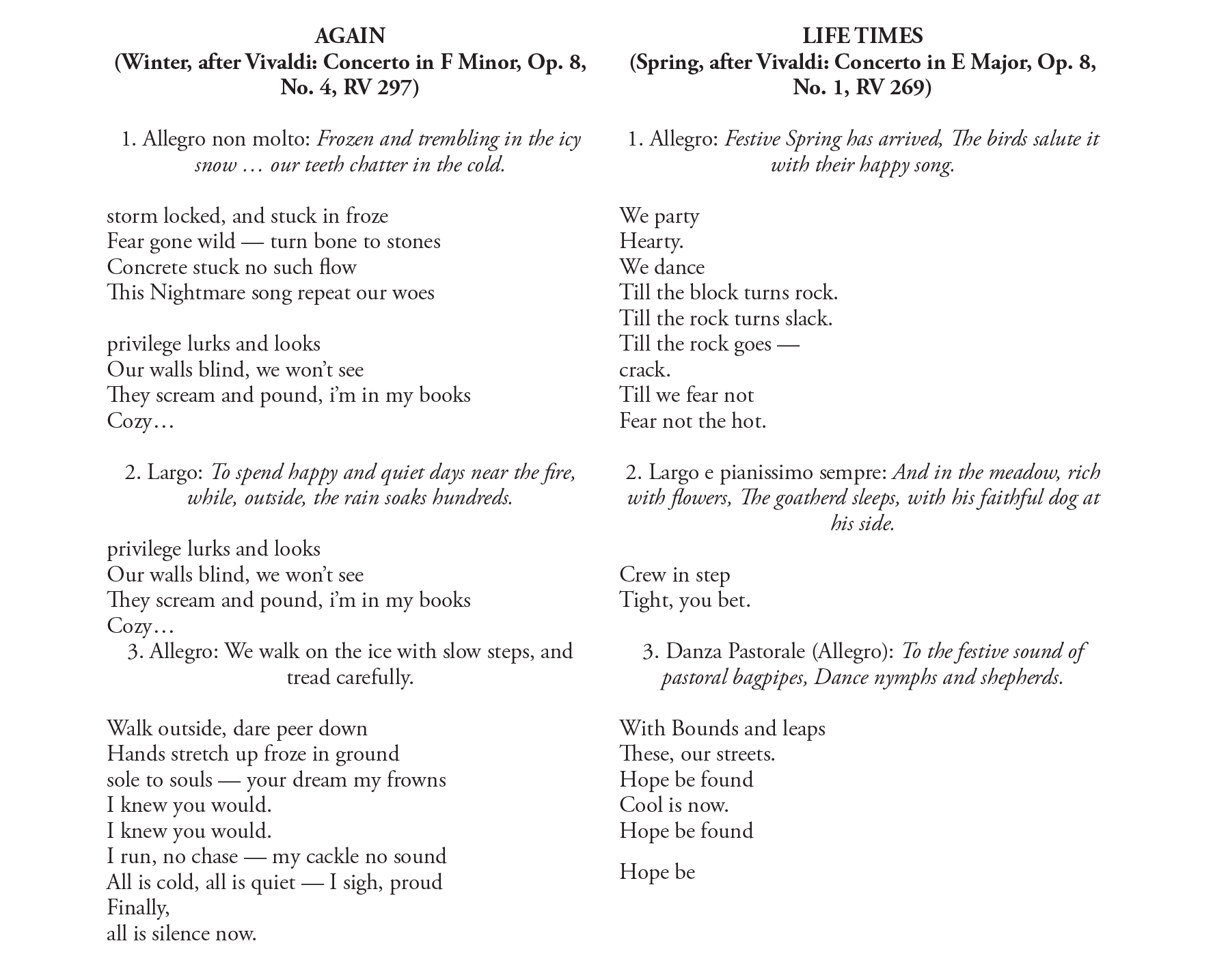
“Seasons of Change, a recomposition of Vivaldi’s The Four Seasons,” wrote Curtis Stewart, “is the frame for an Afrofuturist meditation/dreamscape on climate change, class and the nature of digital memory. It features the voices of individuals experiencing homelessness talking about the heavy impact of climate change on their daily lives. Their voices were captured through a partnership of the Phoenix Symphony, which premiered Seasons of Change in April 2024, and Circle the City, an organization in the city dedicated to providing healthcare to unhoused individuals. My hope is the ethos and pathos of these conversations will drive support for those doing effective work to combat the effects of climate change.
* * *