









× Upcoming Events About Us The Youth Orchestra Program Supporters Your Support BATMAN 1989 LIVE FILM IN CONCERT Past Events
Home About Us The Youth Orchestra Program Supporters Your Support BATMAN 1989 LIVE FILM IN CONCERT
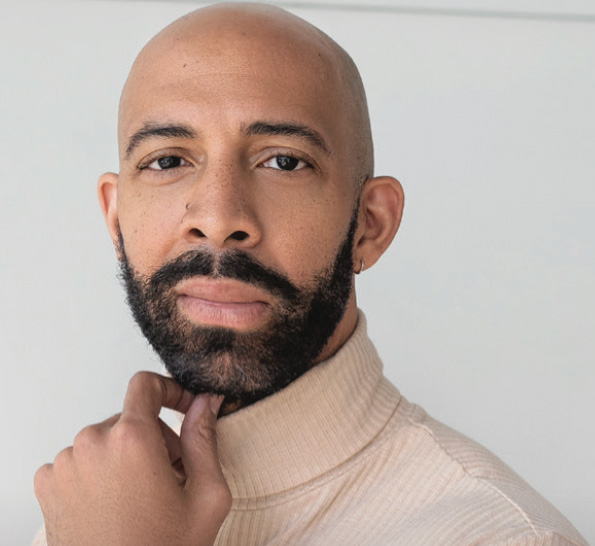
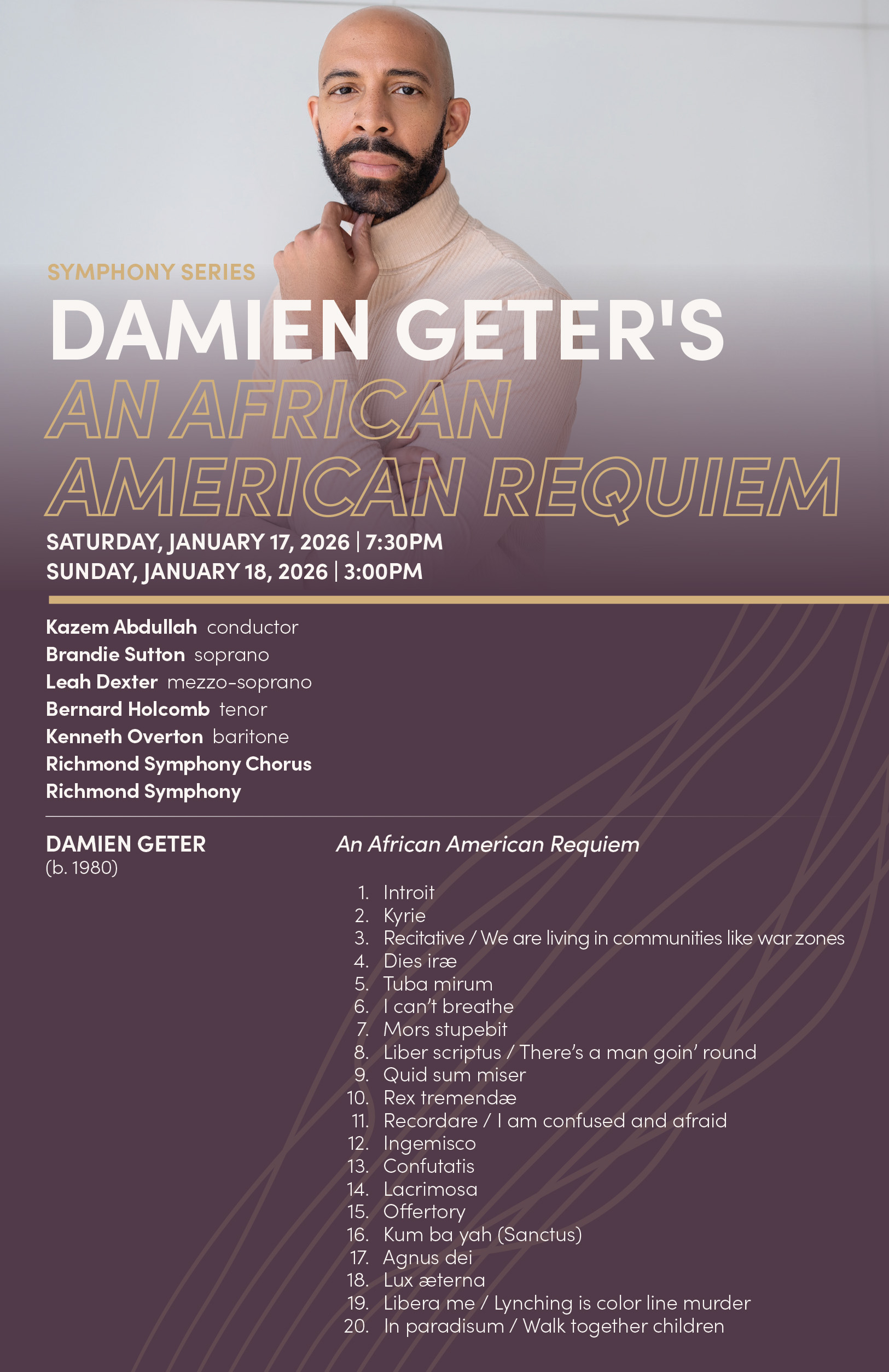
Image for Damen Geter's An African American Requiem
Program

Program Notes

DAMIEN GETER
An African American Requiem
 

SATURDAY, January 17, 2026 | 7:30PM
SUNDAY, January 18, 2026 | 3:00PM

Kazem Abdullah  |  conductor
Brandie Sutton  |  soprano
Leah Dexter  |  mezzo-soprano
Bernard Holcomb  |  tenor
Kenneth Overton  |  baritone

RICHMOND SYMPHONY CHORUS 
80 minutes

Damien Geter’s role as Composer-in-Residence with the Richmond Symphony has been about more than presenting his music in performance. It has meant cultivating relationships—with musicians, audiences, and the community—to explore how music can speak to the American experience in real time. Over the course of his tenure, Geter has curated programs, mentored young artists, and composed works that reflect both personal history and national reckoning.

Currently based in Chicago, Geter was born in Petersburg and raised in Chesterfield County and studied piano and organ as a child before focusing on trumpet at Old Dominion University. “Many of my earliest musical memories,” he recalls, “came from sitting in the Richmond Symphony concert hall as a young person.”

Within this context, An African American Requiem takes on special resonance as the most ambitious realization of his partnership with the Symphony. As Music Director Valentina Peleggi observes, “This is the first official concert in 2026, when we mark the 250th anniversary of the signing of the Declaration of Independence. We wanted to present a piece that speaks about the concept of America nowadays. After three years with Damien as our composer-in-residence, we felt this was exactly the moment to perform such a masterpiece.”

An African American Requiem is a sweeping, concert-length score for orchestra, chorus, and soloists. Geter has dedicated it “to the victims of racial violence,” shaping the work as a memorial to lives tragically lost. 

The idea for An African American Requiem was sparked early in 2017, at a moment of national tension and transition. Geter had already been sketching ideas in 2016, in response to the killings of Trayvon Martin, Michael Brown, Eric Garner, Tamir Rice, and other Black Americans whose deaths at the hands of police or vigilantes had become symbols of racial injustice. He resolved to create a full-scale Requiem. At the time, Geter was a member of Portland’s Resonance Ensemble, where Artistic Director Katherine FitzGibbon recognized the urgency of his vision and commissioned the work.

The premiere, postponed by the pandemic, finally took place in May 2022 with Resonance and the Oregon Symphony, followed by a performance at the Kennedy Center. It has already begun to establish itself as one of the most significant large-scale choral statements of recent years.

A Requiem traditionally sets the Roman Catholic Mass for the Dead, honoring the departed and offering prayers on their behalf. Geter looked to Verdi’s Requiem as his principal model. At the same time, Benjamin Britten’s War Requiem, which premiered in 1962, offered an inspiring precedent for how the ancient ritual could be transformed into commentary on urgent contemporary realities. Like Britten, Geter interweaves the Latin liturgy with other voices—in his case, voices drawn from African American experience, the work of activists, and spiritual song.

The opening Introit follows Verdi’s precedent, and his vividly dramatic setting of the Dies irae (“Day of Wrath”) also finds echoes in Geter’s treatment, including the emphatic role of brass. But Geter extends the form across twenty movements, introducing the contemporary angle already in the third movement, between the Kyrie and the Dies irae, when the soprano soloist sings words by Sacramento activist Jamilia Land: “We are living in communities that are like war zones.” 

Later, amid the sequence of texts that comprise the Dies irae—which originated as a rhymed medieval hymn depicting what awaits humanity at the Last Judgment—a tenor sings Eric Garner’s last words, “I can’t breathe,” just before the chorus launches the terrifying vision of Mors stupebit.

Elsewhere, Geter embeds familiar national symbols in unsettling ways. In the Lacrimosa, a solo clarinet plays a haunting minor-key version of “The Star-Spangled Banner,” leaving silent the climactic note where the word “free” would occur. He also turns to Ida B. Wells, the pioneering Black journalist and civil-rights leader, setting her 1909 speech “Lynching is Color-Line Murder” before the section In paradisum, which envisions the angels leading the departed into Paradise.

Spirituals such as “There’s a Man Goin’ Round Taking Names” and “Kum Ba Yah” are folded into the stylistic collage of Geter’s wide-ranging score. “There’s jazz, especially in the Ida B. Wells movement,” he notes. “But overall, this is a straight-up piece of classical music that interweaves all types of music.”

The stylistic breadth allows Geter to move between emotional extremes. “The music tells the story just as much as the words,” Geter explains. “I’m driven by text. The music supports the text, and the text highlights the music. Even when I’m writing pieces that have no text, I still think about the drama.” An African American Requiem shifts between moments of despair and flashes of hope. “The ending in B major sounds triumphant, in a way,” he says, “but to me this is a dark key.”

Asked about the message he intends to convey, Geter responds: “I’m not sure I have a message per se. What I’m trying to do is to honor and commemorate those who have perished because of racism. The music is the message.”

(c)2025 Thomas May

Libretto

SUNG TEXT:
Introit
Requiem æternam dona eis, Domine:
et lux perpetua luceat eis.
Te decet hymnus, Deus, in Sion,
et tibi reddetur votum in Ierusalem:
exaudi orationem meam,
ad te omnis caro veniet.
Requiem æternam dona eis, Domine:
et lux perpetua luceat eis.

Kyrie
Lord have mercy, Christ have mercy.

Recitative
We are living in communities
that are like war zones.1

Dies Irae
Dies iræ, dies illa,
Solvet sæclum in favilla:
Teste David cum Sibylla.

Quantus tremor est futurus,
Quando judex est venturus,
Cuncta stricte discussurus.

Tuba Mirum
Tuba, mirum spargens sonum
Per sepulchra regionum,
Coget omnes ante thronum.

I Can’t Breathe
I can’t breathe.2

Mors stupebit
Mors stupebit et natura,
Cum resurget creatura,
Judicanti responsura.

There’s A Man Goin’ Round/Liber Scriptus
There’s a man goin’ round takin’ names.
He has taken my father’s name,
And he left my heart in vain.
There’s a man goin’ round takin’ names.

There’s a man goin’ round takin’ names.
He has taken my mother’s name,
And he left my heart in vain.
There’s a man goin’ round takin’ names.

Liber scriptus proferetur,
In quo totum continetur,
Unde mundus iudicetur.

Judex ergo cum sedebit,
Quidquid latet, apparebit:
Nil inultum remanebit.

There’s a man goin’ round takin’ names.
He has taken my brother’s name,
And he left my heart in vain.
There’s a man goin’ round takin’ names.

O Death is that man takin’ names.
He has taken my sister’s name,
And he left my heart in vain.
O Death is that man takin’ names.

Quid sum miser
Quid sum miser tunc dicturus?
Quem patronum rogaturus,
Cum vix iustus sit securus?

Rex tremendae
Rex tremendae majestatis,
Qui salvandos salvas gratis,
Salva me, fons pietatis.

Recordare
Recordare, Jesu pie,
Quod sum causa tuae viae:
Ne me perdas illa die.

I am confused and afraid.3

Quaerens me, sedisti lassus:
Redemisti Crucem passus:
Tantus labor non sit cassus.

I am confused and afraid.3

Juste Judex ulitionis,
Donum fac remissionis
Ante diem rationis.

I am confused and afraid.3

Ingemisco 
Do not fret because of evildoers
Or be jealous of those who do injustice.
For they will quickly wither like the grass,
And fade like the green herbs.

He will set the sheep at His right hand,
But the goats at the left.
Then the King will say to those at his right hand,
come you blessed of my Father.
Inherit the kingdom prepared for you
Since the foundation of this world.

For I know the plans that I have for you,
says the Lord. Plans for peace and not for evil.
To give you a future and a hope.

Confutatis
Confutatis maledictis,
Flammis acribus addictis:
Voca me cum benedictis.

Oro supplex et acclinis,
Cor contritum quasi cinis:
Gere curam mei finis.

Lacrimosa
Lacrimosa dies illa,
Qua resurget ex favilla
Judicandus homo reus:
Huic ergo parce, Deus.

Pie Jesu Domine,
Dona eis requiem. Amen.

Offertory
Domine Jesu Christe, Rex gloriæ,
libera animas omnium fidelium defunctorum
de poenis inferni et de profundo lacu:
libera eas de ore leonis,
ne absorbeat eas tartarus,
ne cadant in obscurum:
sed signifer sanctus Michael
repræsentet eas in lucem sanctam:
Quam olim Abrahæ promisisti,
et semini eius.

Hostias et preces tibi, Domine,
laudis offerimus:
tu suscipe pro animabus illis,
quarum hodie memoriam facimus:
fac eas, Domine, de morte transire ad
vitam. Quam olim Abrahæ promisisti,
et semini eius.

Sanctus (Kum Ba Yah)
Kum ba ya my Lord, kum ba ya.
Somebody’s prayin’ Lord, kum ba yah.
Somebody’s singin’ Lord, kum ba yah.
For the sun that rises in the sky,
For the rhythm of the falling rain,
For all life great or small,
For all that’s true, For all you do.
Hear me singin’ Lord, kum ba yah.
Kum ba ya my Lord, kum ba ya.
Somebody needs you Lord, kum ba ya,
Oh Lord, kum ba ya.

Agnus Dei
Agnus Dei, qui tollis peccata mundi:
dona eis requiem.
Agnus Dei, qui tollis peccata mundi:
dona eis requiem.
Agnus Dei, qui tollis peccata mundi:
dona eis requiem sempiternam.

Lux aeterna
Lux æterna luceat eis, Domine:
Cum Sanctis tuis in æternum:
quia pius es.
Requiem æternam dona eis, Domine:
et lux perpetua luceat eis.
Cum Sanctis tuis in æternum:
quia pius es.

Libera Me
Libera me, Domine, de morte æterna, in die
illa tremenda:
Quando cæli movendi sunt et terra:
Dum veneris iudicare sæculum per ignem.
Tremens factus sum ego, et timeo,
dum discussio venerit, at que ventura ira.

Quando cæli movendi sunt et terra.
Dies illa, dies iræ, calamitatis et miseriæ,

dies magna et amara valde.
Dum veneris iudicare sæculum per ignem.
Requiem æternam dona eis,
Domine: et lux perpetua
luceat eis.


Translation:
Eternal rest give unto them, O Lord,
and let perpetual light shine upon them.
A hymn, O God, becometh Thee in Zion;
and a vow shall be paid to Thee in Jerusalem:
hear my prayer;
all flesh shall come to Thee.
Eternal rest give unto them, O Lord,
and let perpetual light shine upon them.


The day of wrath, that day
will dissolve the world in ashes,
David being witness along with the Sibyl.

How great will be the quaking,
When the Judge will come,
Investigating everything strictly.


The trumpet, scattering a wondrous sound through
the sepulchers of the regions,
will summon all before the throne.


Death and nature will marvel,
when the creature will rise again,
to respond to the Judge.


The written book will be brought forth,
in which all is contained,
from which the world shall be judged.

When therefore the Judge will sit,
whatever lies hidden will appear:
nothing will remain unpunished.


What then will I, poor wretch [that I am], say?
Which patron will I entreat,
when [even] the just may [only] hardly be sure?


King of fearsome majesty,
Who freely savest those that are to be saved,
save me, O font of mercy.

Remember, merciful Jesus,
that I am the cause of Thy way:
lest Thou lose me in that day.


Seeking me, though faint and weary,
Thou redeemst me, having suffered the Cross:
let not so much hardship be in vain.


Just Judge of vengeance,
make a gift of remission
before the day of reckoning.


Once the cursed have been silenced,
sentenced to acrid flames:
Call Thou me with the blessed.

Kneeling and bowed I pray,
my heart crushed as ashes:
take care of my end.


Tearful will be that day,
on which from the flowing embers will arise
the guilty man who is to be judged.
Then spare him, O God.

Merciful Lord Jesus,
Grant them rest. Amen.


O Lord Jesus Christ, King of glory,
deliver the souls of all the faithful departed
from the pains of hell and from the bottomless pit:
deliver them from the lion’s mouth,
that hell swallow them not up,
that they fall not into darkness,
but let the standard-bearer holy Michael
lead them into that holy light:
Which Thou didst promise of old to Abraham
and to his seed.

We offer to Thee, O Lord,
sacrifices and prayers:
do Thou receive them in behalf of those souls
of whom we make memorial this day.
Grant them, O Lord, to pass from death to that
life, Which Thou didst promise of old to
Abraham and to his seed.


Lamb of God, Who takest away the sins of the
world, grant them rest.
Lamb of God, Who takest away the sins of the
world, grant them rest.
Lamb of God, Who takest away the sins of the
world, grant them eternal rest.


May light eternal shine upon them, O Lord,
with Thy Saints for evermore:
for Thou art gracious.
Eternal rest give to them, O Lord,
and let perpetual light shine upon them:
With Thy Saints for evermore,
for Thou art gracious.


Deliver me, O Lord, from death eternal in that
awful day.
When the heavens and the earth shall be moved:
When Thou shalt come to judge the world by fire.
Dread and trembling have laid hold on me,
and I fear exceedingly because of the judgment and
of the wrath to come.
When the heavens and the earth shall be moved.
O that day, that day of wrath, of sore distress and
of all wretchedness,
that great day and exceeding bitter.
When Thou shalt come to judge the world by fire.
Eternal rest grant unto them,
O Lord, and let perpetual light
shine upon them.


(Libera Me) Lynching is Color-Line Murder 5
The lynching record for a quarter of a century merits the thoughtful study of the American people. 
It presents three salient facts:

First, lynching is color-line murder.

Second, crimes against women is the excuse, not the cause. 

Third, it is a national crime and requires a national remedy. (Continued on the following page)

5. By Ida B. Wells (Edited).


(Libera Me) (cont’d)
Proof that lynching follows the color line is to be found in the statistics which have been kept for the past 25 years.

This was wholly political, its purpose being to suppress the colored vote by intimidation and murder… the purpose was accomplished, and the Black vote was suppressed. But mob murder continued.

From 1882, in which year 52 were lynched, down to the present, lynching has been along the color line. Mob murder increased yearly until in 1892; more than 200 victims were lynched and statistics show that 3,284 men, women and children have been put to death in this quarter of a century.

(Twenty-eight human beings burned at the stake, one of them a woman and two of them children,) the awful indictment against American civilization – (the gruesome tribute which the nation pays to the color line.)

Why is mob murder permitted by a Christian nation? What is the cause of this awful slaughter? This question is answered almost daily – always the same shameless falsehood that “Negroes are lynched to protect womanhood”.

(This is the never-varying answer of lynchers and their apologists). All know that it is untrue. The cowardly lyncher revels in murder, (then seeks to shield himself from public execration by claiming devotion to woman). But the truth is mighty and the lynching record discloses the hypocrisy of the lyncher as well as his crime.

The Springfield, Illinois, mob rioted for two days, the militia of the entire state was called out, two men were lynched, hundreds of people driven from their homes, all because a white woman said a Negro assaulted her. A mad mob went to the jail, tried to lynch the victim of her charge and, not being able to find him, proceeded to pillage and burn the town and to lynch two innocent men. Later, after the police had found that the woman’s charge was false, she published a retraction, the indictment was dismissed and the intended victim discharged. But the lynched victims were dead.

As a final and complete refutation of the charge that lynching is occasioned by crimes against women, a partial record of lynchings is cited; 285 persons were lynched for causes as follows:

In Paradisum / Walk Together Children
In paradisum deducant te Angeli:
in tuo adventu suscipiant te Martyres,
et perducant te in civitatem sanctam Ierusalem.
Chorus Angelorum te suscipiat,
et cum Lazaro quondam paupere æternam
habeas requiem.

Oh, just walk together children,
Don’t you get weary,


(Libera Me) (cont’d)
Unknown cause, 92; no cause, 10; race prejudice, 49; miscegenation, 7; informing, 12; making threats, 11; keeping saloon, 3; practicing fraud, 5; practicing voodooism, 1; refusing evidence, 2; political causes, 5; disputing, 1; disobeying quarantine regulations, 2; slapping a child, 1; turning state’s evidence, 3; protecting a Negro, 1; to prevent giving evidence, 1; knowledge of larceny, 1; writing letter to white woman, 1; asking white woman to marry; 1; jilting girl, 1; having smallpox, 1; concealing criminal, 2; threatening political exposure, 1; self-defense, 6; cruelty, 1; insulting language to woman, 5; quarreling with white man, 2; colonizing Negroes, 1; throwing stones, 1; quarreling, 1; gambling, 1.

Is there a remedy, or will the nation confess that it cannot protect its protectors at home as well as abroad? Various remedies have been suggested to abolish the lynching infamy, but year after year, the butchery of men, women and children continues in spite of plea and protest.
The only certain remedy is to appeal to law. Lawbreakers must be made to know that human life is sacred and that every citizen of this country is first a citizen of the United States and secondly a citizen of the state in which he belongs.

In a multitude of counsel there is wisdom. Upon the grave question presented by the slaughter of innocent men, women and children there should be…law-abiding citizens anxious to punish crime promptly, impartially and by due process of law…

Time was when lynching appeared to be sectional, but now it is national – a blight upon our nation… Let us overtake the work of making the “law of the land” effective and supreme. Upon every foot of American soil – a shield to the innocent; and to the guilty, punishment swift and sure.


May the Angels lead thee into paradise:
may the Martyrs receive thee at thy coming,
and lead thee into the holy city of Jerusalem.
May the choir of Angels receive thee,
and mayest thou have eternal rest with 
Lazarus, who once was poor.


Today's Musician Roster

Violin 1
Daisuke Yamamoto,
   Concertmaster
   Tom & Elizabeth Allen Chair
Adrian Pintea,
   Associate Concertmaster
Timothy Judd
Alison Hall
Catherine Cary
Susy Yim
Anna Rogers
Stacy Matthews
Susan Spafford
Anna Bishop
Laura Frazelle
Treesa Gold

Violin 2
Ellen Cockerham Riccio,
   Principal 
Jeannette Jang,
   Associate Principal
   The Bob & Nancy Hill Chair
Emily Monroe
Alana Carithers
Audrey Gray
Jill Foster
Matt Richardson
Hanbing Jia
Kris Miller
Elizabeth Kilpatrick

Viola
Rebecca Benjamin,
  Principal
  The Mary Anne Rennolds Chair
Hyo Joo Uh,
  Associate Principal
Stephen Schmidt
Zsuzsanna Emödi
Jocelyn Smith
Derek Smith
Sandra VandeGeijn
Daniel McCarthy Howard

Cello
Neal Cary
   Principal
Jason McComb
   Associate Principal
   Richmond Symphony League Chair
Ryan Lannan


Schuyler Slack
   Kenneth & Bettie Christopher
Perry Foundation Chair
Peter Greydanus
Barbara Gaden
Dana McComb
Holden Bitner

Bass
Lee Philip,
   Acting Principal
Kelly Ali,
   Acting Associate Principal
Peter Spaar
Patrick Raynard
Joeseph Gaskins
Jose Saavedra

Flute
Mary Boodell,
   Principal
Jennifer Debiec Lawson,
   Associate Principal
Amy Pintea

Oboe
Victoria Chung,
   Principal
Kara Poling,
   Associate Principal

Clarinet
David Lemelin,
   Principal
Eddie Sundra,
   Associate Principal

Bassoon
Thomas Schneider,
   Principal
Corinne Crowley
   Acting Associate Principal

Horn
Dominic Rotella,
   Principal
Devin Gossett,
   The Luzi Wheeler Leisinger 
   & George Wheeler Chair

Erin Lano,
   Associate Principal
Cody Halquist


Trumpet
Brian Strawley,
  Acting Principal
JoAnn Lamolino
  Acting Associate Principal
Davy DeArmand

Trombone
Han Yun (Jonathan) Liang,
   Acting Principal
Scott Winger
Scott Cochran

Tuba
Conrad Shaw, 
   Principal

Timpani
Curt Armbruster,
    Acting Principal

Percussion
Clifton Hardison,
   Principal
Reid Stockdill
Joanna Huling
Chris Fosnaugh
Joseph Gonzalez
Eric Plewinski
Alvin Macasero
Casey Sagola-Slamp

As of Jan 13, 2026


Image for Damen Geter's An African American Requiem
Program

Program Notes

DAMIEN GETER
An African American Requiem
 

SATURDAY, January 17, 2026 | 7:30PM
SUNDAY, January 18, 2026 | 3:00PM

Kazem Abdullah  |  conductor
Brandie Sutton  |  soprano
Leah Dexter  |  mezzo-soprano
Bernard Holcomb  |  tenor
Kenneth Overton  |  baritone

RICHMOND SYMPHONY CHORUS 
80 minutes

Damien Geter’s role as Composer-in-Residence with the Richmond Symphony has been about more than presenting his music in performance. It has meant cultivating relationships—with musicians, audiences, and the community—to explore how music can speak to the American experience in real time. Over the course of his tenure, Geter has curated programs, mentored young artists, and composed works that reflect both personal history and national reckoning.

Currently based in Chicago, Geter was born in Petersburg and raised in Chesterfield County and studied piano and organ as a child before focusing on trumpet at Old Dominion University. “Many of my earliest musical memories,” he recalls, “came from sitting in the Richmond Symphony concert hall as a young person.”

Within this context, An African American Requiem takes on special resonance as the most ambitious realization of his partnership with the Symphony. As Music Director Valentina Peleggi observes, “This is the first official concert in 2026, when we mark the 250th anniversary of the signing of the Declaration of Independence. We wanted to present a piece that speaks about the concept of America nowadays. After three years with Damien as our composer-in-residence, we felt this was exactly the moment to perform such a masterpiece.”

An African American Requiem is a sweeping, concert-length score for orchestra, chorus, and soloists. Geter has dedicated it “to the victims of racial violence,” shaping the work as a memorial to lives tragically lost. 

The idea for An African American Requiem was sparked early in 2017, at a moment of national tension and transition. Geter had already been sketching ideas in 2016, in response to the killings of Trayvon Martin, Michael Brown, Eric Garner, Tamir Rice, and other Black Americans whose deaths at the hands of police or vigilantes had become symbols of racial injustice. He resolved to create a full-scale Requiem. At the time, Geter was a member of Portland’s Resonance Ensemble, where Artistic Director Katherine FitzGibbon recognized the urgency of his vision and commissioned the work.

The premiere, postponed by the pandemic, finally took place in May 2022 with Resonance and the Oregon Symphony, followed by a performance at the Kennedy Center. It has already begun to establish itself as one of the most significant large-scale choral statements of recent years.

A Requiem traditionally sets the Roman Catholic Mass for the Dead, honoring the departed and offering prayers on their behalf. Geter looked to Verdi’s Requiem as his principal model. At the same time, Benjamin Britten’s War Requiem, which premiered in 1962, offered an inspiring precedent for how the ancient ritual could be transformed into commentary on urgent contemporary realities. Like Britten, Geter interweaves the Latin liturgy with other voices—in his case, voices drawn from African American experience, the work of activists, and spiritual song.

The opening Introit follows Verdi’s precedent, and his vividly dramatic setting of the Dies irae (“Day of Wrath”) also finds echoes in Geter’s treatment, including the emphatic role of brass. But Geter extends the form across twenty movements, introducing the contemporary angle already in the third movement, between the Kyrie and the Dies irae, when the soprano soloist sings words by Sacramento activist Jamilia Land: “We are living in communities that are like war zones.” 

Later, amid the sequence of texts that comprise the Dies irae—which originated as a rhymed medieval hymn depicting what awaits humanity at the Last Judgment—a tenor sings Eric Garner’s last words, “I can’t breathe,” just before the chorus launches the terrifying vision of Mors stupebit.

Elsewhere, Geter embeds familiar national symbols in unsettling ways. In the Lacrimosa, a solo clarinet plays a haunting minor-key version of “The Star-Spangled Banner,” leaving silent the climactic note where the word “free” would occur. He also turns to Ida B. Wells, the pioneering Black journalist and civil-rights leader, setting her 1909 speech “Lynching is Color-Line Murder” before the section In paradisum, which envisions the angels leading the departed into Paradise.

Spirituals such as “There’s a Man Goin’ Round Taking Names” and “Kum Ba Yah” are folded into the stylistic collage of Geter’s wide-ranging score. “There’s jazz, especially in the Ida B. Wells movement,” he notes. “But overall, this is a straight-up piece of classical music that interweaves all types of music.”

The stylistic breadth allows Geter to move between emotional extremes. “The music tells the story just as much as the words,” Geter explains. “I’m driven by text. The music supports the text, and the text highlights the music. Even when I’m writing pieces that have no text, I still think about the drama.” An African American Requiem shifts between moments of despair and flashes of hope. “The ending in B major sounds triumphant, in a way,” he says, “but to me this is a dark key.”

Asked about the message he intends to convey, Geter responds: “I’m not sure I have a message per se. What I’m trying to do is to honor and commemorate those who have perished because of racism. The music is the message.”

(c)2025 Thomas May

Libretto

SUNG TEXT:
Introit
Requiem æternam dona eis, Domine:
et lux perpetua luceat eis.
Te decet hymnus, Deus, in Sion,
et tibi reddetur votum in Ierusalem:
exaudi orationem meam,
ad te omnis caro veniet.
Requiem æternam dona eis, Domine:
et lux perpetua luceat eis.

Kyrie
Lord have mercy, Christ have mercy.

Recitative
We are living in communities
that are like war zones.1

Dies Irae
Dies iræ, dies illa,
Solvet sæclum in favilla:
Teste David cum Sibylla.

Quantus tremor est futurus,
Quando judex est venturus,
Cuncta stricte discussurus.

Tuba Mirum
Tuba, mirum spargens sonum
Per sepulchra regionum,
Coget omnes ante thronum.

I Can’t Breathe
I can’t breathe.2

Mors stupebit
Mors stupebit et natura,
Cum resurget creatura,
Judicanti responsura.

There’s A Man Goin’ Round/Liber Scriptus
There’s a man goin’ round takin’ names.
He has taken my father’s name,
And he left my heart in vain.
There’s a man goin’ round takin’ names.

There’s a man goin’ round takin’ names.
He has taken my mother’s name,
And he left my heart in vain.
There’s a man goin’ round takin’ names.

Liber scriptus proferetur,
In quo totum continetur,
Unde mundus iudicetur.

Judex ergo cum sedebit,
Quidquid latet, apparebit:
Nil inultum remanebit.

There’s a man goin’ round takin’ names.
He has taken my brother’s name,
And he left my heart in vain.
There’s a man goin’ round takin’ names.

O Death is that man takin’ names.
He has taken my sister’s name,
And he left my heart in vain.
O Death is that man takin’ names.

Quid sum miser
Quid sum miser tunc dicturus?
Quem patronum rogaturus,
Cum vix iustus sit securus?

Rex tremendae
Rex tremendae majestatis,
Qui salvandos salvas gratis,
Salva me, fons pietatis.

Recordare
Recordare, Jesu pie,
Quod sum causa tuae viae:
Ne me perdas illa die.

I am confused and afraid.3

Quaerens me, sedisti lassus:
Redemisti Crucem passus:
Tantus labor non sit cassus.

I am confused and afraid.3

Juste Judex ulitionis,
Donum fac remissionis
Ante diem rationis.

I am confused and afraid.3

Ingemisco 
Do not fret because of evildoers
Or be jealous of those who do injustice.
For they will quickly wither like the grass,
And fade like the green herbs.

He will set the sheep at His right hand,
But the goats at the left.
Then the King will say to those at his right hand,
come you blessed of my Father.
Inherit the kingdom prepared for you
Since the foundation of this world.

For I know the plans that I have for you,
says the Lord. Plans for peace and not for evil.
To give you a future and a hope.

Confutatis
Confutatis maledictis,
Flammis acribus addictis:
Voca me cum benedictis.

Oro supplex et acclinis,
Cor contritum quasi cinis:
Gere curam mei finis.

Lacrimosa
Lacrimosa dies illa,
Qua resurget ex favilla
Judicandus homo reus:
Huic ergo parce, Deus.

Pie Jesu Domine,
Dona eis requiem. Amen.

Offertory
Domine Jesu Christe, Rex gloriæ,
libera animas omnium fidelium defunctorum
de poenis inferni et de profundo lacu:
libera eas de ore leonis,
ne absorbeat eas tartarus,
ne cadant in obscurum:
sed signifer sanctus Michael
repræsentet eas in lucem sanctam:
Quam olim Abrahæ promisisti,
et semini eius.

Hostias et preces tibi, Domine,
laudis offerimus:
tu suscipe pro animabus illis,
quarum hodie memoriam facimus:
fac eas, Domine, de morte transire ad
vitam. Quam olim Abrahæ promisisti,
et semini eius.

Sanctus (Kum Ba Yah)
Kum ba ya my Lord, kum ba ya.
Somebody’s prayin’ Lord, kum ba yah.
Somebody’s singin’ Lord, kum ba yah.
For the sun that rises in the sky,
For the rhythm of the falling rain,
For all life great or small,
For all that’s true, For all you do.
Hear me singin’ Lord, kum ba yah.
Kum ba ya my Lord, kum ba ya.
Somebody needs you Lord, kum ba ya,
Oh Lord, kum ba ya.

Agnus Dei
Agnus Dei, qui tollis peccata mundi:
dona eis requiem.
Agnus Dei, qui tollis peccata mundi:
dona eis requiem.
Agnus Dei, qui tollis peccata mundi:
dona eis requiem sempiternam.

Lux aeterna
Lux æterna luceat eis, Domine:
Cum Sanctis tuis in æternum:
quia pius es.
Requiem æternam dona eis, Domine:
et lux perpetua luceat eis.
Cum Sanctis tuis in æternum:
quia pius es.

Libera Me
Libera me, Domine, de morte æterna, in die
illa tremenda:
Quando cæli movendi sunt et terra:
Dum veneris iudicare sæculum per ignem.
Tremens factus sum ego, et timeo,
dum discussio venerit, at que ventura ira.

Quando cæli movendi sunt et terra.
Dies illa, dies iræ, calamitatis et miseriæ,

dies magna et amara valde.
Dum veneris iudicare sæculum per ignem.
Requiem æternam dona eis,
Domine: et lux perpetua
luceat eis.


Translation:
Eternal rest give unto them, O Lord,
and let perpetual light shine upon them.
A hymn, O God, becometh Thee in Zion;
and a vow shall be paid to Thee in Jerusalem:
hear my prayer;
all flesh shall come to Thee.
Eternal rest give unto them, O Lord,
and let perpetual light shine upon them.


The day of wrath, that day
will dissolve the world in ashes,
David being witness along with the Sibyl.

How great will be the quaking,
When the Judge will come,
Investigating everything strictly.


The trumpet, scattering a wondrous sound through
the sepulchers of the regions,
will summon all before the throne.


Death and nature will marvel,
when the creature will rise again,
to respond to the Judge.


The written book will be brought forth,
in which all is contained,
from which the world shall be judged.

When therefore the Judge will sit,
whatever lies hidden will appear:
nothing will remain unpunished.


What then will I, poor wretch [that I am], say?
Which patron will I entreat,
when [even] the just may [only] hardly be sure?


King of fearsome majesty,
Who freely savest those that are to be saved,
save me, O font of mercy.

Remember, merciful Jesus,
that I am the cause of Thy way:
lest Thou lose me in that day.


Seeking me, though faint and weary,
Thou redeemst me, having suffered the Cross:
let not so much hardship be in vain.


Just Judge of vengeance,
make a gift of remission
before the day of reckoning.


Once the cursed have been silenced,
sentenced to acrid flames:
Call Thou me with the blessed.

Kneeling and bowed I pray,
my heart crushed as ashes:
take care of my end.


Tearful will be that day,
on which from the flowing embers will arise
the guilty man who is to be judged.
Then spare him, O God.

Merciful Lord Jesus,
Grant them rest. Amen.


O Lord Jesus Christ, King of glory,
deliver the souls of all the faithful departed
from the pains of hell and from the bottomless pit:
deliver them from the lion’s mouth,
that hell swallow them not up,
that they fall not into darkness,
but let the standard-bearer holy Michael
lead them into that holy light:
Which Thou didst promise of old to Abraham
and to his seed.

We offer to Thee, O Lord,
sacrifices and prayers:
do Thou receive them in behalf of those souls
of whom we make memorial this day.
Grant them, O Lord, to pass from death to that
life, Which Thou didst promise of old to
Abraham and to his seed.


Lamb of God, Who takest away the sins of the
world, grant them rest.
Lamb of God, Who takest away the sins of the
world, grant them rest.
Lamb of God, Who takest away the sins of the
world, grant them eternal rest.


May light eternal shine upon them, O Lord,
with Thy Saints for evermore:
for Thou art gracious.
Eternal rest give to them, O Lord,
and let perpetual light shine upon them:
With Thy Saints for evermore,
for Thou art gracious.


Deliver me, O Lord, from death eternal in that
awful day.
When the heavens and the earth shall be moved:
When Thou shalt come to judge the world by fire.
Dread and trembling have laid hold on me,
and I fear exceedingly because of the judgment and
of the wrath to come.
When the heavens and the earth shall be moved.
O that day, that day of wrath, of sore distress and
of all wretchedness,
that great day and exceeding bitter.
When Thou shalt come to judge the world by fire.
Eternal rest grant unto them,
O Lord, and let perpetual light
shine upon them.


(Libera Me) Lynching is Color-Line Murder 5
The lynching record for a quarter of a century merits the thoughtful study of the American people. 
It presents three salient facts:

First, lynching is color-line murder.

Second, crimes against women is the excuse, not the cause. 

Third, it is a national crime and requires a national remedy. (Continued on the following page)

5. By Ida B. Wells (Edited).


(Libera Me) (cont’d)
Proof that lynching follows the color line is to be found in the statistics which have been kept for the past 25 years.

This was wholly political, its purpose being to suppress the colored vote by intimidation and murder… the purpose was accomplished, and the Black vote was suppressed. But mob murder continued.

From 1882, in which year 52 were lynched, down to the present, lynching has been along the color line. Mob murder increased yearly until in 1892; more than 200 victims were lynched and statistics show that 3,284 men, women and children have been put to death in this quarter of a century.

(Twenty-eight human beings burned at the stake, one of them a woman and two of them children,) the awful indictment against American civilization – (the gruesome tribute which the nation pays to the color line.)

Why is mob murder permitted by a Christian nation? What is the cause of this awful slaughter? This question is answered almost daily – always the same shameless falsehood that “Negroes are lynched to protect womanhood”.

(This is the never-varying answer of lynchers and their apologists). All know that it is untrue. The cowardly lyncher revels in murder, (then seeks to shield himself from public execration by claiming devotion to woman). But the truth is mighty and the lynching record discloses the hypocrisy of the lyncher as well as his crime.

The Springfield, Illinois, mob rioted for two days, the militia of the entire state was called out, two men were lynched, hundreds of people driven from their homes, all because a white woman said a Negro assaulted her. A mad mob went to the jail, tried to lynch the victim of her charge and, not being able to find him, proceeded to pillage and burn the town and to lynch two innocent men. Later, after the police had found that the woman’s charge was false, she published a retraction, the indictment was dismissed and the intended victim discharged. But the lynched victims were dead.

As a final and complete refutation of the charge that lynching is occasioned by crimes against women, a partial record of lynchings is cited; 285 persons were lynched for causes as follows:

In Paradisum / Walk Together Children
In paradisum deducant te Angeli:
in tuo adventu suscipiant te Martyres,
et perducant te in civitatem sanctam Ierusalem.
Chorus Angelorum te suscipiat,
et cum Lazaro quondam paupere æternam
habeas requiem.

Oh, just walk together children,
Don’t you get weary,


(Libera Me) (cont’d)
Unknown cause, 92; no cause, 10; race prejudice, 49; miscegenation, 7; informing, 12; making threats, 11; keeping saloon, 3; practicing fraud, 5; practicing voodooism, 1; refusing evidence, 2; political causes, 5; disputing, 1; disobeying quarantine regulations, 2; slapping a child, 1; turning state’s evidence, 3; protecting a Negro, 1; to prevent giving evidence, 1; knowledge of larceny, 1; writing letter to white woman, 1; asking white woman to marry; 1; jilting girl, 1; having smallpox, 1; concealing criminal, 2; threatening political exposure, 1; self-defense, 6; cruelty, 1; insulting language to woman, 5; quarreling with white man, 2; colonizing Negroes, 1; throwing stones, 1; quarreling, 1; gambling, 1.

Is there a remedy, or will the nation confess that it cannot protect its protectors at home as well as abroad? Various remedies have been suggested to abolish the lynching infamy, but year after year, the butchery of men, women and children continues in spite of plea and protest.
The only certain remedy is to appeal to law. Lawbreakers must be made to know that human life is sacred and that every citizen of this country is first a citizen of the United States and secondly a citizen of the state in which he belongs.

In a multitude of counsel there is wisdom. Upon the grave question presented by the slaughter of innocent men, women and children there should be…law-abiding citizens anxious to punish crime promptly, impartially and by due process of law…

Time was when lynching appeared to be sectional, but now it is national – a blight upon our nation… Let us overtake the work of making the “law of the land” effective and supreme. Upon every foot of American soil – a shield to the innocent; and to the guilty, punishment swift and sure.


May the Angels lead thee into paradise:
may the Martyrs receive thee at thy coming,
and lead thee into the holy city of Jerusalem.
May the choir of Angels receive thee,
and mayest thou have eternal rest with 
Lazarus, who once was poor.


Today's Musician Roster

Violin 1
Daisuke Yamamoto,
   Concertmaster
   Tom & Elizabeth Allen Chair
Adrian Pintea,
   Associate Concertmaster
Timothy Judd
Alison Hall
Catherine Cary
Susy Yim
Anna Rogers
Stacy Matthews
Susan Spafford
Anna Bishop
Laura Frazelle
Treesa Gold

Violin 2
Ellen Cockerham Riccio,
   Principal 
Jeannette Jang,
   Associate Principal
   The Bob & Nancy Hill Chair
Emily Monroe
Alana Carithers
Audrey Gray
Jill Foster
Matt Richardson
Hanbing Jia
Kris Miller
Elizabeth Kilpatrick

Viola
Rebecca Benjamin,
  Principal
  The Mary Anne Rennolds Chair
Hyo Joo Uh,
  Associate Principal
Stephen Schmidt
Zsuzsanna Emödi
Jocelyn Smith
Derek Smith
Sandra VandeGeijn
Daniel McCarthy Howard

Cello
Neal Cary
   Principal
Jason McComb
   Associate Principal
   Richmond Symphony League Chair
Ryan Lannan


Schuyler Slack
   Kenneth & Bettie Christopher
Perry Foundation Chair
Peter Greydanus
Barbara Gaden
Dana McComb
Holden Bitner

Bass
Lee Philip,
   Acting Principal
Kelly Ali,
   Acting Associate Principal
Peter Spaar
Patrick Raynard
Joeseph Gaskins
Jose Saavedra

Flute
Mary Boodell,
   Principal
Jennifer Debiec Lawson,
   Associate Principal
Amy Pintea

Oboe
Victoria Chung,
   Principal
Kara Poling,
   Associate Principal

Clarinet
David Lemelin,
   Principal
Eddie Sundra,
   Associate Principal

Bassoon
Thomas Schneider,
   Principal
Corinne Crowley
   Acting Associate Principal

Horn
Dominic Rotella,
   Principal
Devin Gossett,
   The Luzi Wheeler Leisinger 
   & George Wheeler Chair

Erin Lano,
   Associate Principal
Cody Halquist


Trumpet
Brian Strawley,
  Acting Principal
JoAnn Lamolino
  Acting Associate Principal
Davy DeArmand

Trombone
Han Yun (Jonathan) Liang,
   Acting Principal
Scott Winger
Scott Cochran

Tuba
Conrad Shaw, 
   Principal

Timpani
Curt Armbruster,
    Acting Principal

Percussion
Clifton Hardison,
   Principal
Reid Stockdill
Joanna Huling
Chris Fosnaugh
Joseph Gonzalez
Eric Plewinski
Alvin Macasero
Casey Sagola-Slamp

As of Jan 13, 2026